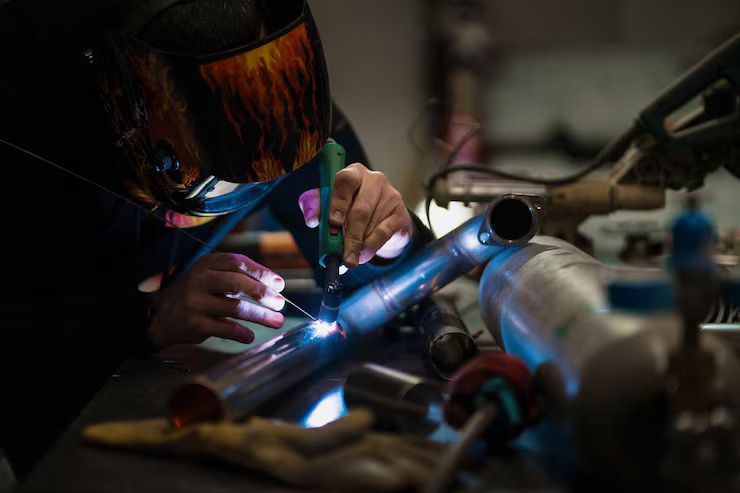
Ultrasonic plastic welders are advanced industrial machines used to join thermoplastic materials using high-frequency ultrasonic vibrations. Unlike traditional welding methods that rely on heat from external sources, ultrasonic welding generates heat internally through friction caused by mechanical vibrations. This allows for precise, fast, and clean bonding of plastic components.
In recent years, ultrasonic welding technology has gained widespread adoption due to its efficiency, reliability, and suitability for automated production lines. Industries such as automotive, electronics, medical devices, packaging, and consumer goods use ultrasonic plastic welders for assembling components with high precision. The demand for lightweight and durable plastic products has further accelerated the use of this technology.
Understanding ultrasonic welding principles and techniques is essential for manufacturers and engineers aiming to improve product quality, reduce production time, and enhance operational efficiency.
Who It Affects and What Problems It Solves
Ultrasonic plastic welders impact various stakeholders in manufacturing industries. Engineers and production managers use these machines to achieve precise and consistent bonding of plastic parts. Operators benefit from automated processes that reduce manual effort and improve efficiency.
Industries producing electronic components, automotive parts, medical devices, and packaging materials rely heavily on ultrasonic welding for assembly processes. Businesses benefit from improved product quality and reduced production costs.
Problems It Solves
- Weak Bonding Issues: Provides strong and reliable joints
- Slow Production Processes: Enables rapid welding cycles
- Material Damage: Minimizes heat-affected zones
- Need for Adhesives: Eliminates requirement for glues or fasteners
- Inconsistent Quality: Ensures repeatable and precise welding
- Production Inefficiency: Supports automation and high-speed manufacturing
Ultrasonic welding offers an efficient and clean solution for plastic joining applications.
Recent Updates and Industry Trends
The ultrasonic welding industry has seen several advancements over the past year:
- Automation Integration: Increased use in robotic and automated production lines
- Energy-Efficient Systems: Reduced power consumption with advanced generators
- Smart Monitoring: Real-time control and quality monitoring systems
- Miniaturization Applications: Growing use in electronics and medical devices
- Advanced Welding Techniques: Improved precision for complex components
- Sustainability Focus: Reduction in material waste and energy usage
India’s manufacturing sector is adopting ultrasonic welding technology to enhance production efficiency and meet global standards.
Comparison Table: Types of Ultrasonic Welding Techniques
| Welding Technique | Key Features | Common Applications |
|---|---|---|
| Spot Welding | Localized welding at specific points | Automotive, electronics |
| Seam Welding | Continuous welding along a seam | Packaging, textiles |
| Staking | Forms plastic studs to hold components | Electronics assembly |
| Embedding | Inserts metal parts into plastic | Industrial components |
| Cutting and Sealing | Simultaneous cutting and welding | Packaging, films |
Laws, Policies, and Government Regulations
Ultrasonic welding systems are subject to industrial safety and quality regulations.
Key Regulations
- Industrial Safety Standards: Ensure safe operation of ultrasonic equipment
- Electrical Safety Regulations: Govern use of high-frequency devices
- Quality Standards: Maintain consistency and reliability in welded products
- Environmental Regulations: Promote energy-efficient and low-waste processes
Practical Guidance
- Manufacturers: Should implement safety features and proper machine guarding
- Operators: Must receive training in ultrasonic welding processes
- High-Precision Industries: Require strict quality control and validation
- Maintenance: Regular calibration ensures consistent performance
Compliance ensures safe and efficient operation.
Tools and Resources
Several tools and resources support ultrasonic welding operations:
Digital Tools
- Process monitoring and control software
- Quality inspection systems
Machine Components
- Ultrasonic generators
- Transducers and horns
Maintenance Tools
- Preventive maintenance scheduling systems
- Diagnostic tools for ultrasonic systems
Industry Resources
- Welding standards and guidelines
- Manufacturer technical documentation
Training Resources
- Operator training programs
- Certification courses in welding technology
These resources help improve welding quality, efficiency, and reliability.
Frequently Asked Questions (FAQ)
What is ultrasonic plastic welding?
It is a process that uses high-frequency vibrations to join plastic materials without external heat sources.
What materials can be welded using ultrasonic welding?
Thermoplastics such as ABS, polypropylene, and polycarbonate can be welded.
What are the advantages of ultrasonic welding?
It offers fast processing, strong joints, and no need for adhesives.
Is ultrasonic welding suitable for small components?
Yes, it is ideal for small and precise components, especially in electronics and medical devices.
How does ultrasonic welding improve production efficiency?
It enables rapid, automated processes with consistent quality.
Conclusion
Ultrasonic plastic welders are a key technology in modern manufacturing, offering precise, efficient, and reliable solutions for joining plastic components. Their ability to produce strong bonds without additional materials makes them highly valuable across industries.
Recent trends such as automation, energy efficiency, and smart monitoring systems are enhancing the capabilities of ultrasonic welding. Data-driven insights indicate that businesses adopting this technology benefit from improved product quality, reduced costs, and faster production cycles.
For manufacturers, selecting the right ultrasonic welding system depends on material type, application requirements, and production scale. While traditional methods remain relevant in some cases, ultrasonic welding is increasingly preferred for high-speed and high-precision applications. Overall, it plays a crucial role in advancing modern manufacturing processes.