Industrial mixing is a fundamental step in manufacturing sectors such as food processing, pharmaceuticals, chemicals, and construction materials. Among the many types of mixing equipment, the ribbon blender machine has become widely recognized for handling dry powders and granular materials. Its development is rooted in the need for consistent and uniform mixing at scale, where manual methods are inefficient and unreliable.
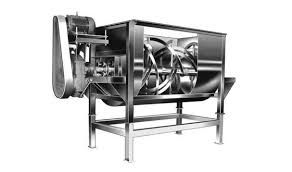
An industrial ribbon blender typically consists of a horizontal trough and a rotating shaft fitted with inner and outer helical ribbons. These ribbons move materials in opposing directions, creating a balanced mixing action. Over time, this design evolved into variations such as the double ribbon blender, which enhances mixing performance by improving material flow patterns.
The concept behind this equipment is simple: ensure that every particle in a mixture is evenly distributed. This is especially important in industries where product consistency affects safety, quality, and usability. As a result, powder blending equipment like ribbon blenders plays a key role in modern production systems.
Importance
Why Consistent Mixing Matters
Uniform mixing ensures that each portion of a product contains the same composition. This is critical in sectors such as pharmaceuticals, where uneven distribution of active ingredients can affect effectiveness, and in food production, where taste and texture depend on even blending.
The ribbon blender working principle helps address these challenges by continuously moving materials both radially and laterally. This reduces the chances of segregation, where heavier or finer particles separate from the rest.
Industries That Rely on Ribbon Blenders
Many industries depend on industrial ribbon blender systems for reliable mixing. These include:
- Food processing: blending spices, flour, and additives
- Pharmaceuticals: mixing powders for tablets and capsules
- Chemicals: combining raw materials into uniform compounds
- Construction materials: preparing cement mixtures and dry mortar
Addressing Operational Challenges
Without proper mixing equipment, manufacturers may face issues such as inconsistent product quality, material waste, and inefficiencies in production time. The ribbon blender efficiency helps mitigate these issues by providing a controlled and repeatable mixing process.
Recent Updates
Advancements in Design and Automation
Between 2024 and 2026, improvements in ribbon blender machine designs have focused on automation and energy optimization. Modern systems often include programmable controls that allow operators to set mixing times, speeds, and sequences. This reduces human error and improves consistency across batches.
Integration with Smart Manufacturing
Industrial ribbon blender systems are increasingly being integrated into smart manufacturing environments. Sensors can monitor parameters such as temperature, load, and mixing duration. These data points help optimize performance and detect maintenance needs early.
Improved Material Handling
Recent developments have also enhanced how materials are loaded and discharged. Features such as automated feeding systems and improved discharge valves reduce manual handling and minimize contamination risks.
Focus on Hygiene and Safety
In sectors like food and pharmaceuticals, there is growing attention to hygienic design. Equipment surfaces are being designed for easier cleaning, and materials used in construction are chosen to meet strict safety standards.
Laws or Policies
Regulatory Framework in India
In India, the use of powder blending equipment, including ribbon blenders, is influenced by multiple regulatory bodies depending on the industry.
- Food sector: The Food Safety and Standards Authority of India (FSSAI) sets guidelines for hygiene and equipment used in food processing
- Pharmaceutical sector: The Central Drugs Standard Control Organization (CDSCO) enforces Good Manufacturing Practices (GMP)
- Industrial safety: The Factories Act outlines safety measures for machinery operation
Compliance Requirements
Manufacturers using industrial ribbon blender systems must ensure:
- Equipment is constructed from approved materials, especially for food and pharmaceutical use
- Regular maintenance and inspection are conducted to prevent mechanical failures
- Operators are trained in safe handling procedures
Environmental Considerations
Dust generation during mixing can impact air quality. Regulations may require dust control systems, such as filters or enclosed designs, to reduce emissions and protect worker health.
Tools and Resources
Design and Simulation Software
Engineers often use specialized software to model and analyze mixing processes. These tools help predict how materials will behave inside a ribbon blender machine and allow adjustments before physical implementation.
Maintenance and Monitoring Tools
Modern systems may include digital dashboards that track performance metrics. These tools assist in monitoring ribbon blender efficiency and identifying potential issues early.
Reference Standards and Guidelines
Organizations such as the Bureau of Indian Standards (BIS) provide technical guidelines for machinery design and safety. These documents help ensure that equipment meets acceptable engineering practices.
Common Features Comparison
| Feature | Single Ribbon Blender | Double Ribbon Blender |
|---|---|---|
| Mixing mechanism | One helical ribbon | Inner and outer ribbons |
| Mixing uniformity | Moderate | Higher consistency |
| Processing time | Longer | Shorter |
| Material flow pattern | Limited directional flow | Multi-directional flow |
| Typical applications | Basic powder blending | Complex mixtures |
This table highlights how a double ribbon blender can provide improved performance in more demanding applications.
FAQs
What is a ribbon blender machine used for?
A ribbon blender machine is used to mix dry powders and granular materials. It ensures even distribution of ingredients in industries such as food processing, pharmaceuticals, and chemicals.
How does the ribbon blender working principle function?
The ribbon blender working principle involves a rotating shaft with inner and outer ribbons that move materials in opposite directions. This creates a continuous mixing cycle that promotes uniform blending.
What is the difference between an industrial ribbon blender and a double ribbon blender?
An industrial ribbon blender refers to the general category of mixing equipment, while a double ribbon blender specifically includes two sets of ribbons that enhance mixing efficiency and uniformity.
What factors affect ribbon blender efficiency?
Ribbon blender efficiency depends on factors such as mixing speed, batch size, material properties, and the design of the ribbons. Proper maintenance and operation also play a role.
Where is powder blending equipment commonly used?
Powder blending equipment is widely used in industries that require consistent mixtures, including food production, pharmaceuticals, chemicals, and construction materials.
Conclusion
Ribbon blenders are a key component in modern industrial mixing processes, designed to handle a wide range of dry materials with consistency. Their simple yet effective design allows for reliable performance across multiple industries. Advances in automation and monitoring have further improved their functionality and integration into production systems. Understanding how these machines work and where they are applied helps clarify their role in ensuring product uniformity. As industries continue to evolve, ribbon blenders remain a practical solution for large-scale powder mixing.