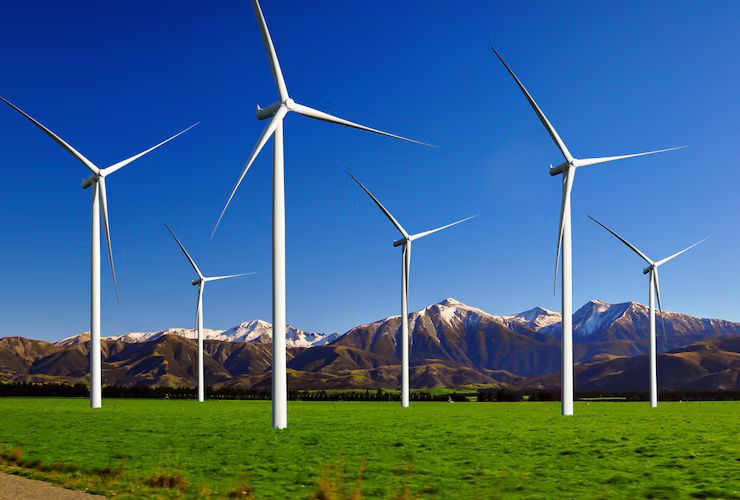
Wind energy has been used for centuries, from sailing ships to grinding grain with windmills. Today, modern wind turbines convert moving air into electricity through a process known as wind energy generation. Understanding how wind turbines work helps explain how a natural resource can be transformed into usable power for homes, industries, and infrastructure.
At its core, the wind turbine working principle relies on the transfer of kinetic energy from the wind into mechanical energy, and then into electrical energy. Large-scale wind power generation systems are now installed both on land and offshore, where wind speeds are typically higher and more consistent. These systems play a growing role in electricity production across many countries.
A modern wind turbine consists of several key components, including blades, a rotor, a nacelle (which houses the generator and gearbox), and a tower. The efficiency and output of a turbine depend on multiple factors such as wind speed, blade design, and control systems.
Importance
Wind power generation has become increasingly relevant as societies seek alternatives to fossil fuels. It provides a renewable source of electricity that does not rely on finite resources and produces minimal emissions during operation.
The topic matters because it addresses several real-world challenges:
- Reducing dependence on fossil fuels: Wind energy generation contributes to diversifying energy sources.
- Lowering environmental impact: Wind turbines do not emit greenhouse gases during operation.
- Supporting energy security: Local wind resources can reduce reliance on imported fuels.
- Expanding rural infrastructure: Wind farms are often located in open or rural areas, bringing development opportunities.
For everyday people, this translates into a more stable energy mix and potentially cleaner air. Even if individuals do not directly interact with turbines, the electricity generated contributes to the grid they use daily.
Recent Updates
Recent developments in wind turbine efficiency and design have focused on increasing output while reducing environmental and structural challenges. Between 2024 and 2026, several trends have become more noticeable.
Larger and More Efficient Turbines
Manufacturers are producing turbines with longer blades and taller towers. These designs allow turbines to capture stronger and more consistent winds at higher altitudes. Improvements in materials, such as lightweight composites, have enhanced wind turbine blade design without significantly increasing structural load.
Offshore Wind Expansion
Offshore wind farms have gained attention due to higher wind speeds over oceans. Floating turbine technology has enabled installations in deeper waters, expanding the range of possible locations for wind power generation.
Digital Monitoring and Control
Advanced wind turbine control systems now use sensors, data analytics, and automated adjustments to optimize performance. These systems can adjust blade angles and rotation speeds in real time, improving efficiency and reducing wear.
Hybrid Energy Systems
Wind energy is increasingly combined with solar and energy storage systems. This integration helps balance supply and demand, especially during periods of variable wind conditions.
Laws or Policies
Wind energy development is influenced by government policies, environmental regulations, and energy planning frameworks. In India, several initiatives support wind power generation.
National Energy Policies
India’s renewable energy goals include significant contributions from wind energy. Government programs encourage the installation of wind turbines through policy frameworks that promote clean energy adoption.
Grid Integration Regulations
Wind farms must comply with grid connectivity standards. These regulations ensure that electricity generated from wind turbines can be safely and efficiently integrated into the national grid.
Environmental Guidelines
Wind turbine installations are subject to environmental impact assessments. These evaluations consider factors such as land use, wildlife impact, and noise levels.
State-Level Policies
Different states in India have their own policies regarding land allocation, infrastructure support, and renewable energy targets. States like Gujarat and Tamil Nadu have been active in wind energy development due to favorable wind conditions.
Tools and Resources
Understanding how wind turbines work can be supported by various tools and educational platforms. These resources help individuals, students, and researchers explore wind energy concepts more deeply.
Online Calculators
Wind energy calculators estimate potential electricity generation based on wind speed, turbine size, and location. These tools help illustrate the relationship between environmental conditions and output.
Simulation Software
Programs such as wind flow simulators model airflow patterns and turbine performance. They are often used in engineering and academic settings to study wind turbine efficiency.
Educational Platforms
Websites and online courses provide structured learning about wind turbine working principles, blade design, and energy systems. These platforms often include interactive diagrams and case studies.
Data Portals
Government and research institutions publish wind resource maps and datasets. These resources help identify suitable locations for wind power generation.
Technical Documentation
Manufacturers and research organizations release reports and guides on wind turbine blade design and control systems. These documents explain design considerations and operational strategies.
How Wind Turbines Work
Basic Working Principle
The wind turbine working principle begins when wind flows over the blades. The shape of the blades creates a pressure difference, causing them to rotate. This rotation spins a shaft connected to a generator, which produces electricity.
Key Components and Functions
- Blades: Capture wind energy and convert it into rotational motion
- Rotor: Connects the blades and transfers motion
- Nacelle: Contains the gearbox, generator, and control systems
- Tower: Elevates the turbine to access stronger winds
Energy Conversion Process
The process can be summarized in three steps:
- Wind energy turns the blades
- Mechanical energy rotates the generator
- Electrical energy is transmitted to the grid
Wind Turbine Blade Design
Blade design plays a critical role in wind turbine efficiency. Engineers focus on optimizing shape, length, and materials to maximize energy capture.
Aerodynamic Shape
Blades are shaped similarly to airplane wings. This design allows them to generate lift, which drives rotation more effectively than simple drag-based designs.
Length and Size
Longer blades can capture more wind energy, increasing output. However, they must be carefully engineered to withstand stress and environmental conditions.
Materials Used
Modern blades are typically made from composite materials such as fiberglass or carbon fiber. These materials provide strength while keeping the blades relatively lightweight.
Design Factors Influencing Efficiency
- Wind speed variability
- Air density
- Blade pitch angle
- Structural flexibility
Wind Turbine Control Systems
Control systems are essential for safe and efficient turbine operation. They ensure that turbines operate within optimal conditions and respond to changing wind speeds.
Types of Control Mechanisms
- Pitch control: Adjusts the angle of the blades to regulate speed
- Yaw control: Rotates the turbine to face the wind direction
- Brake systems: Stops the turbine during extreme conditions
Role in Efficiency
Wind turbine control systems help maintain consistent power output. By adjusting blade angles and rotation speed, they prevent damage and improve overall performance.
Automation and Monitoring
Modern systems use sensors and software to monitor wind conditions and turbine behavior. These systems can automatically adjust settings to optimize wind energy generation.
Wind Turbine Efficiency
Wind turbine efficiency refers to how effectively a turbine converts wind energy into electricity. It is influenced by both design and environmental factors.
Factors Affecting Efficiency
- Wind speed: Higher speeds generally increase output
- Blade design: Aerodynamic efficiency impacts energy capture
- Turbine placement: Location affects wind consistency
- Maintenance: Well-maintained turbines perform more reliably
Efficiency Limits
The theoretical maximum efficiency of a wind turbine is defined by the Betz limit, which states that no turbine can capture more than about 59% of the wind’s kinetic energy. In practice, most turbines operate below this limit due to real-world conditions.
Example Efficiency Comparison
| Factor | Impact on Output | Notes |
|---|---|---|
| Wind speed increase | High | Small increases can significantly boost output |
| Blade length increase | Moderate | Larger blades capture more energy |
| Improved control system | Moderate | Enhances stability and performance |
| Maintenance quality | Variable | Reduces downtime and inefficiencies |
FAQs
How do wind turbines work in simple terms?
Wind turbines work by using moving air to spin blades connected to a generator. This process converts wind energy into electricity through mechanical motion.
What affects wind turbine efficiency the most?
Wind speed is the most significant factor. However, wind turbine blade design, placement, and control systems also play important roles in determining efficiency.
Why is wind turbine blade design important?
Blade design determines how effectively a turbine captures wind energy. Aerodynamic shapes and proper materials improve performance and durability.
What are wind turbine control systems used for?
Wind turbine control systems regulate speed, direction, and safety. They adjust blade angles and orientation to maintain efficient operation under changing conditions.
How does wind energy generation contribute to electricity supply?
Wind energy generation provides a renewable source of power that feeds into the electrical grid. It complements other energy sources and supports a diversified energy system.
Conclusion
Wind turbines are a key part of modern energy systems, converting natural wind into usable electricity through well-defined mechanical and electrical processes. Their efficiency depends on factors such as blade design, control systems, and environmental conditions. Advances in technology continue to improve performance and expand their application, especially in offshore and hybrid systems. Understanding how wind turbines work provides insight into how renewable energy contributes to everyday electricity use.