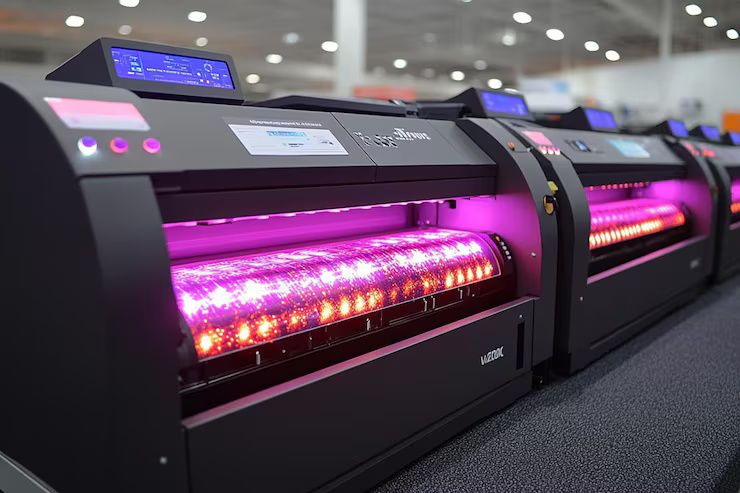
UV curing machines are industrial systems used to instantly harden or “cure” coatings, inks, adhesives, and resins using ultraviolet light. Unlike conventional drying methods that rely on heat or long air-drying times, UV curing triggers a chemical reaction that solidifies materials within seconds.
These machines exist to meet the needs of modern manufacturing processes that require speed, precision, and consistent quality. UV curing is widely used in printing, electronics, automotive components, medical devices, and packaging. It enables manufacturers to apply coatings or inks and immediately move products to the next production stage.
At the core of UV curing is photopolymerization. When UV light reaches a specially formulated material, photoinitiators absorb the energy and start a reaction that transforms liquid material into a solid state. Process setup and parameter control ensure this reaction happens fully and uniformly.
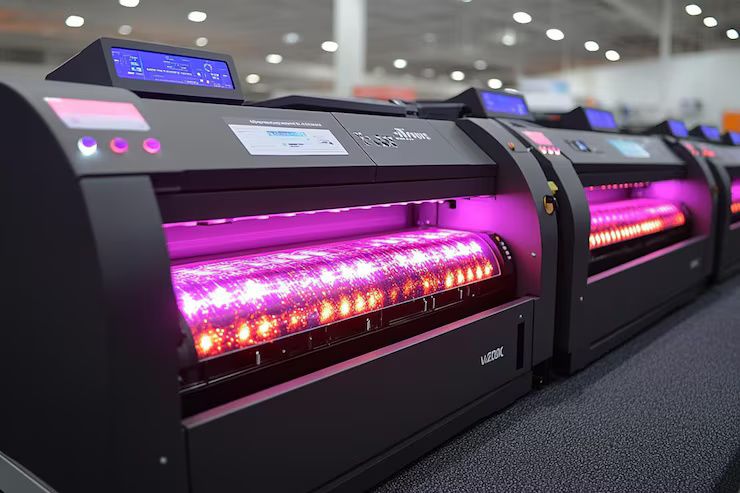
Importance: Why Process Setup and Parameter Control Matter Today
Proper setup and parameter control are essential for achieving reliable UV curing results. Small changes in exposure time or light intensity can significantly affect material performance.
This topic matters to:
-
Manufacturing engineers and technicians
-
Quality control professionals
-
Process planners in industrial production
-
Students learning industrial processing methods
Key problems that correct setup and control help solve include:
-
Incomplete curing or surface tackiness
-
Material degradation from overexposure
-
Uneven coating performance
-
Production delays caused by rework
As production speeds increase and materials become more specialized, controlling UV curing parameters becomes increasingly important. Accurate control ensures consistent product quality while supporting high-throughput manufacturing environments.
Recent Updates: Developments in the Past Year
Over the past year, UV curing technology has continued to evolve, driven by efficiency and process control improvements.
Key developments since 2024 include:
-
Increased adoption of UV LED systems: In 2024, UV LED curing gained wider use due to stable output and lower energy consumption.
-
Improved wavelength control: Late 2024 updates focused on matching UV wavelengths more precisely to material formulations.
-
Digital process monitoring: Early 2025 saw broader use of real-time monitoring for intensity and exposure tracking.
-
Compact system designs: New configurations released in 2025 improved integration into existing production lines.
-
Material compatibility expansion: Recent research in 2025 expanded UV-curable formulations for specialized applications.
These updates reflect a shift toward tighter process control and greater flexibility in production environments.
Laws and Policies: Regulations Affecting UV Curing Operations
UV curing machines are subject to safety and workplace regulations due to ultraviolet radiation exposure and electrical operation.
International safety and equipment standards from the International Organization for Standardization influence machine design, testing, and documentation practices. These standards help ensure safe and consistent equipment operation.
In the United States, workplace exposure and equipment safety practices are guided by the Occupational Safety and Health Administration. These guidelines address operator protection, shielding, and hazard communication.
Common regulatory considerations include:
-
UV radiation shielding and enclosure requirements
-
Electrical safety and grounding standards
-
Operator training and safety procedures
-
Ventilation and heat management
These policies aim to protect workers while allowing efficient use of UV curing technology.
Tools and Resources: Supporting UV Curing Setup and Control
Several tools and resources support effective UV curing process management. These tools help operators measure, adjust, and document curing conditions.
Useful resource categories include:
-
UV intensity meters for measuring light output
-
Process setup guides from material suppliers
-
Digital control interfaces for parameter adjustment
-
Maintenance checklists for lamps and cooling systems
The table below outlines common parameters and their roles:
| Parameter | Purpose in UV Curing |
|---|---|
| UV intensity | Drives curing reaction speed |
| Exposure time | Ensures full material polymerization |
| Wavelength range | Matches material photoinitiators |
| Conveyor speed | Controls exposure duration |
| Lamp distance | Affects light distribution |
These resources help ensure that curing conditions remain stable and repeatable.
Process Setup: Preparing a UV Curing Machine
Process setup begins with understanding the material being cured. Different coatings and inks require specific UV intensity levels and exposure times.
Key setup steps include:
-
Reviewing material technical data
-
Selecting appropriate lamp type or LED source
-
Setting initial conveyor or exposure speed
-
Adjusting lamp-to-surface distance
A trial run is often performed to confirm curing performance. Visual inspection and simple physical tests help verify whether the material has cured completely.
Parameter Control: Managing UV Exposure Precisely
Parameter control refers to maintaining stable curing conditions during production. Once optimal settings are identified, they must be consistently applied.
Critical control aspects include:
-
Intensity stability: Ensuring lamps provide consistent output
-
Exposure consistency: Maintaining uniform speed and spacing
-
Temperature management: Preventing heat buildup that affects materials
Modern UV curing machines often include digital controls that allow operators to store and recall parameter settings. This supports repeatability across different production batches.
Common UV Curing Configurations
UV curing machines can be configured in different ways depending on production needs.
Typical configurations include:
-
Conveyor-based systems for continuous processing
-
Spot curing systems for localized applications
-
Enclosed chambers for controlled environments
Each configuration requires specific setup considerations, especially regarding shielding and exposure uniformity.
Quality Checks: Verifying Curing Performance
Quality verification ensures that the curing process meets material and performance requirements.
Common verification methods include:
-
Surface hardness or scratch resistance tests
-
Adhesion checks
-
Visual inspection for gloss or uniformity
These checks help confirm that process parameters remain within acceptable limits.
FAQs: Common Questions About UV Curing Machines
What materials are suitable for UV curing?
Materials must be formulated with photoinitiators that respond to UV light.
Why is wavelength control important?
Different materials cure best at specific UV wavelengths.
Can overexposure cause problems?
Yes. Excessive exposure can degrade materials or cause discoloration.
Do UV curing machines require regular maintenance?
Yes. Lamps, filters, and cooling systems require routine inspection.
Is UV curing faster than heat drying?
Yes. UV curing typically occurs within seconds under proper conditions.
Conclusion
UV curing machines enable fast and controlled solidification of coatings, inks, and adhesives through ultraviolet light. Their effectiveness depends heavily on correct process setup and precise parameter control.
Recent developments show a move toward LED-based systems, digital monitoring, and improved material compatibility. At the same time, safety regulations guide responsible operation and worker protection.
By understanding process setup and parameter control, readers gain clearer insight into how UV curing machines support modern, high-speed manufacturing with consistent and reliable results.