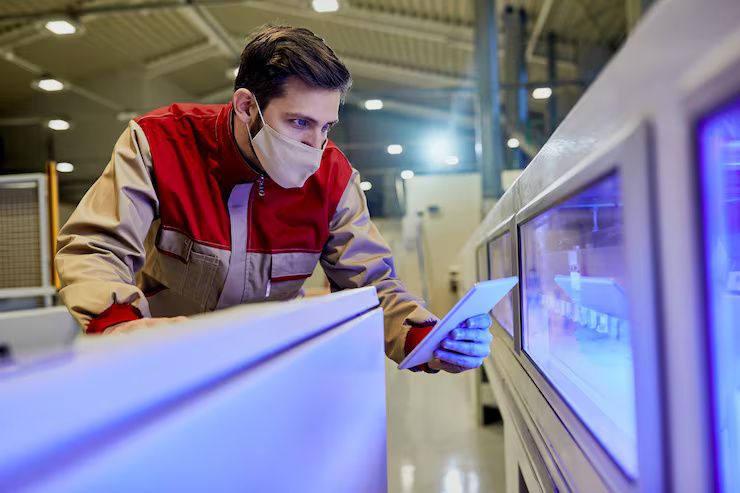
UV curing is a photochemical process that uses ultraviolet light to instantly harden or “cure” adhesives, inks, coatings, and resins. Unlike traditional drying, which relies on evaporation or heat, UV curing triggers a rapid polymerization reaction using UV energy.
This technology was developed to improve manufacturing speed, eliminate long drying times, reduce energy consumption, and achieve stronger, more durable finishes. UV curing enables high-precision, high-efficiency production in electronics, automotive parts, printing, packaging, and various industrial sectors.
Importance: Why UV Curing Matters in Industrial Manufacturing
UV curing systems support modern industries by enhancing productivity and improving material performance.
Key reasons UV curing is essential:
-
Fast production: Materials cure in seconds instead of hours.
-
Strong bonding: UV-cured materials provide higher chemical, scratch, and moisture resistance.
-
Low energy consumption: Systems use less power than thermal curing.
-
Minimal heat exposure: Suitable for heat-sensitive materials such as plastics, electronics, and wood.
-
Environmental benefits: Many UV formulations have low or zero volatile organic compounds (VOC).
-
High precision: Ideal for micro-manufacturing and electronics assembly.
Industries rely on UV curing to increase output, achieve consistent quality, and reduce operational costs.
Recent Updates: Trends & Developments in UV Curing (2024–2025)
UV curing technology has advanced in response to sustainability goals, automation, and precision manufacturing needs.
Important developments include:
-
LED UV curing expansion: 2024–2025 saw major growth in LED-based curing because of lower heat output and longer lamp life.
-
Eco-friendly UV formulations: New low-VOC resins and inks support environmental compliance.
-
IoT-enabled curing systems: Smart UV systems now include temperature sensors, real-time monitoring, and automated intensity control.
-
Improved wavelength customization: Manufacturers now use 365 nm, 385 nm, 395 nm, and 405 nm wavelengths for specialized applications.
-
Integration with robotics: UV curing lines are increasingly paired with robotic arms for precision assembly.
These advancements make UV curing more reliable, energy-efficient, and versatile across industries.
Laws or Policies Affecting UV Curing Systems
UV curing systems must comply with safety, optical radiation, and material handling regulations.
Key regulatory considerations:
-
OSHA UV Exposure Guidelines – Protect workers from excessive UV radiation.
-
IEC/EN Standards – Cover electrical safety for UV equipment.
-
EPA VOC Regulations – Encourage low-emission inks, coatings, and adhesives.
-
RoHS & REACH Compliance – Guide acceptable chemical additives in UV materials.
-
Local industrial safety rules – Specify shielding, ventilation, and operator protection.
Industries must ensure proper shielding, eye protection, and safe operating procedures for UV systems.
Types of UV Curing Systems (One-Box Table Format)
UV Curing System Overview
| Type | Description | Best Uses |
|---|---|---|
| Mercury Vapor Lamps | Traditional broad-spectrum UV lamps | Printing, wood coatings, industrial finishing |
| Metal Halide Lamps | Modified mercury lamps with enhanced UV output | Automotive parts, plastics, industrial coatings |
| UV LED Lamps | Low heat, long life, energy efficient | Electronics, medical devices, adhesives |
| Excimer Lamps | Produce very short wavelengths (172 nm) | Surface treatment, polymer modification |
| Spot UV Curing Systems | Focused, high-intensity beams | PCB assembly, optical bonding |
| Flood UV Systems | Wide-area curing | Packaging, labels, industrial panels |
| Conveyor UV Systems | Continuous curing lines | High-volume manufacturing |
Materials That Can Be UV Cured
UV curing works on multiple material categories:
-
UV adhesives (acrylic, epoxy, silicone)
-
UV inks (flexo, screen, inkjet)
-
UV coatings (wood, metal, plastic)
-
UV resins for 3D printing
-
Optical bonding materials
-
UV potting compounds
-
Conformal coatings for electronics
This versatility allows manufacturers to use UV curing across numerous production processes.
Applications: Where UV Curing Is Used in Industry
UV curing supports high-performance manufacturing across many sectors.
Electronics
-
PCB coatings
-
Chip encapsulation
-
Smartphone display bonding
Automotive
-
Headlamp assembly
-
Interior coatings
-
UV-cured sealants
Printing & Packaging
-
UV inks for labels, magazines, cartons
-
Gloss and matte coatings
-
Fast-turnaround printing jobs
Medical Devices
-
Catheter bonding
-
Syringe assembly
-
Protective coatings
Wood & Furniture
-
Scratch-resistant coatings
-
Decorative finishes
Industrial Manufacturing
-
Metal finishing
-
Protective layers
-
High-speed assembly lines
Benefits of UV Curing Technology
Speed: Curing takes seconds, improving throughput.
Quality: Produces harder, more durable surfaces.
Energy Efficiency: UV LEDs consume minimal power.
Consistency: Achieves uniform curing without overheating.
Compact Equipment: Suitable for small production areas.
Environmentally Safer: Many UV formulations are low-VOC.
Precision: Ideal for delicate electronics and micro-assembly.
Machinery & Manufacturing: How UV Curing Equipment Works
UV curing equipment generally includes:
-
UV light source (lamp or LED)
-
Power supply and driver
-
Cooling system (air or water cooled)
-
Reflectors and optical guides
-
Conveyor or positioning system
-
Intensity sensors and controls
Process Steps:
-
Application of UV material (adhesive, ink, coating).
-
Positioning under UV source or conveyor line.
-
Exposure to UV light triggers polymerization.
-
Curing completion within seconds.
-
Inspection for adhesion, hardness, and surface finish.
Automation ensures repeatable curing cycles for large batches.
Strengths & Limitations of UV Curing
Strengths:
-
Extremely fast curing
-
High bonding strength
-
Low operating cost
-
No heat damage to substrates
Limitations:
-
UV-blocking materials cannot cure fully
-
Some formulations require oxygen shielding
-
Safety measures needed for UV exposure
Selection Guide: How to Choose the Right UV Curing System
When selecting UV curing equipment, consider:
-
Material Type
Adhesive, resin, ink, or coating determines wavelength and intensity needs. -
Substrate Material
Plastics, metal, wood, and glass respond differently to UV. -
Required Curing Speed
High-volume production may need conveyor systems. -
Wavelength Requirements
-
LEDs: 365–405 nm
-
Mercury lamps: broad spectrum
-
-
Heat Sensitivity
UV LEDs work best for low-temperature substrates. -
Curing Depth
Thicker coatings require higher-intensity UV sources. -
Space & Layout
Compact flood lamps suit small facilities; conveyors suit industrial lines. -
Safety & Compliance
Proper shielding, ventilation, and PPE must be supported.
Tools & Resources for UV Curing Systems
Common tools and references include:
-
UV intensity meters
-
Adhesion and hardness testing tools
-
Material compatibility charts
-
Wavelength & irradiance calculators
-
Industry safety checklists
-
UV curing equipment manuals
-
Spectral power distribution charts
These resources help engineers ensure accurate curing and long-term reliability.
FAQs
What is the main advantage of UV curing over heat curing?
UV curing works in seconds and avoids heating sensitive components.
Can UV curing work on all materials?
No. UV cannot penetrate opaque, highly reflective, or UV-blocking materials.
Do UV LEDs last longer than mercury lamps?
Yes, UV LEDs have significantly longer lifespan and lower energy consumption.
Is UV curing safe?
Yes, when proper shielding, ventilation, and eye protection are used.
Which industries benefit most from UV curing?
Electronics, automotive, printing, packaging, medical, and wood finishing.
Conclusion
UV curing technology has become a cornerstone of modern industrial manufacturing due to its speed, precision, and material performance advantages. From electronics assembly to automotive components and advanced printing, UV curing enables faster production cycles, stronger finishes, and improved energy efficiency. With continued advancements in LED curing, smart monitoring, and low-VOC formulations, UV curing is evolving into one of the most sustainable and high-performance manufacturing methods available today.