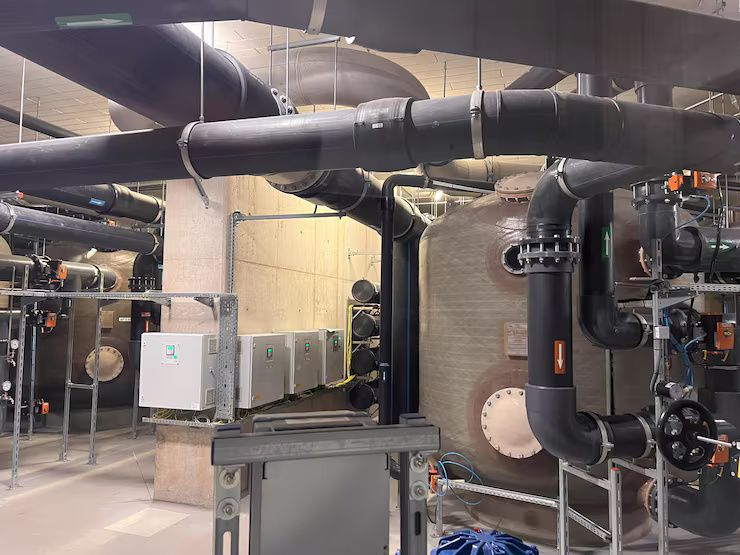
Vacuum heat treatment was developed to overcome limitations of conventional heat treatment methods, which often involve exposure to oxygen and other gases. Traditional processes can lead to surface defects, oxidation, and inconsistent material performance. By creating a vacuum environment, this advanced method ensures cleaner and more controlled thermal processing.
The process takes place in a sealed furnace where air is removed using vacuum pumps. Once the desired vacuum level is achieved, the material is heated to a specific temperature and then cooled under controlled conditions. This ensures uniform heat distribution and precise metallurgical transformation.
Industries such as aerospace, automotive, tool manufacturing, and medical equipment rely on vacuum heat treatment for high-performance components. The process supports modern manufacturing needs where accuracy and material integrity are critical.
Importance of Vacuum Heat Treatment in Industrial Manufacturing
Vacuum heat treatment plays a key role in improving material performance and extending product lifespan. It is particularly important for components that operate under high stress, temperature, or corrosive conditions.
Key Advantages of Vacuum Heat Treatment
- Oxidation-Free Processing: Eliminates exposure to oxygen, preventing surface scaling
- Improved Material Strength: Enhances hardness, toughness, and wear resistance
- Uniform Heat Distribution: Ensures consistent results across complex geometries
- Reduced Distortion: Minimizes dimensional changes during processing
- Clean Surface Finish: No need for additional cleaning or post-processing
Industrial Impact
| Industry | Application Example |
|---|---|
| Aerospace | Turbine blades and structural components |
| Automotive | Gears, bearings, and engine parts |
| Medical Devices | Surgical tools and implants |
| Tool Manufacturing | Cutting tools and dies |
The process contributes to improved reliability and efficiency in industrial operations, making it a preferred method for high-precision manufacturing.
Recent Updates and Trends in Vacuum Heat Treatment
In recent years, vacuum heat treatment technology has evolved with advancements in automation, energy efficiency, and process monitoring.
Key Developments
- Advanced Vacuum Furnaces (2024–2025): Modern systems include automated controls and real-time monitoring
- Integration with Industry 4.0: Smart sensors and data analytics improve process accuracy
- Energy-Efficient Heating Systems: New furnace designs reduce energy consumption
- Improved Cooling Techniques: High-pressure gas quenching enhances material properties
- Digital Process Tracking: Enables better quality control and traceability
Technology Adoption Trends
| Year | Automation Level (%) | Energy Efficiency Improvement (%) |
|---|---|---|
| 2023 | 55% | 10% |
| 2024 | 63% | 14% |
| 2025 | 70% | 18% |
These developments reflect the increasing demand for sustainable and precise manufacturing processes.
Laws and Policies Related to Vacuum Heat Treatment
Vacuum heat treatment processes are influenced by industrial standards and environmental regulations. These rules ensure safety, quality, and compliance across manufacturing operations.
Key Regulatory Areas
- Industrial Safety Standards: Ensure safe operation of high-temperature equipment
- Environmental Regulations: Limit emissions and promote energy-efficient technologies
- Quality Certification Standards: Maintain consistency in material properties
- Workplace Safety Guidelines: Protect operators from hazards
Regulatory Framework in India
In India, vacuum heat treatment processes are guided by standards and policies from organizations such as:
- Bureau of Indian Standards (BIS) for material and process quality
- Environmental guidelines for industrial emissions and energy usage
- Factory safety regulations governing furnace operations
These policies support safe and sustainable industrial practices while maintaining product quality.
Tools and Resources for Vacuum Heat Treatment
Several tools and technologies support vacuum heat treatment processes, improving efficiency, accuracy, and monitoring.
Common Tools and Systems
- Vacuum Furnaces: Core equipment for controlled heating
- Vacuum Pumps: Remove air and maintain required pressure levels
- Temperature Control Systems: Ensure precise thermal cycles
- Gas Quenching Systems: Provide rapid and controlled cooling
- Monitoring Software: Tracks process parameters and performance
Useful Features in Modern Systems
| Feature | Description |
|---|---|
| Automated Control Panels | Enable precise operation and reduced human error |
| Real-Time Data Monitoring | Tracks temperature and pressure continuously |
| Programmable Heat Cycles | Allows customized treatment processes |
| Safety Interlock Systems | Prevent operational hazards |
| Energy Optimization Tools | Improve efficiency and reduce consumption |
These tools help industries maintain consistent quality while optimizing production processes.
Frequently Asked Questions About Vacuum Heat Treatment
What is vacuum heat treatment?
Vacuum heat treatment is a process where metals are heated in a vacuum environment to prevent oxidation and contamination while improving material properties.
How does vacuum heat treatment differ from conventional methods?
Unlike conventional methods, vacuum heat treatment eliminates exposure to air, resulting in cleaner surfaces and more precise material characteristics.
What materials can be treated using this process?
Metals such as steel, titanium, and specialized alloys are commonly treated using vacuum heat treatment.
Why is vacuum heat treatment important in aerospace and medical industries?
These industries require high precision, clean surfaces, and reliable material performance, which vacuum heat treatment provides.
Does vacuum heat treatment improve durability?
Yes, it enhances hardness, wear resistance, and overall material strength, contributing to longer component lifespan.
Conclusion
Vacuum heat treatment is a critical technology in modern manufacturing, offering precise and clean thermal processing solutions. By eliminating oxidation and ensuring uniform heat distribution, it enhances material performance and reliability.
With ongoing advancements in automation, energy efficiency, and process monitoring, vacuum heat treatment continues to evolve. Its role in high-precision industries highlights its importance in supporting innovation and sustainable industrial growth.