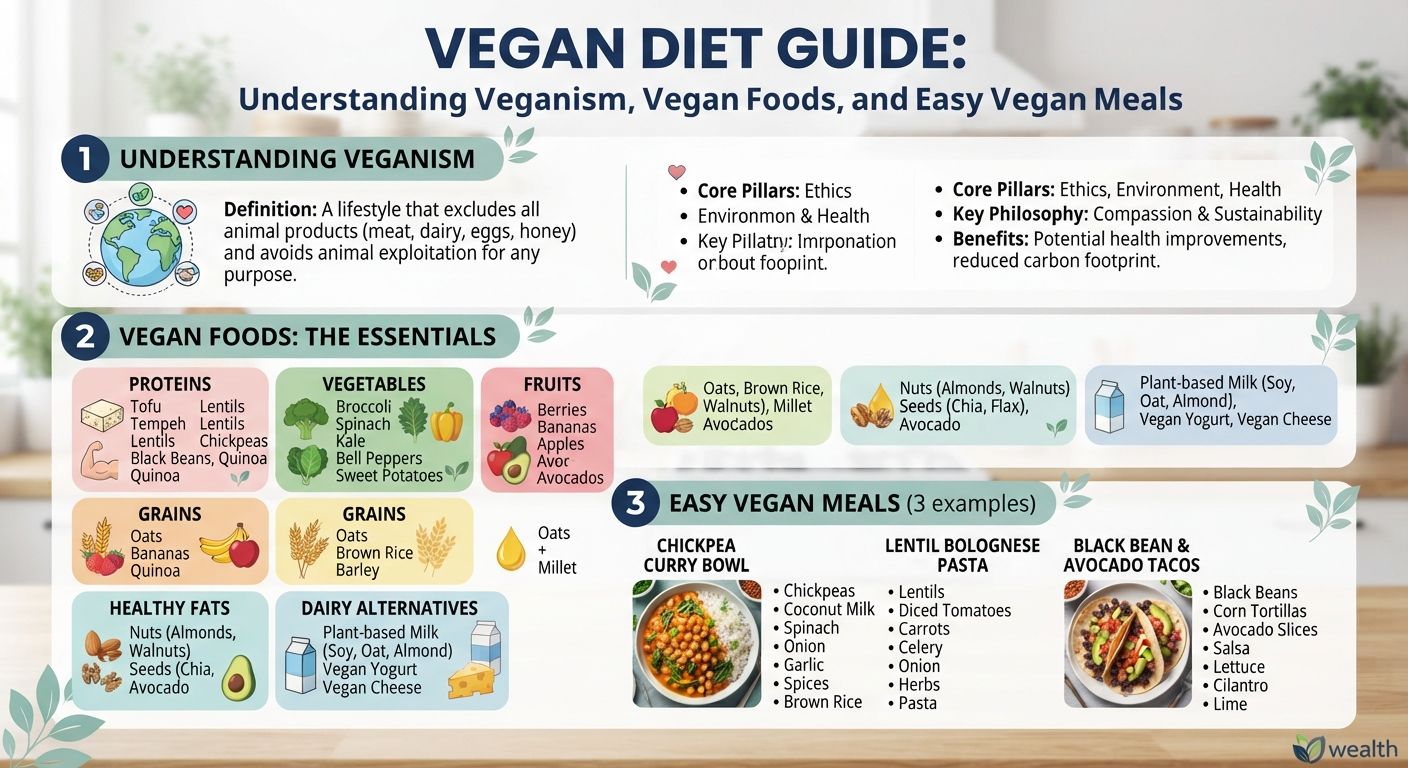
New to veganism or just curious? This guide covers what a vegan diet really involves, the best vegan foods to stock up on, and simple vegan meal ideas to get started.
What Is Veganism, Really?
Veganism is often described simply as "not eating animal products," but it's really a broader lifestyle philosophy centered on avoiding animal exploitation across diet, clothing, and other consumer choices. For most people exploring veganism, the starting point is dietary — cutting out meat, dairy, eggs, and other animal-derived ingredients in favor of plant-based foods.
People come to veganism for a range of reasons: health, environmental concerns, animal welfare, or simply curiosity about trying something new. Regardless of the motivation, understanding how to build a nutritionally complete vegan diet is the key to making it sustainable long-term.
What Does a Vegan Diet Include?
A vegan diet excludes all animal products, but it's far more varied than many people expect. Core vegan foods include:
- Vegetables and fruits — the foundation of any plant-based diet
- Legumes — beans, lentils, chickpeas, and peas, which are major protein sources
- Whole grains — brown rice, quinoa, oats, farro, and barley
- Nuts and seeds — almonds, walnuts, chia seeds, flaxseeds, and hemp seeds
- Plant-based proteins — tofu, tempeh, seitan, and edamame
- Plant milks and dairy alternatives — soy, oat, almond, and coconut-based products
- Healthy plant fats — avocado, olive oil, and nut butters
Common Nutrients to Watch on a Vegan Diet
While a well-planned vegan diet can meet nutritional needs, a few nutrients require extra attention since they're less abundant — or less bioavailable — in plant foods:
- Vitamin B12 — Found almost exclusively in animal products; most vegans need a fortified food source or supplement.
- Iron — Plant-based (non-heme) iron is less easily absorbed; pairing iron-rich foods like lentils and spinach with vitamin C sources can improve absorption.
- Omega-3 fatty acids — Flaxseeds, chia seeds, walnuts, and algae-based supplements can help fill this gap, since the plant-based omega-3 form converts to the more usable forms less efficiently than fish-derived sources.
- Calcium — Fortified plant milks, tofu made with calcium sulfate, and leafy greens like kale and bok choy are good sources.
- Zinc and iodine — Whole grains, legumes, and iodized salt or seaweed can help meet these needs.
This doesn't mean a vegan diet is inherently deficient — it simply requires more intentional food choices than a diet that includes animal products by default.
Easy Vegan Meals to Get Started
Transitioning to veganism doesn't require complicated recipes. Some approachable vegan meal ideas include:
Breakfast:
- Overnight oats made with plant milk, chia seeds, and fresh fruit
- Tofu scramble with vegetables and turmeric
- Smoothie bowls with plant-based protein powder, spinach, and berries
Lunch:
- Chickpea salad sandwiches with vegan mayo
- Buddha bowls with quinoa, roasted vegetables, and tahini dressing
- Lentil soup with crusty whole-grain bread
Dinner:
- Stir-fried tofu and vegetables over brown rice
- Black bean tacos with avocado and salsa
- Pasta with lentil-based marinara and nutritional yeast
Snacks:
- Hummus with vegetable sticks
- Trail mix with nuts, seeds, and dried fruit
- Roasted chickpeas
Vegan Substitutes for Common Ingredients
One of the easiest ways to adapt favorite recipes to a vegan diet is learning simple ingredient swaps:
| Traditional Ingredient | Vegan Substitute |
|---|---|
| Butter | Vegan butter or coconut oil |
| Milk | Soy, oat, or almond milk |
| Eggs (in baking) | Flax egg (ground flaxseed + water) or mashed banana |
| Honey | Maple syrup or agave nectar |
| Ground beef | Lentils, mushrooms, or plant-based crumbles |
| Cheese | Nutritional yeast or plant-based cheese alternatives |
Tips for Transitioning to Veganism
- Start gradually — Shifting one meal at a time can make the transition feel more manageable than an overnight switch.
- Explore cuisines that are naturally plant-forward — Many Indian, Middle Eastern, and Southeast Asian dishes are naturally vegan or easily adapted.
- Read ingredient labels carefully — Animal-derived ingredients like gelatin, casein, and whey can appear in unexpected packaged foods.
- Batch cook staples — Preparing grains, legumes, and roasted vegetables in advance makes building vegan meals throughout the week much faster.
- Don't aim for perfection immediately — Even reducing animal product consumption gradually can be a meaningful and sustainable approach for many people.
Common Misconceptions About Veganism
- "Vegan food is bland." With the right herbs, spices, and cooking techniques, plant-based meals can be just as flavorful as any other cuisine.
- "You can't get enough protein." Legumes, tofu, tempeh, seitan, and even whole grains provide meaningful protein when eaten across a varied diet.
- "Vegan diets are automatically healthy." Highly processed vegan snacks and meat substitutes exist too — whole-food-based choices matter more than the vegan label alone.
The Bottom Line
A vegan diet is built around a wide variety of vegetables, legumes, whole grains, nuts, and plant-based proteins — far more diverse than the common misconception of "just salad." With some attention to key nutrients like B12, iron, and omega-3s, veganism can be a nutritious and sustainable way of eating. Whether you're fully committed to veganism or simply exploring more plant-based meals, starting with a few easy recipes and gradual swaps makes the transition far more approachable.