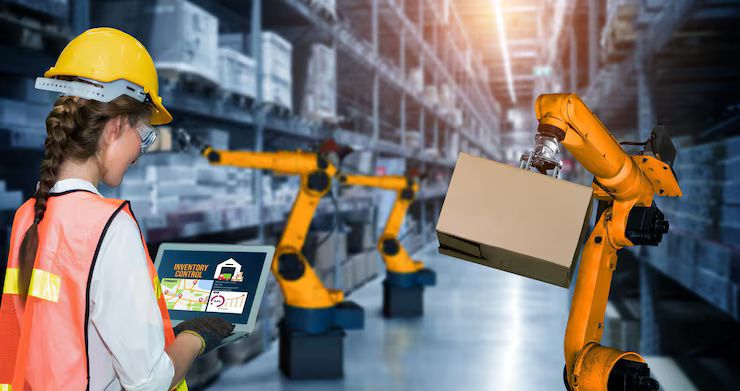
Warehouse automation refers to the use of technology, systems, and software to perform warehouse operations with minimal human intervention. It includes automated storage, retrieval, sorting, picking, packing, and inventory management processes. These systems are designed to improve efficiency, accuracy, and scalability in logistics and supply chain operations.
In recent years, warehouse automation has become increasingly important due to the rapid growth of e-commerce, rising customer expectations for faster deliveries, and the need to optimize operational costs. Businesses are investing in technologies such as robotics, artificial intelligence (AI), and warehouse management systems (WMS) to streamline processes and reduce manual errors.
This comparison between manual and automated warehouse systems is relevant today because organizations must balance cost, efficiency, and scalability. Trends such as same-day delivery, global supply chain disruptions, and digital transformation are driving the adoption of automation. Understanding warehouse automation helps businesses make informed decisions and remain competitive in a dynamic logistics environment.
Who It Affects and What Problems It Solves
Warehouse automation affects multiple stakeholders, including logistics companies, e-commerce businesses, manufacturers, and distribution centers. It also impacts warehouse workers, whose roles are shifting from manual handling to system monitoring and technical management.
Retailers benefit from faster order fulfillment and improved inventory accuracy, while customers experience quicker delivery times and better service reliability. Supply chain managers gain real-time visibility into operations, enabling better decision-making.
Problems It Solves
- Manual Errors: Automation reduces picking and inventory inaccuracies
- Slow Order Processing: Speeds up order fulfillment and delivery timelines
- Labor Shortages: Reduces dependency on manual workforce
- Inventory Mismanagement: Provides real-time tracking and visibility
- Operational Inefficiencies: Optimizes workflows and resource utilization
- Scalability Challenges: Enables businesses to handle increased demand
Warehouse automation addresses key challenges in modern logistics, improving both operational efficiency and customer satisfaction.
Recent Updates and Industry Trends
The warehouse automation sector has experienced significant advancements over the past year:
- Increased Use of Robotics: Autonomous mobile robots (AMRs) are widely used for picking and transportation
- AI and Data Analytics Integration: Predictive analytics improves inventory management and demand forecasting
- Cloud-Based Warehouse Management Systems: Enable real-time data access and scalability
- Micro-Fulfillment Centers: Smaller automated warehouses closer to urban areas for faster delivery
- Sustainability Focus: Energy-efficient systems and optimized routing reduce carbon footprint
- Growth in E-commerce Logistics: Continued expansion of online retail is driving automation adoption
In India, logistics infrastructure development and digital transformation initiatives are accelerating the adoption of automated warehouse solutions.
Comparison Table: Manual vs Automated Warehouse Systems
| Factor | Manual Warehouse Systems | Automated Warehouse Systems |
|---|---|---|
| Labor Requirement | High | Reduced, more skilled roles |
| Accuracy | Prone to human error | High accuracy with minimal errors |
| Speed | Slower processing | Faster order fulfillment |
| Initial Investment | Lower | Higher upfront cost |
| Operational Cost | Higher over time | Lower long-term costs |
| Scalability | Limited | Highly scalable |
| Inventory Visibility | Limited or delayed | Real-time tracking |
| Space Utilization | Less efficient | Optimized storage solutions |
| Flexibility | Moderate | High with configurable systems |
Laws, Policies, and Government Regulations
Warehouse automation is influenced by regulatory frameworks related to labor, safety, and logistics operations.
Key Regulations
- Labor Laws (India): Govern workforce safety and employment conditions in automated environments
- Industrial Safety Standards: Ensure safe operation of automated equipment and robotics
- Data Protection Regulations: Apply to digital systems handling inventory and customer data
- Logistics and Infrastructure Policies: Support development of modern warehousing facilities
Practical Guidance
- Large Enterprises: Automation helps meet compliance requirements and improve operational efficiency
- SMEs: Gradual adoption or hybrid systems can balance cost and benefits
- High-Volume Operations: Fully automated systems are more suitable
- Data Security: Businesses must ensure compliance with data protection standards
Adhering to these policies ensures safe, secure, and efficient warehouse operations.
Tools and Resources
Various tools and technologies support warehouse automation:
Software Solutions
- Warehouse Management Systems (WMS)
- Enterprise Resource Planning (ERP) systems
- Inventory management software
Automation Equipment
- Automated storage and retrieval systems (AS/RS)
- Conveyor systems
- Autonomous mobile robots (AMRs)
Digital Tools
- Barcode and RFID systems
- Real-time tracking and analytics platforms
Planning and Optimization Tools
- Demand forecasting software
- Route optimization tools
Training Resources
- Technical training programs for automation systems
- Safety and compliance certification courses
These tools help businesses implement and manage automation effectively.
Frequently Asked Questions (FAQ)
What is warehouse automation?
Warehouse automation involves using technology to perform warehouse operations with minimal human intervention.
Is warehouse automation suitable for small businesses?
Yes, small businesses can adopt partial automation or scalable solutions based on their needs and budget.
What are the main benefits of warehouse automation?
Key benefits include improved efficiency, accuracy, reduced labor costs, and faster order fulfillment.
How does automation improve inventory management?
Automation provides real-time tracking, reducing errors and improving stock visibility.
What is the future of warehouse automation?
The future includes increased use of AI, robotics, and data-driven systems for fully integrated supply chains.
Conclusion
Warehouse automation is transforming modern logistics and supply chain operations by improving efficiency, accuracy, and scalability. As businesses face increasing demand for faster delivery and cost optimization, automation provides a practical solution to meet these challenges.
Data trends indicate that automated warehouses reduce operational errors, improve inventory management, and enhance customer satisfaction. While the initial investment may be higher, long-term benefits such as reduced operational costs and improved productivity make automation a strategic choice.
For high-volume and growth-oriented businesses, warehouse automation is becoming essential. Smaller organizations can adopt phased approaches to balance cost and efficiency. Overall, automation is a key driver of innovation and competitiveness in the logistics industry.