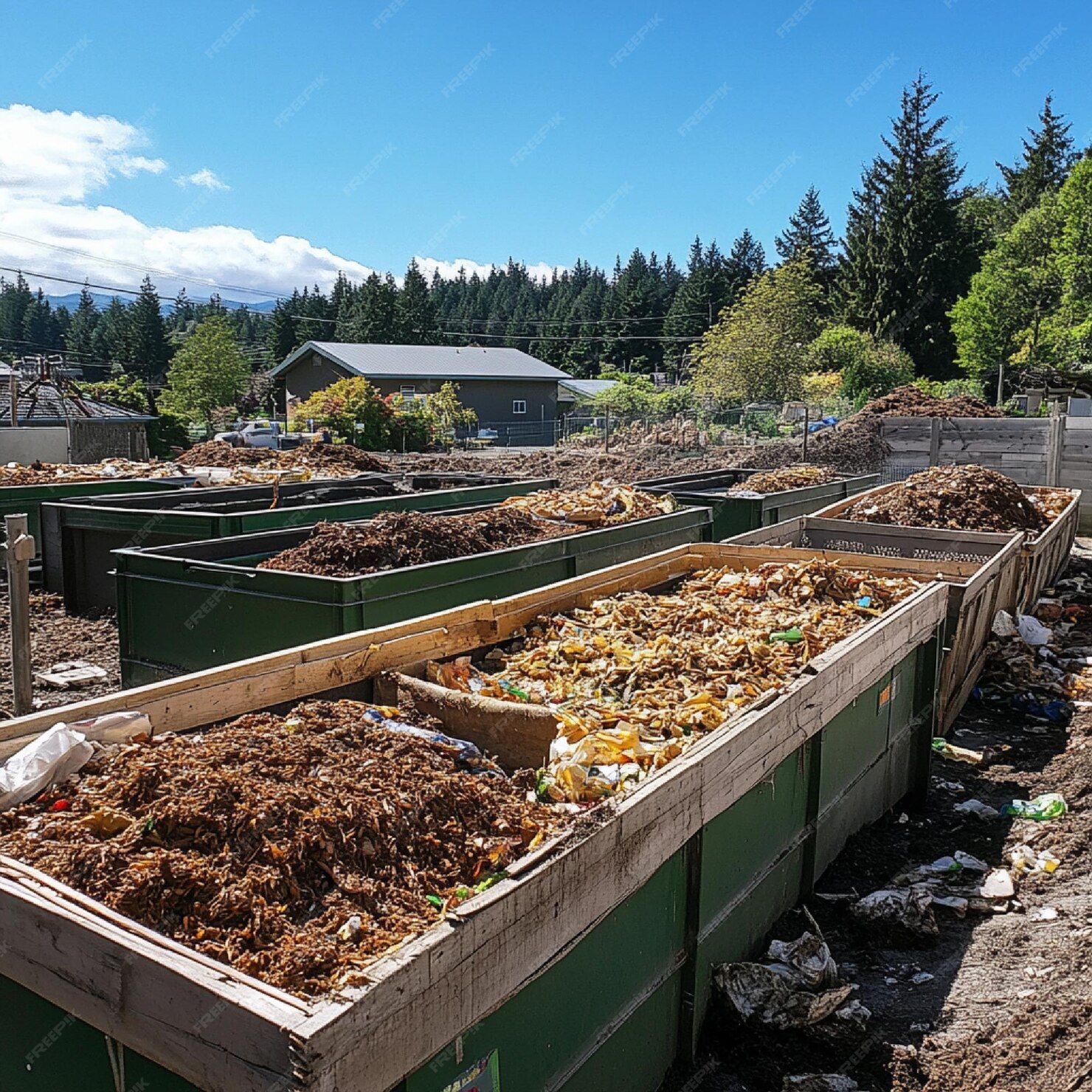
Waste composting units are systems designed to convert organic waste into nutrient-rich compost through controlled biological decomposition. Organic waste typically includes food scraps, agricultural residues, garden trimmings, and biodegradable materials generated in households, institutions, and agricultural activities.
These units create conditions that allow microorganisms such as bacteria and fungi to break down organic matter. The decomposition process produces compost, a soil-enriching material that improves soil structure, nutrient availability, and water retention.
Waste composting units exist in various forms depending on scale and environment. Small units are often used in homes, community gardens, or educational institutions. Larger systems operate in municipalities, agricultural facilities, and industrial organic waste treatment centers.
The primary purpose of these systems is to manage organic waste in a sustainable manner while reducing landfill dependency. Composting also helps close the nutrient cycle by returning valuable organic material back to the soil.
Types of Waste Composting Units
Different composting units are designed to support varying waste volumes and environmental conditions.
| Composting Unit Type | Description | Typical Use Case |
|---|---|---|
| Aerobic Composting Units | Use oxygen to accelerate microbial decomposition | Community or municipal waste systems |
| Vermicomposting Units | Use earthworms to break down organic waste | Small households and educational setups |
| In-Vessel Composting Units | Enclosed systems with controlled temperature and airflow | Urban waste treatment facilities |
| Windrow Composting Units | Organic waste arranged in long rows for aeration and turning | Agricultural and municipal composting |
Each system focuses on optimizing decomposition conditions such as temperature, oxygen, moisture, and carbon-to-nitrogen ratio.
Importance of Waste Composting Units
Role in Organic Waste Management
Organic waste represents a significant portion of municipal solid waste worldwide. When organic materials are disposed of in landfills, they decompose anaerobically and release methane, a greenhouse gas that contributes to climate change.
Waste composting units reduce this environmental impact by allowing controlled aerobic decomposition. This process produces carbon dioxide instead of methane and creates compost that can be used to improve soil fertility.
Environmental and Agricultural Benefits
Composting systems support sustainable environmental management in several ways.
| Environmental Benefit | Explanation |
|---|---|
| Landfill Reduction | Organic waste diverted from landfill sites |
| Soil Health Improvement | Compost adds nutrients and organic matter to soil |
| Carbon Cycle Support | Organic material returns to the natural nutrient cycle |
| Waste Volume Reduction | Organic waste mass decreases significantly after composting |
Farmers, urban planners, municipalities, and environmental organizations benefit from these systems. In agriculture, compost improves soil productivity and supports sustainable crop cultivation.
Urban Sustainability
Rapid urbanization has increased organic waste generation in cities. Waste composting units provide decentralized waste treatment options for residential complexes, markets, and institutional campuses.
Urban composting initiatives also promote environmental awareness and encourage responsible waste segregation practices.
Recent Updates in Waste Composting Technology
Innovations in Composting Systems (2024–2025)
Recent developments have improved the efficiency and monitoring capabilities of waste composting units.
In 2024, several waste management research programs introduced sensor-based compost monitoring systems. These technologies track temperature, moisture, and oxygen levels to ensure optimal decomposition conditions.
Automated aeration systems have also become more common in modern composting units. These systems regulate airflow to maintain microbial activity and reduce manual labor.
Growth of Smart Waste Management Platforms
Digital platforms have emerged that allow municipalities and organizations to track organic waste collection and compost production.
For example, data dashboards introduced in 2025 help waste managers monitor compost facility performance, including decomposition time, waste diversion rates, and environmental impact metrics.
Expansion of Community Composting
Many urban areas expanded community composting initiatives in 2024 and 2025. These programs encourage residents to separate organic waste for local composting systems installed in neighborhoods or residential complexes.
Educational institutions have also adopted composting units as sustainability learning tools for environmental science programs.
Laws and Policies Influencing Composting
Organic Waste Management Regulations
Many countries have introduced regulations encouraging organic waste treatment through composting and similar biological processes.
Municipal waste policies often require waste segregation at the source, separating organic waste from recyclable and non-recyclable materials.
Such regulations aim to reduce landfill waste volumes and promote sustainable waste treatment infrastructure.
Government Environmental Programs
Environmental sustainability programs frequently support composting initiatives.
For example, urban waste management guidelines in several countries promote decentralized composting systems for residential complexes and community markets.
Government sustainability frameworks often encourage compost production for agricultural and landscaping applications.
Waste Segregation and Environmental Compliance
Policies typically emphasize three key waste management principles:
| Policy Principle | Description |
|---|---|
| Waste Segregation | Organic, recyclable, and residual waste separated at source |
| Decentralized Processing | Local treatment of biodegradable waste |
| Circular Economy Practices | Reuse of organic material as soil nutrients |
Compliance with these policies helps municipalities manage waste more effectively and reduce environmental pollution.
Tools and Resources for Composting Knowledge
Several digital tools and educational resources help individuals and organizations understand waste composting systems.
Waste Management Platforms
Online platforms provide educational materials on sustainable waste practices, composting science, and environmental management strategies.
Environmental knowledge portals often publish guides explaining composting techniques, organic waste classification, and soil health benefits.
Composting Calculators
Some sustainability websites offer composting calculators that estimate:
- Organic waste generation rates
- Compost production potential
- Carbon emission reduction from composting
These tools help municipalities and organizations evaluate the environmental impact of composting programs.
Monitoring and Data Tracking Tools
Advanced composting facilities often use monitoring systems that track operational parameters.
| Monitoring Tool | Purpose |
|---|---|
| Temperature Sensors | Monitor microbial activity in compost piles |
| Moisture Meters | Maintain proper moisture levels |
| Aeration Monitoring Systems | Ensure oxygen availability |
| Waste Tracking Dashboards | Track organic waste processing metrics |
These tools support efficient compost production and help maintain environmental standards.
Frequently Asked Questions
What materials can be processed in waste composting units?
Waste composting units process biodegradable materials such as fruit and vegetable scraps, garden trimmings, leaves, coffee grounds, and agricultural residues. These materials decompose naturally when exposed to microorganisms under controlled conditions.
How long does composting typically take?
The composting process generally takes several weeks to several months depending on factors such as temperature, moisture, oxygen levels, and waste composition. Controlled systems with aeration and monitoring often accelerate decomposition.
Why is waste segregation important for composting?
Waste segregation ensures that only biodegradable materials enter composting systems. Non-organic materials such as plastics, metals, or synthetic waste can disrupt the composting process and reduce compost quality.
Do composting units produce environmental benefits?
Yes. Composting reduces landfill waste, lowers methane emissions from organic waste decomposition, and produces compost that improves soil health and agricultural productivity.
Can composting systems be used in urban environments?
Many composting systems are designed specifically for urban environments. Compact units and in-vessel systems allow residential communities, institutions, and commercial facilities to process organic waste locally.
Conclusion
Waste composting units play an essential role in sustainable waste management by converting biodegradable materials into valuable compost. These systems support environmental protection, reduce landfill waste, and promote circular resource use.
Advances in composting technology, including automated monitoring systems and smart waste management platforms, have improved efficiency and scalability. At the same time, environmental policies and waste segregation regulations continue to encourage wider adoption of composting practices.
As organic waste generation increases globally, composting units provide a practical solution for managing biodegradable waste responsibly. By integrating scientific understanding, supportive policies, and digital monitoring tools, waste composting systems contribute to healthier ecosystems and sustainable urban development.