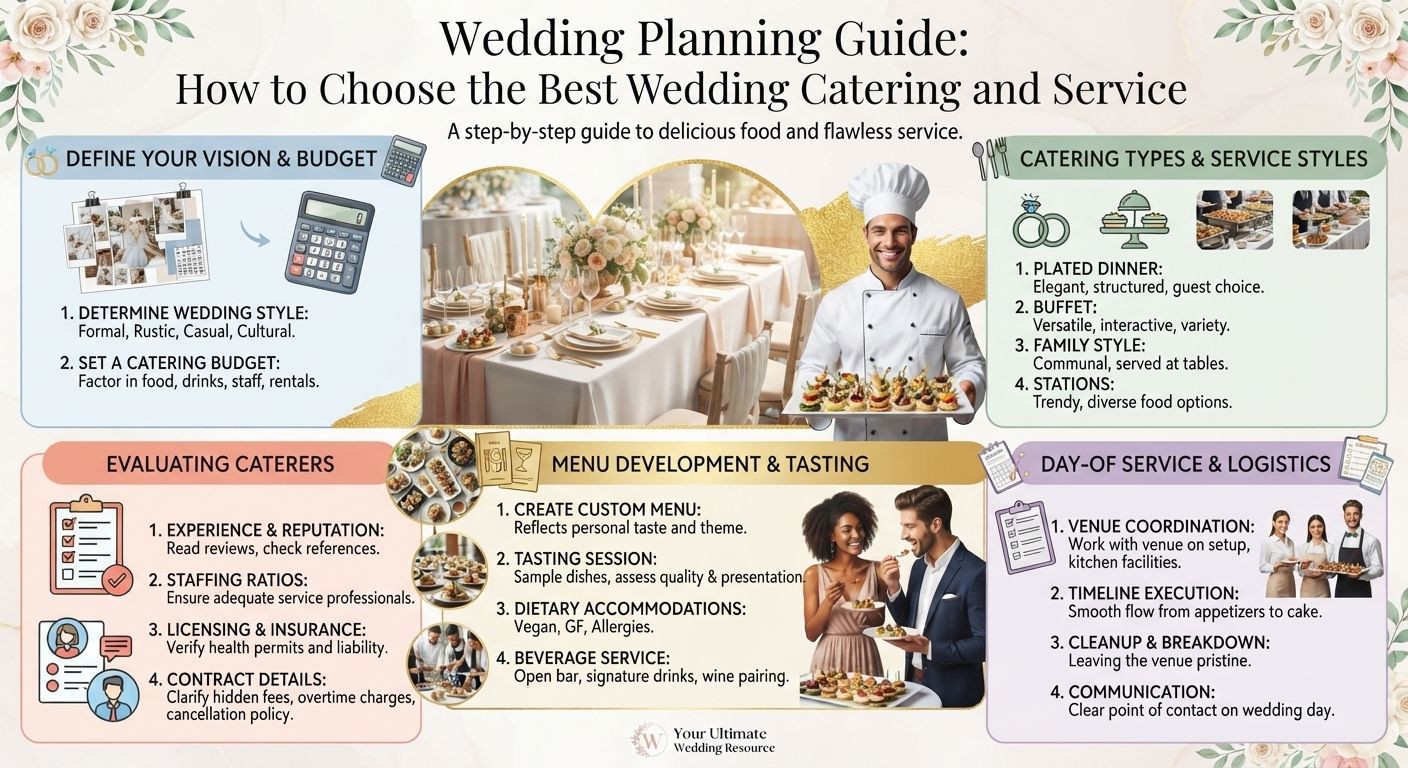
Planning a wedding? Learn how to choose the right wedding catering near you, compare wedding services, and build a wedding plan that keeps everything on track.
Where to Start With Wedding Plans
Planning a wedding involves coordinating dozens of moving parts — venue, catering, photography, decor, and timing — all while staying within budget. It's easy to feel overwhelmed early on, but breaking the process into clear categories makes it far more manageable. Among all the decisions, wedding catering is often one of the largest budget items and one of the most memorable parts of the day for guests, making it worth extra attention during the planning process.
Building a Realistic Wedding Plan Timeline
A well-structured wedding plan typically starts 9–12 months before the event for larger weddings, though smaller or more intimate weddings can come together in a shorter timeframe. A general planning order looks like:
- 9–12 months out: Set a budget, choose a date, book the venue, and start researching wedding catering options
- 6–9 months out: Finalize catering, photography, and other major vendors; begin dress or attire shopping
- 3–6 months out: Send invitations, finalize the menu, and confirm details with all vendors
- 1–2 months out: Confirm final guest count with your caterer, finalize seating arrangements, and complete final vendor payments
- Final week: Confirm timelines with all vendors, including your wedding catering team, and prepare for any last-minute adjustments
How to Choose the Right Wedding Catering
1. Start with your venue's requirements
Some venues have an in-house catering team or a list of approved caterers, while others allow you to bring in any wedding catering service of your choice. Confirming this early narrows your options significantly.
2. Consider your guest count and menu style
A formal plated dinner requires more staff and coordination than a buffet or family-style service, which can affect both pricing and the overall guest experience.
3. Schedule tastings before committing
Most wedding catering companies offer tasting sessions — this is your opportunity to evaluate not just flavor, but presentation, portion sizes, and how well the menu can accommodate dietary restrictions among your guests.
4. Ask about staffing and service style
Confirm how many servers will be present, how the meal will be served, and whether the catering team also handles setup and cleanup, since this affects your overall day-of logistics.
Finding Wedding Catering Near You
When searching for "wedding catering near me," a few strategies can help narrow down the best fit:
- Ask your venue for recommended vendors — many venues have relationships with local caterers who are already familiar with the space's kitchen setup and logistics.
- Read recent reviews focused on wedding-specific events, since catering a large event differs significantly from smaller catering jobs.
- Compare at least three quotes to understand the range of pricing and service levels available in your area.
- Confirm licensing and insurance, particularly for outdoor or non-traditional venues that may require proof of liability coverage from vendors.
Questions to Ask Wedding Caterers
Before signing a contract, it's worth clarifying:
- What is included in the per-person price (linens, plates, glassware, staff)?
- How are dietary restrictions and allergies handled?
- What is the payment schedule and cancellation policy?
- Is there a minimum guest count requirement?
- How far in advance is the final headcount needed?
- Do they provide a day-of coordinator or point of contact during the event?
Budgeting for Wedding Catering and Other Services
Catering typically represents a significant portion of the overall wedding budget, often ranging widely based on menu style, guest count, and region. A few budgeting tips:
- Get itemized quotes rather than a single bundled price, so you can see exactly what you're paying for.
- Ask about bar service separately, since alcohol packages are often priced and negotiated independently from food service.
- Factor in service fees and gratuity, which are sometimes added on top of the quoted per-person price.
- Consider off-peak dates or seasons, since wedding services — including catering — are often priced lower for weekday or off-season weddings.
Coordinating Wedding Catering With Other Vendors
Your caterer often needs to coordinate closely with other wedding services, including:
- The venue, for kitchen access, setup timing, and space logistics
- The event planner or coordinator, to align the meal service with the overall day-of timeline
- The bar service provider, if catering and bar service are handled by separate vendors
Clear communication between these vendors — ideally facilitated through a written timeline — helps avoid last-minute confusion on the wedding day itself.
The Bottom Line
A successful wedding plan comes down to organized timelines, clear vendor communication, and choosing wedding catering and services that match both your vision and your budget. Taking the time to compare options, ask detailed questions, and confirm logistics well in advance helps ensure the big day runs smoothly — leaving more room to actually enjoy the celebration rather than manage last-minute stress.