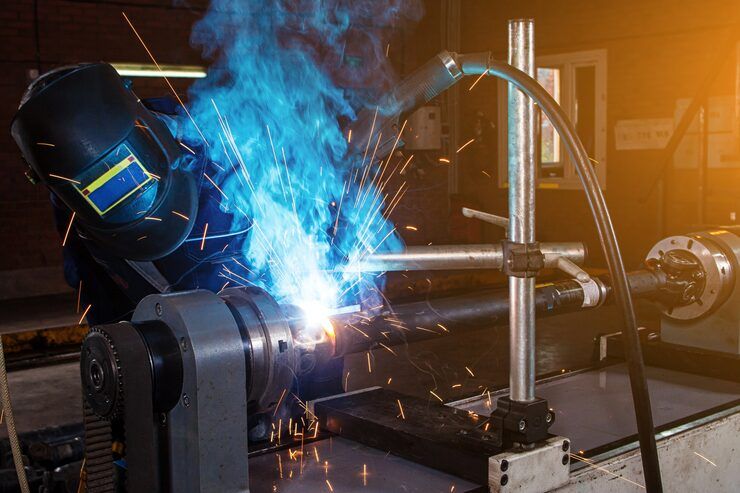
A welding machine is an industrial and technical device designed to join metals by applying controlled heat, pressure, or both. Welding exists because many modern structures and products require permanent, strong metal joints that cannot be achieved with mechanical fasteners alone. From infrastructure and transportation to manufacturing and energy systems, welding machines support the creation of durable metal connections that withstand stress, vibration, and environmental exposure.
Over time, welding equipment has evolved from basic transformer-based units to advanced inverter-based systems with precise digital controls. These developments aim to improve consistency, safety, and energy efficiency while reducing material waste. Today, welding machines are used across workshops, factories, construction sites, and training institutes, making them a foundational tool in industrial technology and fabrication processes.
Importance: Why Welding Machine Knowledge Matters Today
Understanding welding machine controls, settings, and operation is important because welding directly affects structural integrity and safety. Incorrect settings can weaken joints, cause defects, or increase workplace risks. This topic matters to technicians, engineers, safety managers, educators, and students who rely on accurate welding parameters for predictable results.
Key reasons welding machine knowledge is relevant today include:
-
Increased use of automated and semi-automated welding systems
-
Higher safety and compliance expectations in industrial environments
-
Demand for consistent weld quality in infrastructure and manufacturing
-
Growth in renewable energy, automotive, and heavy equipment sectors
By understanding how welding machines operate, users can reduce rework, minimize material damage, and maintain compliance with modern industrial standards.
Recent Updates: Changes and Trends in the Past Year
During 2024 and early 2025, several trends influenced welding machine technology and usage. Manufacturers expanded the adoption of inverter welding machines due to their compact size and improved power efficiency. Digital control panels with memory presets became more common, allowing operators to store welding parameters for repeat tasks.
Another notable update is the increased integration of monitoring features. Many modern welding systems now support real-time data tracking for current, voltage, and duty cycle. This aligns with broader Industry 4.0 trends, where connected equipment supports predictive maintenance and quality assurance.
Safety-focused updates were also observed. Enhanced thermal protection systems and automatic shutdown mechanisms gained attention in updated equipment standards released in mid-2024. These changes aim to reduce overheating incidents and electrical hazards in industrial settings.
Laws and Policies: Regulatory Influence on Welding Machines
Welding machine usage is shaped by occupational safety regulations and technical standards. In many countries, workplace safety authorities require welding equipment to meet electrical safety and operator protection guidelines. These regulations typically address insulation, grounding, and exposure to fumes and arc radiation.
Common regulatory areas include:
-
Electrical safety compliance for industrial equipment
-
Operator safety standards for arc welding and resistance welding
-
Environmental rules related to emissions and energy efficiency
Government-backed skill development programs also influence welding practices by promoting standardized training curricula. These policies ensure that welding machine operation aligns with national safety codes and recognized technical benchmarks, helping reduce workplace incidents and equipment misuse.
Tools and Resources: Helpful References for Welding Machine Operation
Several tools and resources support understanding and managing welding machines effectively. These references focus on education, calculation, and compliance rather than commercial promotion.
Useful resources include:
-
Welding parameter calculators for current, voltage, and electrode size
-
Equipment manuals and technical documentation from manufacturers
-
Welding procedure specification (WPS) templates for consistent setup
-
Online knowledge bases covering arc welding fundamentals and safety
-
Industry standards documents outlining testing and inspection methods
Example Table: Common Welding Machine Controls and Functions
| Control Type | Purpose | Practical Impact |
|---|---|---|
| Current Adjustment | Regulates heat input | Affects penetration depth |
| Voltage Control | Stabilizes arc length | Influences bead appearance |
| Duty Cycle Indicator | Shows operating limits | Prevents overheating |
| Polarity Selector | Sets current direction | Impacts weld strength |
These tools and references help users apply correct welding machine settings across different materials and thicknesses.
FAQs: Common Questions About Welding Machine Controls and Operation
What is the duty cycle in a welding machine?
The duty cycle indicates how long a welding machine can operate within a fixed time period without overheating. It is usually expressed as a percentage and helps protect internal components.
How do welding machine settings affect weld quality?
Settings such as current and voltage determine heat input and arc stability. Incorrect values may cause weak joints, excessive spatter, or incomplete fusion.
Why are inverter welding machines widely used today?
Inverter systems offer better energy efficiency, lighter design, and precise control compared to traditional transformer-based machines.
Is polarity important in welding machine operation?
Yes, polarity affects heat distribution between the electrode and the workpiece. Choosing the correct polarity improves penetration and bead consistency.
How can welding machine operation improve safety?
Using correct settings, respecting duty cycles, and following safety guidelines reduces electrical hazards, overheating, and operator exposure to arc radiation.
Additional Insight: Data Trends in Welding Machine Usage
The table below summarizes a general trend observed in industrial settings over recent years.
| Feature Adoption | Earlier Usage | Recent Usage |
|---|---|---|
| Analog Controls | High | Moderate |
| Digital Displays | Limited | High |
| Energy-Efficient Inverters | Moderate | High |
| Integrated Safety Sensors | Low | Increasing |
This shift highlights the growing focus on precision and operational safety.
Conclusion
Welding machine information covering controls, settings, and operation is essential for safe and effective metal joining. As industries adopt advanced equipment and stricter safety standards, understanding how welding machines function becomes increasingly important. Recent updates emphasize digital control, monitoring, and energy efficiency, while regulations ensure safe and standardized use.
By relying on accurate tools, technical documentation, and structured operational knowledge, users can improve weld consistency and maintain compliance with modern industrial expectations. Clear understanding of welding machine operation supports long-term reliability across construction, manufacturing, and engineering applications.