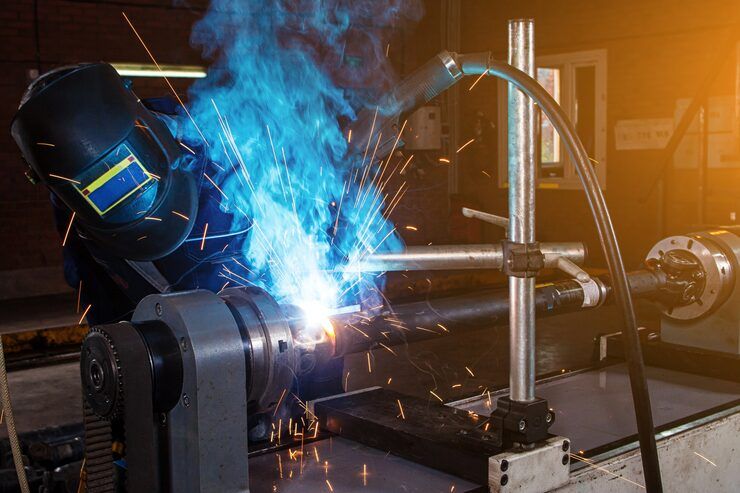
A welding machine is an industrial and technical device designed to join metals by applying controlled heat, pressure, or both. Welding exists because many modern structures and products require permanent, strong metal joints that cannot be achieved with mechanical fasteners alone. From infrastructure and transportation to manufacturing and energy systems, welding machines support the creation of durable metal connections that withstand stress, vibration, and environmental exposure.
Welding equipment has evolved from basic transformer-based units to advanced inverter-based systems with digital controls. These developments improve precision, energy efficiency, and operational safety.
Today, welding machines are widely used in construction, manufacturing, workshops, and training environments, making them essential tools in industrial processes.
Importance: Why Welding Machine Knowledge Matters Today
Understanding welding machine operation is critical because welding directly affects structural strength and safety. Incorrect settings can lead to weak joints and potential hazards.
Key Reasons for Importance
- Growth of automated and semi-automated welding systems
- Increased safety and compliance requirements
- Need for consistent weld quality
- Expansion of industrial and infrastructure projects
Proper knowledge helps reduce material waste, improve efficiency, and maintain safe working conditions.
Welding Machine Controls and Their Functions
Welding machines include various controls that regulate heat, arc stability, and operational limits.
Common Controls
- Current adjustment to control heat input
- Voltage control to stabilize the arc
- Duty cycle indicator to prevent overheating
- Polarity selector to manage current direction
Welding Machine Controls and Impact
| Control Type | Purpose | Practical Impact |
|---|---|---|
| Current Adjustment | Regulates heat input | Affects penetration depth |
| Voltage Control | Stabilizes arc | Influences weld appearance |
| Duty Cycle Indicator | Shows operating limits | Prevents overheating |
| Polarity Selector | Sets current direction | Impacts weld strength |
These controls ensure consistent and reliable welding performance.
Understanding Welding Machine Operation
Welding machine operation involves controlling electrical energy to create a stable arc for joining materials.
Key Operational Factors
- Material type and thickness
- Electrode selection
- Current and voltage settings
- Cooling and duty cycle limits
Proper adjustment of these factors ensures strong and defect-free welds.
Recent Updates: Trends and Developments
Welding technology continues to advance with improvements in efficiency and monitoring.
Key Trends
- Increased use of inverter welding machines
- Digital control panels with memory presets
- Real-time monitoring of welding parameters
- Integration with Industry 4.0 systems
- Enhanced thermal protection and safety features
These updates improve accuracy, reduce errors, and support safer operation.
Laws and Policies Affecting Welding Machines
Welding machines are regulated to ensure safety and compliance in industrial environments.
Key Regulatory Areas
- Electrical safety standards
- Operator protection guidelines
- Environmental and emission regulations
- Training and certification requirements
These policies help reduce risks and ensure proper equipment usage.
Tools and Resources for Welding Machine Operation
Various tools support accurate welding setup and operation.
Helpful Tools and Resources
- Welding parameter calculators
- Equipment manuals and documentation
- Welding procedure specification (WPS) templates
- Safety guidelines and training materials
- Industry standards documentation
These resources help maintain consistency and improve weld quality.
Data Trends in Welding Machine Usage
| Feature Adoption | Earlier Usage | Recent Usage |
|---|---|---|
| Analog Controls | High | Moderate |
| Digital Displays | Limited | High |
| Energy-Efficient Inverters | Moderate | High |
| Integrated Safety Sensors | Low | Increasing |
These trends show a shift toward digital control and improved safety systems.
FAQs: Common Questions About Welding Machines
What is the duty cycle in a welding machine?
It indicates how long a machine can operate within a given period without overheating.
How do settings affect weld quality?
Current and voltage settings control heat and arc stability, directly impacting weld strength and appearance.
Why are inverter welding machines popular?
They are energy-efficient, lightweight, and provide precise control.
Is polarity important in welding?
Yes, polarity affects heat distribution and weld penetration.
How can safety be improved?
Using correct settings, following guidelines, and maintaining equipment reduces risks.
Conclusion
Welding machines are essential tools for metal joining across industries. Understanding their controls, settings, and operation ensures safe and effective results.
Recent advancements focus on digital controls, monitoring, and energy efficiency, while regulations ensure safe use.
With proper knowledge and tools, users can achieve consistent weld quality and maintain compliance with modern industrial standards.