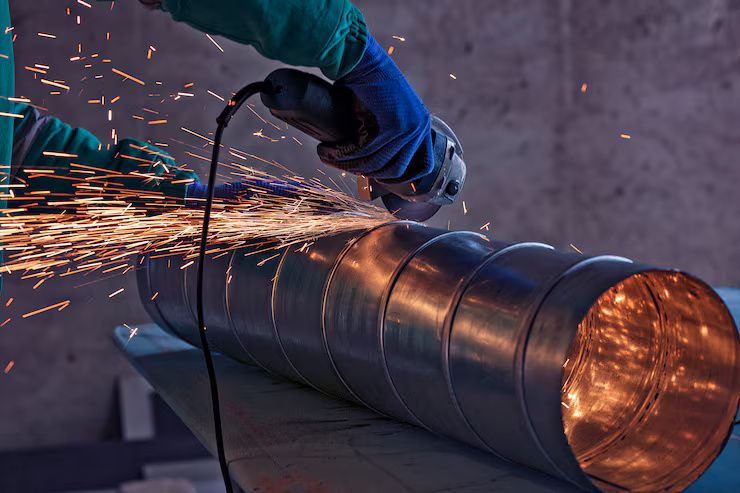
Welding is a manufacturing and fabrication process used to join materials, usually metals or thermoplastics, by applying heat, pressure, or both. The process creates a strong bond between separate parts, allowing them to function as a single structure. Welding machines are the primary equipment used to generate the energy required to melt and fuse materials together.
The history of welding can be traced back to ancient metalworking practices where blacksmiths joined metal pieces through forging. With the development of electricity and industrial machinery in the nineteenth and twentieth centuries, welding technology evolved significantly. Electrical welding systems replaced many manual methods and enabled more precise and reliable metal joining.
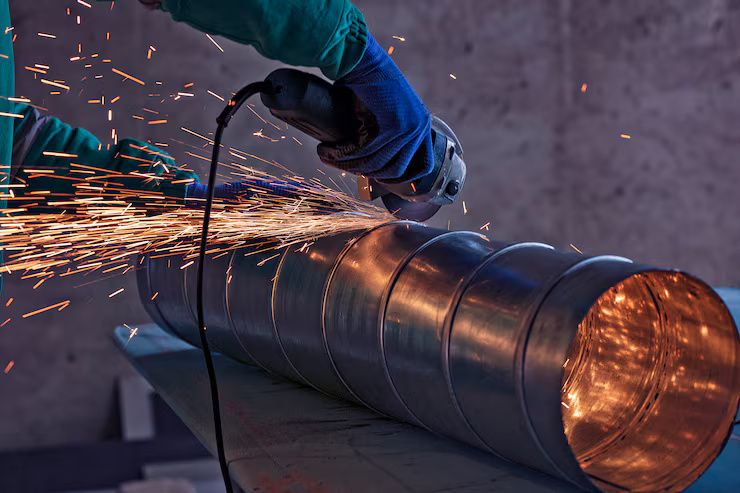
Modern welding machines are widely used across industries such as construction, automotive manufacturing, shipbuilding, aerospace engineering, and infrastructure development. These machines allow controlled heating, stable arcs, and consistent material fusion, which are essential for creating durable joints in metal structures.
As industrial processes expanded, welding technology also diversified. Different welding methods were developed to suit specific materials, thickness levels, and production environments. Today, a range of welding machines support both small-scale fabrication tasks and large industrial manufacturing operations.
Importance
Welding machines play a vital role in modern manufacturing and infrastructure development. Many industries depend on welded structures to maintain strength, safety, and reliability in equipment and buildings.
The ability to join metal components permanently allows engineers and manufacturers to construct complex structures. Bridges, pipelines, transportation equipment, and heavy machinery often rely on welded joints.
Several factors explain the importance of welding machines in industrial environments:
-
Structural integrity: Welding forms strong joints capable of supporting heavy loads in construction and engineering projects.
-
Manufacturing efficiency: Automated welding machines help maintain consistent production output in industrial assembly lines.
-
Material compatibility: Different welding techniques allow metals such as steel, aluminum, and stainless steel to be joined effectively.
-
Design flexibility: Welding allows manufacturers to create complex shapes and frameworks that would be difficult with mechanical fasteners alone.
In addition to industrial applications, welding machines are also used in repair work, equipment maintenance, and metal fabrication workshops. Their versatility makes them essential tools in many technical fields.
Recent Updates
Advancements in welding technology have focused on improving efficiency, automation, and precision. Modern welding machines now integrate digital systems and robotics to enhance production capabilities.
Integration with Robotics
Industrial automation has increased the use of robotic welding systems. These systems operate with programmed movements that maintain consistent weld quality in repetitive manufacturing processes.
Robotic welding is commonly used in automotive assembly lines where precision and speed are critical.
Digital Welding Controls
Modern machines often include digital interfaces that allow operators to adjust voltage, current, and wire feed speed with high accuracy. Digital monitoring systems help track welding parameters and ensure stable performance during operation.
Energy Efficiency Improvements
Manufacturers have introduced inverter-based welding machines that use electronic circuits to regulate electrical output more efficiently. These systems typically generate stable arcs while reducing energy consumption.
Advanced Welding Techniques
New welding processes continue to emerge in industrial research and engineering environments. Examples include laser welding, friction stir welding, and hybrid welding technologies that combine multiple energy sources to improve joint quality.
These developments reflect the ongoing evolution of welding technology as industries seek improved productivity and precision.
Laws or Policies
Welding activities in industrial environments are shaped by safety regulations and technical standards. These guidelines help ensure safe operation and consistent welding quality.
Several regulatory frameworks influence welding practices and equipment design.
Workplace Safety Regulations
Government agencies establish rules that protect workers involved in welding operations. These regulations often address ventilation, protective equipment, and electrical safety.
In the United States, workplace safety standards related to welding are overseen by the Occupational Safety and Health Administration (OSHA).
Welding Standards and Certifications
Industry organizations publish technical standards that guide welding procedures and equipment use. These standards help ensure structural reliability in manufactured products and construction projects.
Examples of organizations involved in welding standards include:
-
American Welding Society (AWS)
-
International Organization for Standardization (ISO)
-
American Society of Mechanical Engineers (ASME)
These organizations publish guidelines related to welding procedures, inspection methods, and certification requirements.
Equipment Compliance
Welding machines must meet electrical and mechanical safety standards. These requirements help prevent hazards such as electrical faults, overheating, and equipment failure during operation.
Manufacturers typically design welding equipment according to international engineering and safety specifications.
Tools and Resources
Various technical tools and educational resources support the use and understanding of welding machines. These tools help engineers, technicians, and students learn welding techniques and monitor welding performance.
Examples of commonly used resources include:
-
Welding simulation software: Digital platforms that allow users to practice welding techniques in a virtual environment.
-
Inspection and testing instruments: Tools such as ultrasonic testing devices and radiographic inspection systems used to evaluate weld quality.
-
Training manuals and textbooks: Educational materials that explain welding theory, safety procedures, and metal behavior during heating.
-
Engineering calculators: Tools used to estimate welding parameters such as heat input and joint strength.
-
Technical standards documentation: Published guidelines from professional organizations that define welding procedures and inspection methods.
These resources support both educational programs and industrial training environments.
Common Types of Welding Machines
Different welding processes require specialized machines designed to produce specific types of heat sources and welding arcs.
| Welding Machine Type | Technology Used | Typical Applications |
|---|---|---|
| Arc Welding Machine | Electric arc between electrode and metal | Construction, steel fabrication |
| MIG Welding Machine | Wire electrode with shielding gas | Automotive manufacturing |
| TIG Welding Machine | Non-consumable tungsten electrode | Aerospace, precision fabrication |
| Spot Welding Machine | Electrical resistance heating | Sheet metal assembly |
| Laser Welding Machine | Focused laser beam | Electronics and medical device production |
Each type of welding machine is suited for particular materials, joint designs, and industrial environments.
FAQs
What are welding machines used for?
Welding machines are used to join metal or thermoplastic materials by applying heat, pressure, or electrical energy. They create strong bonds that allow separate components to function as a single structure.
What are the main types of welding machines?
Common types include arc welding machines, MIG welding machines, TIG welding machines, resistance welding machines, and laser welding machines. Each type uses a different method to generate heat for joining materials.
How does a welding machine work?
A welding machine produces heat using electrical energy, gas combustion, or laser energy. This heat melts the base materials or filler metal, allowing them to fuse together as they cool and solidify.
Which industries use welding machines?
Many industries rely on welding machines, including construction, automotive manufacturing, shipbuilding, aerospace engineering, metal fabrication, and infrastructure development.
What safety precautions are important when using welding machines?
Important precautions include proper ventilation, protective clothing, eye protection, and adherence to electrical safety guidelines. Safety regulations also recommend training and regular equipment inspection.
Conclusion
Welding machines are fundamental tools used to join materials in manufacturing, construction, and engineering industries. These machines generate controlled heat and energy to create strong, durable bonds between metal components.
Different welding technologies, such as arc welding, MIG welding, TIG welding, and laser welding, support a wide range of industrial applications. Advances in automation, robotics, and digital control systems continue to shape modern welding processes.
Understanding welding machines, their types, and their role in industrial production helps explain how many essential structures and manufactured products are created.