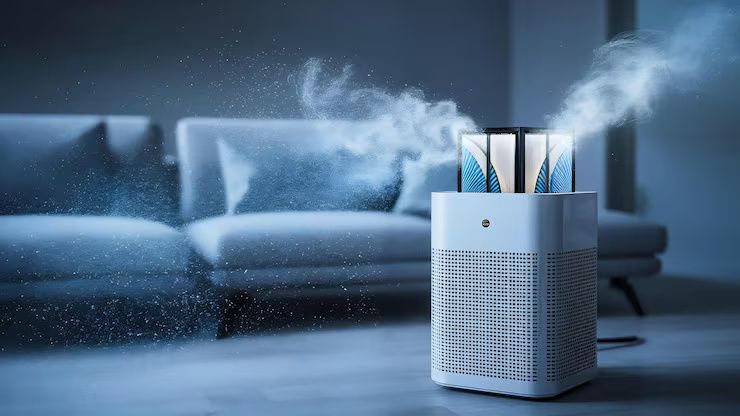
Air filtration refers to the process of removing particles, gases, and biological contaminants from air as it moves through a system. These systems exist to improve indoor air quality by reducing pollutants that people breathe every day. Airflow is the movement of air through spaces and equipment, and it determines how effectively filters can capture contaminants.
Air filtration systems are widely used in homes, offices, hospitals, factories, and public buildings. They are typically integrated into heating, ventilation, and air conditioning (HVAC) systems to clean indoor air while maintaining proper airflow.
These systems are designed to balance airflow speed, pressure, and filter efficiency. Effective air filtration depends not only on the filter type but also on how air moves through the system.
Core Elements of Air Filtration Systems
Air filtration systems generally include:
- Air filters (HEPA, mechanical, or synthetic media)
- Fans and airflow systems
- Ductwork or ventilation pathways
- Sensors and monitoring devices
Importance of Air Filtration
Air filtration has become increasingly important due to rising pollution levels and indoor air quality concerns.
Why It Matters Today
- Increased exposure to fine particles such as PM2.5
- Higher indoor pollution levels in enclosed environments
- Greater awareness of airborne health risks
- Limited natural ventilation in modern buildings
Who It Affects
Air filtration is especially relevant for:
- Children and elderly individuals
- People with respiratory conditions
- Workers in enclosed environments
- Urban populations exposed to pollution
Problems It Helps Solve
- Allergens like dust and pollen
- Smoke from traffic or cooking
- Industrial and construction particles
- Airborne microorganisms in crowded spaces
Key Concepts in Air Filtration
Understanding airflow and filtration is essential for system performance.
| Concept | Explanation |
|---|---|
| Airflow Rate | Volume of air moving through a system |
| Filter Efficiency | Ability to capture particles of specific sizes |
| Pressure Drop | Resistance caused by filters |
| Particle Size | Size of airborne particles (microns) |
Proper balance between these factors ensures effective air cleaning.
Air Filtration vs Ventilation
| Feature | Air Filtration | Ventilation |
|---|---|---|
| Purpose | Removes particles | Replaces indoor air |
| Method | Uses filters | Uses fresh air exchange |
| Role | Cleans air | Dilutes pollutants |
Both systems work together to improve indoor air quality.
Recent Updates (2024–2025)
Air filtration technology has evolved significantly in recent years.
HEPA Filter Research (2024)
Studies highlighted the effectiveness of HEPA filters in reducing fine particle concentrations in indoor environments.
Smart Filtration Systems (2025)
Sensor-based systems now adjust airflow automatically based on real-time air quality data.
Low-Resistance Filter Materials
New filter designs focus on reducing pressure drop while maintaining efficiency.
Pollution-Specific Filtration
Increased attention to filtering wildfire smoke and seasonal pollution events, especially in high-risk regions.
Laws and Policies
Air filtration is influenced by environmental and building standards.
Key Regulatory Areas
- Indoor air quality guidelines
- Building ventilation standards
- Environmental pollution regulations
- Energy efficiency requirements
Examples
- National air quality standards guide pollution control
- Global health guidelines influence filtration practices
- Green building certifications include airflow and filtration benchmarks
Tools and Resources
Various tools help evaluate and manage air filtration systems.
Technical Tools
- Indoor air quality calculators
- Air changes per hour (ACH) tools
- Filter efficiency comparison charts
- Ventilation modeling software
Monitoring Tools
- Particle counters
- Carbon dioxide monitors
- Air quality index (AQI) mobile apps
Reference Resources
- Government air quality dashboards
- Academic research publications
- Public health advisories
Data Snapshot
| Year | Focus Area | Key Insight |
|---|---|---|
| 2023 | Indoor Pollution | Increased monitoring in urban environments |
| 2024 | Filter Design | Emphasis on low-resistance materials |
| 2025 | Smart Systems | Growth of sensor-based airflow control |
This shows the shift toward system optimization and real-time monitoring.
Practical Considerations
When using air filtration systems, consider:
- Matching filter type with airflow capacity
- Regular maintenance and replacement schedules
- Integration with ventilation systems
- Monitoring indoor air quality levels
FAQs
What is air filtration?
It is the process of removing particles and pollutants from air using filters.
Are HEPA filters effective?
Yes, they can capture very fine particles when used with proper airflow conditions.
Why is airflow important?
Incorrect airflow can reduce filtration efficiency or restrict circulation.
Can indoor air be more polluted than outdoor air?
Yes, pollutants can accumulate indoors due to limited ventilation.
Does higher filtration always improve air quality?
No, filtration must be balanced with airflow and ventilation.
Conclusion
Air filtration systems are essential for maintaining clean and healthy indoor environments. By removing airborne pollutants and supporting airflow management, they help reduce exposure to harmful particles.
Recent advancements such as smart sensors, improved filter materials, and stronger policy focus have enhanced system effectiveness. These developments highlight the importance of combining filtration, ventilation, and energy efficiency.
Understanding airflow, filter performance, and system design helps ensure effective air quality management. As awareness continues to grow, air filtration remains a key component of modern environmental health practices.