Automated plastic injection molding machines have become central to high-volume manufacturing where repeatable part quality, controlled cycle times, and coordinated production steps are essential.
Modern systems combine injection molding equipment with sensors, robotics, programmable controls, and automated material handling.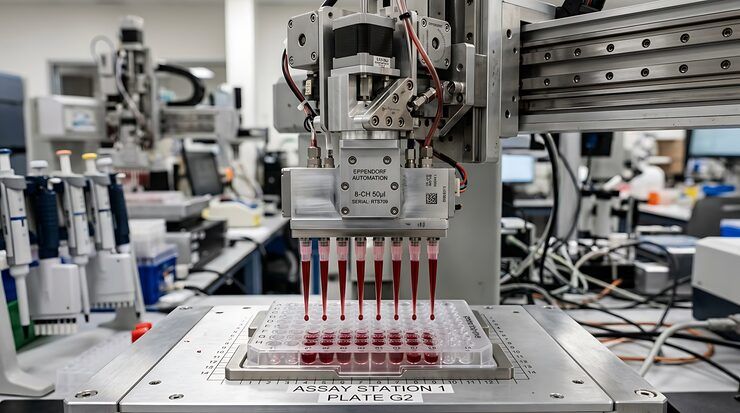
Manufacturing environments increasingly connect molding machines with auxiliary equipment rather than treating the press as an isolated production unit. This allows material preparation, mold operation, part removal, inspection, and production monitoring to work as a coordinated workflow.
Understanding this workflow helps explain how automation changes injection molding operations. It also clarifies which machine functions are automated, how production data is used, and where human operators remain important in a modern molding environment.
How an Automated Injection Molding Workflow Is Organized
A plastic injection molding cycle begins before molten polymer enters the mold. Material must be prepared, transported, and introduced into the molding system under controlled conditions.
In an automated production cell, several connected stages typically work together:
- Resin preparation and drying
- Material conveying
- Plasticizing and injection
- Mold clamping and opening
- Part ejection or robotic removal
- Inspection and process monitoring
- Part handling and downstream operations
The exact arrangement depends on the component, polymer, mold design, production volume, and required level of automation.
The injection molding machine remains the central control point, but surrounding equipment can perform many repetitive tasks. Communication between these systems allows the production cell to operate with fewer manual interventions.
Material Preparation Sets the Foundation
Plastic resin characteristics directly affect molding performance. Moisture-sensitive materials may require controlled drying before entering the injection unit, while other polymers may need appropriate storage and conveying conditions.
Automated material handling systems can move resin from storage to drying equipment and then toward the molding machine. Conveyors, vacuum loaders, dryers, and material-control systems can coordinate these stages.
Material preparation is not simply a logistics task. Incorrect moisture levels, contamination, inconsistent material supply, or unsuitable drying conditions can influence surface appearance, mechanical properties, dimensional stability, and processing behavior.
For this reason, modern production workflows often monitor material conditions before molding begins.
The Injection Cycle and Automated Machine Control
Once prepared resin reaches the molding machine, the injection cycle follows a controlled sequence.
Plastic pellets enter the barrel, where heat and mechanical shear transform them into a molten material. A reciprocating screw then moves the material toward the mold and injects it into the cavity under controlled pressure and speed.
After filling, the machine applies holding pressure while the material begins to solidify. Cooling follows, and the mold eventually opens so the finished component can be removed.
Modern machine controllers coordinate parameters such as:
- Injection speed
- Injection pressure
- Screw position
- Holding pressure
- Barrel temperature
- Mold temperature
- Cooling duration
- Cycle timing
The objective is not simply to automate movement. It is to maintain a repeatable process window so that parts remain consistent across production cycles.
Robotics Extend Automation Beyond the Molding Machine
Part removal is one of the most visible applications of automation in injection molding.
A robotic arm can enter the mold area after the mold opens, grip or extract the molded component, and transfer it to a predetermined location. Depending on the production cell, the robot may also separate runners, orient components, or place parts onto a conveyor.
Automation becomes particularly useful when components are produced repeatedly over long production runs. A programmed robot can perform the same movement pattern cycle after cycle while maintaining controlled positioning.
However, robot selection depends on the part and mold. Factors such as payload, reach, cycle time, gripping method, component geometry, and available space influence the appropriate configuration.
Integrated Quality Monitoring
Automation also changes how manufacturers identify process variation.
Sensors can monitor machine conditions and production parameters throughout the molding cycle. Depending on the system, information may include pressure profiles, temperature readings, screw position, cycle duration, and other process variables.
These measurements can help production teams identify deviations before they become widespread quality problems.
For example, a gradual change in injection pressure may indicate a developing process issue. A change in cycle time may also indicate equipment, material, cooling, or mold-related variation.
Automated monitoring does not eliminate the need for quality personnel. Instead, it gives them more structured information for investigating production conditions.
From Single Machines to Connected Production Cells
Modern injection molding automation increasingly involves complete production cells rather than standalone machines.
A connected cell may include an injection molding machine, robot, material dryer, conveyor, mold-temperature controller, granulator, inspection equipment, and manufacturing data system.
The equipment can communicate through industrial control interfaces, allowing different parts of the workflow to operate in coordination.
For example, the molding machine can signal when the mold is ready for part removal. The robot can respond to that condition, remove the component, and transfer it to the next stage. Auxiliary systems can continue preparing material while the molding cycle proceeds.
This coordination reduces unnecessary waiting between production stages.
Process Data Supports More Consistent Production
Data collection is becoming an increasingly important part of automated molding.
Instead of relying entirely on visual observation, production teams can examine historical process information. Trends in pressure, temperature, cycle duration, machine alarms, and other parameters can provide insight into changes occurring during production.
Manufacturing execution systems and industrial data platforms can also connect machine-level information with broader production records.
This creates opportunities for statistical process control and condition-based maintenance. When abnormal patterns appear, maintenance teams may investigate equipment before a major failure interrupts production.
The value of data depends on how it is interpreted. Collecting thousands of measurements does not automatically improve manufacturing. Useful systems identify meaningful variables and connect them to specific production decisions.
Where Human Operators Still Matter
A highly automated molding cell still requires skilled people.
Operators and technicians remain responsible for activities such as mold changes, process setup, material verification, troubleshooting, quality checks, equipment inspection, and production adjustments.
Automation handles predictable sequences effectively, but manufacturing environments frequently encounter conditions that require judgment.
A technician may need to determine whether a defect originates from material moisture, mold temperature, injection parameters, mechanical wear, contamination, or another process variable.
This makes workforce expertise an important part of automated manufacturing rather than something automation simply removes.
Designing an Efficient Automated Workflow
Automation should be designed around the entire production process rather than added to individual machines without considering upstream and downstream requirements.
A practical workflow considers several connected factors:
Part design: Geometry, wall thickness, tolerances, and material characteristics influence mold and process requirements.
Mold design: Cooling channels, ejection mechanisms, cavity arrangement, and runner configuration affect cycle behavior.
Machine capability: Clamping force, injection capacity, control functions, and available interfaces must match the application.
Automation equipment: Robot reach, payload, gripping method, and cycle speed need to correspond with the molding process.
Material handling: Drying, conveying, blending, and storage must maintain appropriate material conditions.
Quality control: Inspection methods should identify the characteristics that matter most for the finished component.
A well-designed cell treats these elements as one workflow rather than unrelated pieces of equipment.
Common Challenges in Automated Molding
Automation introduces its own operational considerations.
Integration can become complicated when machines and auxiliary systems use different control architectures. Incorrect synchronization can create delays, alarms, or unsafe operating conditions.
Another challenge is process stability. Automation can repeat a process very accurately, but it can also repeat an incorrect process consistently. Initial setup and validation therefore remain essential.
Maintenance is another consideration. Robots, sensors, conveyors, controllers, and auxiliary equipment all require inspection and servicing. A failure in one component can interrupt an otherwise functional production cell.
Training is equally important. Personnel need to understand both conventional molding principles and the automated systems controlling the production environment.
Frequently Asked Questions
What makes an injection molding machine automated?
Automation can involve programmable machine controls, robotic part removal, automatic material handling, sensor-based monitoring, and coordinated auxiliary equipment. The level of automation varies between production cells.
Can automation improve injection molding consistency?
It can improve repeatability by controlling machine movements, cycle parameters, material handling, and part removal. However, consistency still depends on proper machine setup, mold condition, material control, and process management.
What role does a robot play in injection molding?
A robot can remove molded parts, separate components from runners, orient parts, transfer them between production stages, and perform other repetitive handling tasks.
Is human supervision still required?
Yes. Skilled personnel remain important for setup, quality verification, troubleshooting, maintenance, mold changes, and process optimization.
Conclusion
An automated plastic injection molding machine is best understood as part of a coordinated manufacturing system. Modern workflows connect material preparation, machine control, robotic handling, quality monitoring, and production data into a structured sequence.
The strongest automation strategies focus on process stability rather than automation for its own sake. When machine capabilities, molds, materials, robotics, monitoring systems, and skilled personnel are properly coordinated, manufacturers can create production workflows that are more repeatable, measurable, and responsive to process variation.