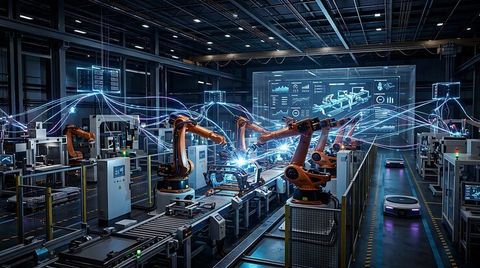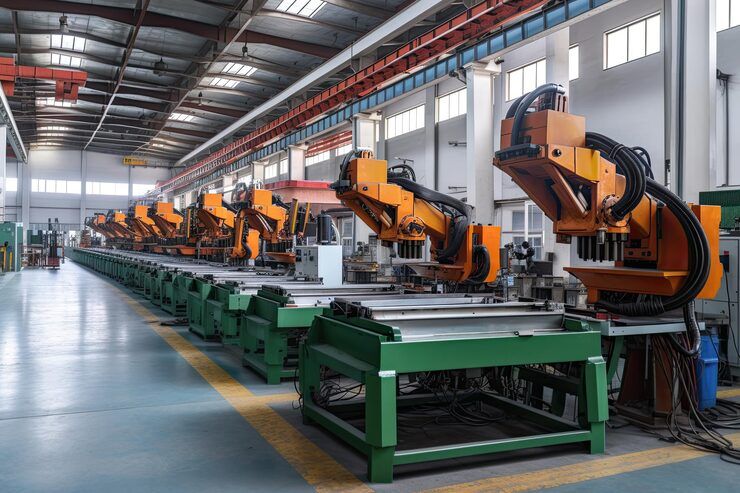
China's industrial machinery refers to equipment used to make goods, process materials, move products and operate industrial facilities. It includes machine tools, robots, pumps, compressors, construction and agricultural machinery, textile equipment, power systems and specialized production lines. These machines support products used in homes, transport, healthcare and construction.
The sector grew alongside China's industrial expansion. Domestic engineering, investment, research and international trade expanded the range of machinery produced. Manufacturers now supply domestic factories and overseas markets, although capabilities vary across product categories and producers.
Main types of industrial machinery
General-purpose machinery includes motors, pumps, valves and compressors used across industries. Special-purpose machinery is designed for tasks such as food processing, textiles, mining, packaging or semiconductor production. Machine tools shape materials, while robots handle repeated movements, inspection and material transfer.
Construction and agricultural machinery, including excavators, tractors and harvesters, support infrastructure and food production. Electrical machinery and industrial controls help factories manage energy.
Importance
Industrial machinery affects daily life by helping produce food packaging, clothing, appliances, building materials, vehicles, electronics and medical equipment. Reliable equipment supports consistent output, less material waste and more precise production.
It matters to workers, factory owners, farmers, infrastructure planners and consumers. Mechanization can reduce physically demanding tasks, while sensors may detect faults before production is interrupted. Properly designed equipment can also improve the handling of heavy loads, heat and hazardous materials.
Challenges the sector addresses
Factories face ageing machines, inconsistent quality, high energy use, limited capacity and shortages of skilled technicians. Digital monitoring, precise controls and improved energy performance may address some of these issues, but upgrades require planning, training, compatible software and maintenance.
Machinery also introduces risks: moving parts, electricity, pressure, heat and heavy loads can cause injuries without suitable guards and procedures. A machine's usefulness therefore depends on safety, durability, maintenance needs and compliance with technical standards.
Recent Updates
From 2024 to 2026, China's machinery sector has been shaped by equipment renewal, automation, digital transformation and energy efficiency. A national initiative encouraged industrial enterprises to modernize ageing machinery and adopt digital design and production processes, linking upgrades with productivity, lower emissions and safer operations.
A 2025 machinery-sector plan set out measures for digital upgrades, robots, machine tools, intelligent inspection and industrial software. It also encouraged specialized manufacturing clusters and stronger technical capabilities, signalling greater emphasis on precision, connectivity and performance.
Official figures show activity across several equipment categories. In 2025, China's industrial robot output rose by 28 percent compared with the previous year. The value added of general-purpose machinery manufacturing increased by 8.0 percent, while special-purpose machinery manufacturing increased by 4.3 percent. In the first half of 2026, the value added of intelligent equipment manufacturing grew by 16.7 percent year on year.
| Machinery category or measure | Reported change | What it indicates |
|---|---|---|
| Industrial robot output, 2025 | +28% year on year | Greater production of factory robots |
| General-purpose machinery value added, 2025 | +8.0% year on year | Growth in machinery used across industries |
| Special-purpose machinery value added, 2025 | +4.3% year on year | Growth in equipment designed for specific tasks |
| Intelligent equipment manufacturing value added, first half of 2026 | +16.7% year on year | Faster expansion of smart equipment activity |
These figures describe different measures and periods, so they should not be treated as direct comparisons of factory output. They do, however, show the importance of automation and specialized machinery in the sector's recent development.
Digital and environmental priorities
Digital systems connect design, production, inspection and machine monitoring. Factories may combine computer-aided design, production software, sensors and digital quality records, although adoption varies by company and industry.
Energy performance also matters. Motors, pumps, fans, compressors, boilers and heating systems can consume substantial energy. Renewal plans and efficiency standards have increased attention to electricity use, emissions, material recovery and equipment life.
Laws or Policies
China's industrial machinery sector operates within rules covering workplace safety, product quality, environmental protection, energy use and technical standards. The exact requirements depend on the machine, its intended use, the materials it handles and whether it belongs to a regulated category.
Workplace and equipment safety
The Work Safety Law requires production and operating entities to establish safety responsibilities, procedures and training. It also provides for the removal of technologies and equipment that create serious safety risks. In practice, businesses need to assess hazards such as exposed moving parts, electrical faults, unstable loads, excessive pressure and unsafe maintenance access.
Certain equipment is subject to additional controls under China's Special Equipment Safety Law. Its scope includes boilers, pressure vessels, pressure pipelines, elevators and lifting machinery. Equipment within the regulated catalogue may require specific production, installation, inspection, registration or operating procedures. Not every industrial machine falls within this category.
Energy and technical standards
China's Energy Conservation Law provides a basis for mandatory energy-efficiency standards for energy-using products and equipment. Industrial operators may need to consider applicable standards when selecting, installing or upgrading motors, pumps, compressors and other energy-consuming machinery. Environmental rules can also affect emissions, noise, waste handling and the operation of industrial facilities.
National and industry standards set technical requirements for safety, performance, testing and product quality. For machinery entering or leaving China, customs classification, documentation and any applicable conformity or export-control requirements may also need to be considered. Requirements differ by product, so a general description of a machine is not enough to determine its full regulatory status.
Tools and Resources
Tools help people understand China's industrial machinery market and assess equipment. Computer-aided design (CAD) creates component drawings; computer-aided manufacturing (CAM) turns designs into production instructions; and manufacturing execution systems (MES) track factory-floor activity.
Enterprise resource planning (ERP) platforms coordinate inventory, production schedules and accounting. Sensors can record vibration, temperature, energy use and operating hours, helping maintenance teams identify unusual changes and plan inspections.
Useful information resources include:
The Ministry of Industry and Information Technology (MIIT), for industrial policy announcements and manufacturing plans.
The National Bureau of Statistics of China, for official industry and production data.
The State Administration for Market Regulation (SAMR), for market regulation and standards-related information.
China Customs, for customs procedures and product classification information.
Technical manuals, equipment specification sheets, maintenance logs and workplace risk-assessment templates, which help document the operating requirements of individual machines.
An equipment review considers purpose, capacity, energy use, accuracy, safety features, parts availability, operator training and compatibility with existing systems. These factors reveal more than a model name or headline specification.
FAQs
What is included in China's industrial machinery sector?
China's industrial machinery sector includes machine tools, industrial robots, pumps, compressors, construction and agricultural equipment, power systems and specialized production machinery. The range covers equipment used in factories, infrastructure, farming, energy and material processing.
Why is China's industrial machinery industry important?
It supports the production of goods and the operation of essential facilities. Machinery helps manufacturers process materials, maintain product consistency, automate repetitive tasks and support construction, transport, agriculture and electronics.
What are the recent trends in China's industrial machinery?
Recent trends include wider use of industrial robots, digital factory systems, intelligent inspection, advanced machine tools and energy-efficient equipment. Government plans announced in 2024 and 2025 have also emphasized equipment renewal and digital transformation.
Which rules apply to industrial machinery in China?
Relevant rules may include the Work Safety Law, the Energy Conservation Law, product standards and environmental requirements. Boilers, pressure vessels, elevators and lifting machinery may also fall under the Special Equipment Safety Law and its related technical rules.
How can a business assess industrial machinery from China?
An assessment can compare technical specifications, intended workload, safety documentation, applicable standards, energy requirements, maintenance needs and compatibility with existing systems. Product-specific regulatory checks are also important for equipment used in controlled or high-risk settings.
Conclusion
China's industrial machinery sector supports manufacturing, infrastructure, agriculture and energy production. Recent developments emphasize automation, digital integration, equipment renewal and energy performance. Safety laws, technical standards and environmental requirements shape how machinery is designed, produced and used.