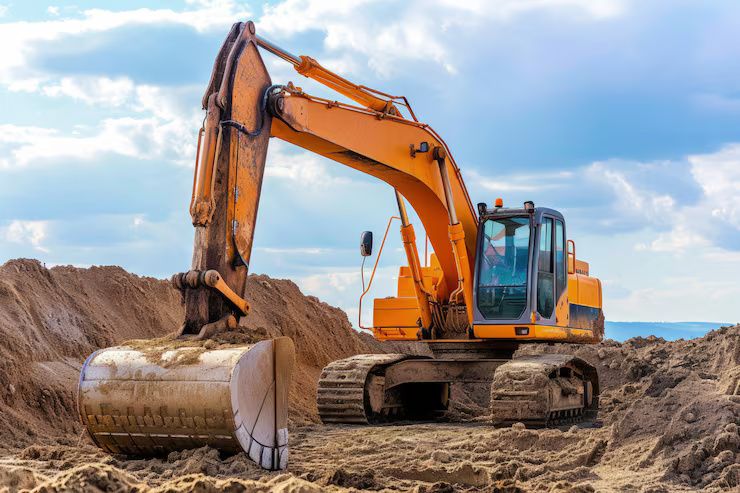
Construction equipment includes the machines, vehicles, tools, and specialized systems used to perform excavation, lifting, grading, earthmoving, material handling, concrete work, road development, and other construction activities. Modern heavy machinery combines mechanical engineering, hydraulics, electronics, automation, and digital monitoring technologies.
Construction equipment can range from compact machines used on urban projects to large earthmoving and lifting systems used on infrastructure, mining, industrial, and civil engineering projects. Equipment selection depends on site conditions, material characteristics, project requirements, operating environment, and safety considerations.
Context
What Is Construction Equipment?
Construction equipment refers to machinery and supporting systems designed to perform specific construction tasks. Some machines are multipurpose, while others are engineered for specialized applications.
Common categories include:
- Excavators
- Wheel loaders
- Bulldozers
- Motor graders
- Cranes
- Backhoe loaders
- Skid-steer loaders
- Compactors
- Forklifts
- Concrete equipment
- Asphalt equipment
- Drilling equipment
The equipment used on a project depends on the required work sequence and site conditions.
Major Types of Heavy Machinery
| Equipment Type | Primary Function | Typical Applications |
|---|---|---|
| Excavator | Digging and material handling | Foundations, trenches, earthmoving |
| Bulldozer | Pushing and grading | Site preparation and earthworks |
| Wheel Loader | Loading and transport | Aggregate and material handling |
| Motor Grader | Surface grading | Roads and site development |
| Crane | Lifting materials | Buildings and infrastructure |
| Compactor | Soil or asphalt compaction | Roads and foundations |
| Backhoe Loader | Excavation and loading | Utility and general construction |
| Concrete Mixer | Concrete preparation | Building and infrastructure |
| Asphalt Paver | Asphalt placement | Road construction |
| Drilling Rig | Ground drilling | Foundations and geotechnical work |
Excavators
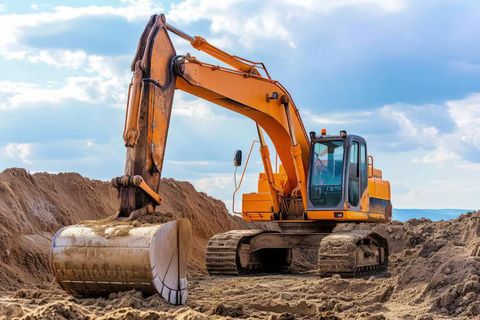
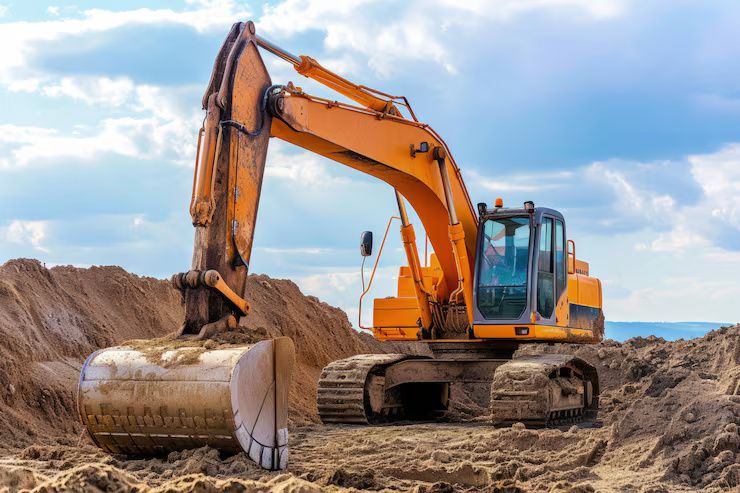
Excavators use a boom, arm, bucket, hydraulic system, and rotating upper structure to perform digging and material-handling activities.
Different attachments can expand their applications. Buckets, breakers, grapples, augers, and other tools can be selected according to the work requirement.
Bulldozers
Bulldozers use a heavy blade mounted at the front of the machine to push soil, rock, debris, and other materials.
They are commonly used for site preparation, grading, land clearing, earthmoving, and material spreading.
Wheel Loaders
Wheel loaders use a front-mounted bucket to collect, transport, and load materials. They are commonly used for aggregates, soil, construction debris, and other bulk materials.
Their articulated design allows maneuverability across many construction environments.
Cranes
Cranes are designed to lift and position heavy materials. Configurations include mobile cranes, crawler cranes, tower cranes, rough-terrain cranes, and truck-mounted cranes.
Selection depends on lifting capacity, reach, ground conditions, site restrictions, and project requirements.
Importance
Why Construction Equipment Matters
Construction machinery allows large quantities of material to be excavated, transported, lifted, compacted, processed, and placed. Mechanized equipment can perform activities that would otherwise require substantial manual effort and extended working periods.
The appropriate machine can also influence project sequencing, site logistics, and equipment utilization.
Supporting Earthmoving
Earthmoving equipment is used during excavation, grading, trenching, land preparation, and foundation work.
Excavators, bulldozers, loaders, and graders can operate as a coordinated system in large earthwork projects.
Material Handling
Construction sites frequently require movement of soil, aggregates, steel, concrete components, pipes, equipment, and other materials.
Loaders, forklifts, telehandlers, cranes, conveyors, and dump vehicles support these activities.
Road Construction
Road projects use specialized machinery for earth preparation, aggregate placement, compaction, asphalt production, paving, and surface finishing.
Equipment can include graders, rollers, asphalt plants, pavers, milling machines, crushers, and material transport vehicles.
Concrete Construction
Concrete-related equipment can include batching plants, mixers, pumps, placing booms, vibrators, and finishing machines.
Automated batching and monitoring systems can help maintain defined material proportions and production records.
Construction Technologies
Hydraulic Systems
Hydraulic systems are fundamental to many construction machines. Hydraulic pumps, valves, cylinders, motors, and control systems provide the force needed for excavation, lifting, steering, and attachment operation.
Hydraulic design influences machine responsiveness, lifting capability, and attachment compatibility.
Telematics
Construction equipment can incorporate telematics systems that collect information about machine location, operating hours, fuel or energy use, fault codes, utilization, and selected performance parameters.
Fleet managers can use this information for equipment tracking and maintenance planning.
Machine Control Systems
Modern graders, excavators, dozers, and other equipment can incorporate machine-control technologies.
Positioning systems, sensors, digital terrain models, and onboard displays can help operators understand machine position and grading requirements.
GPS and GNSS Technology
Satellite positioning technologies can support site surveying, machine guidance, fleet tracking, and earthmoving operations.
GNSS-based systems can communicate machine position relative to digital site plans or terrain models.
Electric Construction Equipment
Battery-electric and hybrid technologies are being developed for selected construction equipment categories. Electric powertrains can change machine architecture, energy management, charging requirements, and operating characteristics.
Their suitability depends on machine size, operating cycle, site infrastructure, and duty requirements.
Autonomous and Semi-Autonomous Systems
Automation technologies can support selected construction activities such as machine guidance, repetitive earthmoving, drilling, and site surveying.
Fully autonomous operation requires sophisticated perception, control, communication, safety, and site-management systems.
Manufacturing Systems
Engine and Powertrain Systems
Traditional heavy machinery commonly uses diesel engines, hydraulic transmissions, or mechanical drivetrains. Newer equipment may incorporate hybrid or electric powertrains.
Powertrain selection depends on machine size, duty cycle, terrain, emissions requirements, and energy infrastructure.
Hydraulic Components
Hydraulic cylinders, pumps, motors, valves, hoses, filters, and reservoirs form an important part of many construction machines.
Regular inspection and appropriate fluid management are important for maintaining hydraulic-system performance.
Electronic Control Units
Electronic control units can manage engine functions, transmission behavior, hydraulic systems, emissions systems, and other machine operations.
These controllers can communicate with sensors and onboard displays.
Attachments
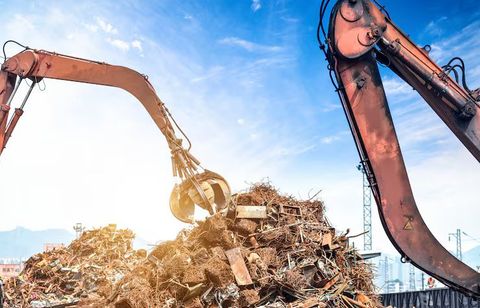
Attachments allow one base machine to perform multiple tasks. Examples include buckets, hydraulic breakers, augers, grapples, forks, blades, compactors, and specialized demolition tools.
Attachment selection should consider machine hydraulic capacity, weight limits, mounting configuration, and operating requirements.
Manufacturers and Suppliers
The construction equipment industry includes manufacturers of excavators, loaders, cranes, drilling systems, compactors, concrete equipment, road machinery, and specialized attachments.
Equipment suppliers may provide individual machines, fleet solutions, replacement components, technical documentation, and equipment support.
When evaluating construction equipment manufacturers or suppliers, organizations can examine:
- Machine specifications
- Operating capacity
- Engine or powertrain configuration
- Hydraulic performance
- Attachment compatibility
- Fuel or energy requirements
- Telematics capabilities
- Operator controls
- Safety systems
- Maintenance requirements
- Parts availability
- Regulatory compliance
The selection process should focus on the actual site conditions and project requirements rather than machine specifications alone.
Industrial Applications
Infrastructure Development
Large infrastructure projects use heavy machinery for excavation, foundation preparation, material handling, road construction, tunneling, bridge construction, and site development.
Projects may require coordinated fleets containing multiple machine categories.
Building Construction
Building projects commonly use excavators, cranes, loaders, concrete equipment, forklifts, telehandlers, compactors, and material-handling systems.
Equipment requirements change as the project moves from site preparation to structural construction and finishing.
Mining and Quarrying
Mining operations use large excavators, haul trucks, loaders, drilling rigs, crushers, conveyors, and other specialized machinery.
Equipment must be selected according to material characteristics, operating terrain, production requirements, and site conditions.
Road and Highway Construction
Road construction uses graders, compactors, milling machines, asphalt pavers, rollers, crushers, batching plants, and material-handling equipment.
Different machines perform sequential tasks from ground preparation through surface finishing.
Utility Construction
Utility projects require equipment for trenching, excavation, pipe installation, drilling, lifting, and backfilling.
Compact excavators, backhoe loaders, trenching machines, directional drilling systems, and cranes may be used depending on project conditions.
Industrial Construction
Industrial facilities such as factories, processing plants, warehouses, and energy infrastructure require heavy equipment during site preparation, structural construction, equipment installation, and material handling.
Recent Updates
Smart Construction Equipment
Connected machinery increasingly combines sensors, telematics, onboard computers, and communication systems.
These technologies can provide information about machine operation and equipment condition.
Remote Monitoring
Fleet platforms can collect information from machines operating at different locations. Remote monitoring can help managers understand operating hours, machine utilization, fault alerts, and maintenance requirements.
Electrification
Battery-electric construction machines are becoming more relevant in applications where charging infrastructure and duty cycles are compatible.
Electric machines can be particularly suitable for selected indoor, urban, or lower-noise applications, depending on the equipment category.
Artificial Intelligence
AI-based technologies are being explored for equipment diagnostics, operator assistance, site mapping, machine perception, and construction planning.
Computer vision and sensor fusion can help machines interpret aspects of their surroundings.
Digital Construction Planning
Building Information Modeling (BIM), geographic information systems, digital terrain models, and machine-control platforms can connect construction planning with equipment operation.
Digital project information can help coordinate site activities and machine guidance.
Fleet Analytics
Fleet-management systems can analyze machine utilization, operating hours, idle periods, fuel or energy consumption, and fault information.
These analytics can help organizations understand equipment usage and plan maintenance activities.
Laws or Policies
Construction Equipment Safety
Construction machinery is subject to occupational safety requirements covering areas such as machine guarding, operator protection, lifting operations, visibility, maintenance, and safe operating procedures.
Specific requirements vary according to equipment type and jurisdiction.
Crane and Lifting Requirements
Cranes and lifting equipment generally require additional inspection, operating procedures, load management, and operator competency controls.
Applicable standards and regulations should be identified before equipment deployment.
Environmental Regulations
Construction equipment can be subject to emissions, noise, fuel handling, waste, and environmental requirements.
Requirements vary according to machine type, project location, and local regulations.
Operator Training
Organizations should establish appropriate training and competency procedures for personnel operating heavy machinery.
Training requirements depend on the machine, task, workplace hazards, and jurisdiction.
Equipment Inspection
Pre-use inspections and scheduled maintenance can identify mechanical, hydraulic, electrical, and structural issues.
Inspection intervals should follow equipment documentation, organizational procedures, and applicable regulatory requirements.
Tools and Resources
Fleet Management Platforms
Fleet-management software can track machine locations, operating hours, utilization, fault information, and maintenance records.
Machine-Control Software
Machine-control platforms connect digital site plans with onboard positioning and machine sensors.
These systems can support grading, excavation, and other earthmoving activities.
BIM and Site Modeling
BIM and digital terrain models can provide information for construction planning, quantity estimation, sequencing, and machine guidance.
Equipment Diagnostic Tools
Electronic diagnostic tools can read fault codes and operating information from machine control systems.
Maintenance Management Systems
CMMS platforms can record inspections, maintenance activities, component replacements, equipment history, and scheduled maintenance tasks.
FAQs
What is construction equipment?
Construction equipment includes heavy machinery, vehicles, tools, and specialized systems used for excavation, lifting, grading, material handling, concrete work, road development, and other construction activities.
What are the main types of heavy construction machinery?
Common categories include excavators, bulldozers, wheel loaders, cranes, motor graders, compactors, backhoe loaders, drilling rigs, concrete equipment, and asphalt machinery.
How is technology changing construction equipment?
Sensors, telematics, GPS/GNSS, machine-control systems, automation, digital modeling, electrification, and AI-based technologies are changing how construction machinery is operated and monitored.
What should be considered when selecting construction equipment?
Important factors include project requirements, machine capacity, site conditions, material characteristics, operating environment, attachments, energy requirements, safety systems, maintenance needs, and applicable regulations.
What do construction equipment suppliers provide?
Construction equipment suppliers can provide machinery, specialized attachments, technical documentation, replacement components, equipment support, and related fleet or maintenance technologies, depending on their business model.
Conclusion
Construction equipment provides the mechanical foundation for modern building, infrastructure, road, utility, mining, and industrial projects. Excavators, bulldozers, loaders, cranes, graders, compactors, concrete systems, and specialized machinery perform different functions throughout the construction lifecycle.
Modern construction technologies increasingly combine heavy machinery with hydraulics, sensors, telematics, machine control, GNSS positioning, digital modeling, electrification, and automation. As equipment becomes more connected and data-driven, organizations need to consider not only machine capability but also operator training, maintenance, cybersecurity, environmental requirements, and applicable safety regulations.