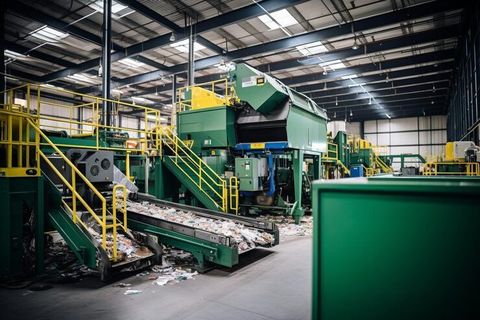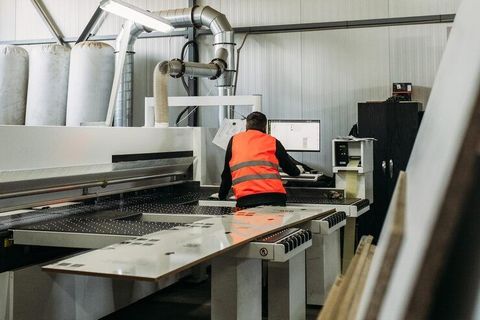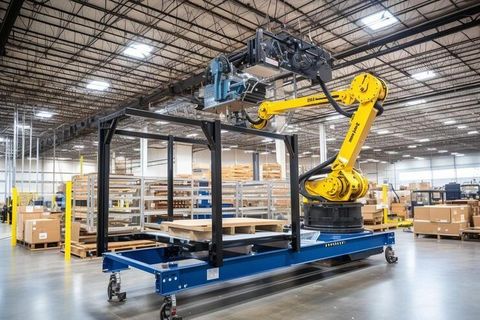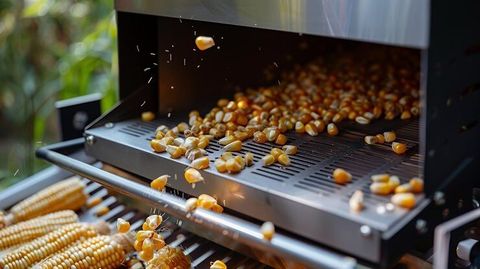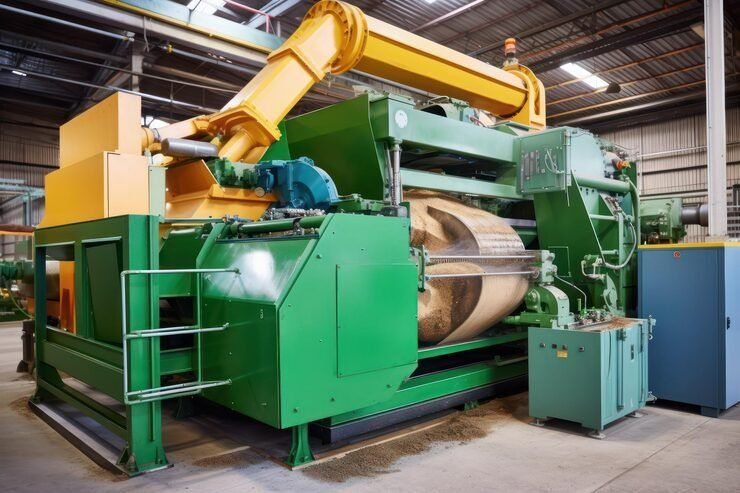
Corrugation machine manufacturing involves the engineering and production of industrial machinery used to convert paper rolls into corrugated board and packaging materials. These machines combine forming, heating, bonding, cutting, printing, folding, and converting technologies to support high-volume packaging production.
Modern corrugation systems can range from individual machines to fully integrated production lines controlled through automated systems.
What Is Corrugation Machine Manufacturing?
Corrugation machine manufacturing focuses on designing and producing equipment that creates corrugated board by combining paper liners with a fluted medium. The resulting structure provides strength, cushioning, and relatively low weight for packaging applications.
A typical corrugated-board production line can include:
Paper roll stands
Preheating systems
Single facer machines
Glue application systems
Double backer machines
Slitters and scorers
Cut-off machines
Stackers
Printing and converting equipment
Machine configuration depends on board specifications, production speed, flute profile, sheet dimensions, and packaging requirements.
Major Corrugation Machine Types
Different machines perform specific stages of corrugated-board production.
Single Facer Machines
A single facer combines the fluted medium with a liner to create single-face corrugated board. It typically incorporates corrugating rolls, heating systems, and adhesive application.
Double Backer Machines
The double backer bonds an additional liner to the single-face board, producing the completed corrugated board structure.
Corrugator Lines
A complete corrugator line integrates several machines into a continuous production system. It can include paper feeding, preheating, fluting, gluing, bonding, cutting, and stacking.
Slitter-Scorer Machines
Slitter-scorers cut large sheets into specified widths while creating score lines that support subsequent box forming.
Cut-Off Machines
Cut-off systems divide continuous corrugated board into sheets of predetermined lengths.
Flexographic Printing Machines
Flexographic printing equipment applies graphics, text, symbols, and other information directly to corrugated sheets or converted packaging.
Corrugation Production Technologies
Modern corrugation systems use mechanical, thermal, adhesive, electrical, and automation technologies.
Fluting Technology
Fluting forms the paper medium into a regular wave pattern between corrugating rolls. Different flute profiles provide different combinations of thickness, rigidity, cushioning, and printability.
Common profiles include:
| Flute | General Characteristics | Typical Application |
|---|---|---|
| A Flute | Larger, thicker structure | Cushioning and heavy-duty packaging |
| B Flute | Moderate thickness | Folding cartons and general packaging |
| C Flute | Balanced strength and thickness | Shipping boxes |
| E Flute | Fine structure | Retail packaging and printed boxes |
| F Flute | Very fine structure | Lightweight specialty packaging |
Actual performance depends on paper grades, board construction, adhesive formulation, and manufacturing conditions.
Adhesive Application
Starch-based adhesives are commonly used to bond the fluted medium and liners. Controlled adhesive application helps maintain consistent bonding across the board.
Thermal Processing
Heating systems control paper temperature and moisture during corrugation and bonding. Accurate thermal control contributes to stable board formation and dimensional consistency.
Corrugation Machine Manufacturing Process
Manufacturing industrial corrugation equipment involves multiple engineering and fabrication stages.
1. Machine Design
Engineers establish machine specifications based on required speed, board dimensions, flute profiles, automation requirements, and production conditions.
2. Component Manufacturing
Major components such as frames, shafts, rollers, gears, drive systems, heating assemblies, and conveyor components are manufactured using machining, fabrication, casting, or precision forming processes.
3. Corrugating Roll Production
Corrugating rolls require accurate machining and surface finishing because their geometry directly influences flute formation.
4. Assembly
Mechanical, electrical, pneumatic, hydraulic, and control-system components are assembled into individual machines or complete production lines.
5. Automation Integration
PLC controllers, sensors, variable-frequency drives, servo systems, human-machine interfaces, and industrial communication networks can be integrated into the equipment.
6. Testing and Quality Control
Manufacturers test machine operation, alignment, temperature control, drive performance, safety systems, and production parameters before shipment.
Production Technologies and Automation
Automation has become an important part of modern corrugation machine manufacturing. Automated systems can coordinate multiple production stages while collecting operational data.
Typical technologies include:
PLC-based machine control
Servo-driven positioning
Automatic paper-roll handling
Digital temperature control
Automatic tension control
Machine vision
Production monitoring systems
Industrial networking
Automated stacking
Predictive maintenance monitoring
These technologies can improve process coordination and reduce manual intervention in high-volume production environments.
Global Manufacturers and Suppliers
The global corrugated machinery sector includes manufacturers specializing in complete corrugator lines, individual processing machines, printing equipment, converting systems, and automation technologies.
When evaluating manufacturers and suppliers, consider:
Machine configuration
Production speed
Board width
Supported flute profiles
Automation architecture
Energy requirements
Spare-parts availability
Maintenance requirements
Technical documentation
Production-line integration
The appropriate supplier depends on the required board specifications, factory capacity, packaging formats, and degree of automation.
Packaging Applications
Corrugation machinery supports a broad range of packaging applications.
Shipping Boxes
Corrugated board is widely converted into transport boxes for industrial and commercial distribution.
E-Commerce Packaging
Automated converting and printing equipment supports the production of boxes and mailers used for online order fulfillment.
Food Packaging
Corrugated packaging can be used for secondary and tertiary packaging of food products when appropriate materials and compliance requirements are met.
Retail Packaging
Fine-flute boards can support printed retail packaging where appearance and structural performance are both important.
Industrial Packaging
Heavy-duty corrugated structures can be designed for machinery components, automotive parts, electronics, and other industrial products.
How to Select Corrugation Machinery
Selecting equipment requires evaluating the complete production workflow.
Production capacity: Determine required board output and operating schedule.
Board width: Machine width should match the intended product range.
Flute requirements: Different products may require A, B, C, E, F, or combined flute structures.
Automation: Assess whether manual, semi-automatic, or highly automated operation fits the facility.
Printing requirements: Consider whether inline flexographic printing or separate printing equipment is required.
Energy consumption: Heating, motors, compressed air, and other systems contribute to overall energy requirements.
Maintenance: Accessibility of components and availability of replacement parts can influence equipment uptime.
Expansion: Modular equipment configurations may accommodate future production requirements.
Frequently Asked Questions
What is a corrugation machine?
A corrugation machine forms paper into fluted structures and bonds it with liner paper to manufacture corrugated board used for packaging.
What machines are used in a corrugated board production line?
A production line may include roll stands, preheaters, single facers, glue systems, double backers, slitters, scorers, cut-off machines, conveyors, and stackers.
What are the main types of corrugated board flutes?
Common flute profiles include A, B, C, E, and F. Each provides different characteristics related to thickness, strength, cushioning, and printability.
How does a corrugation machine work?
Paper is conditioned and heated before the medium passes through corrugating rolls. Adhesive is applied and liners are bonded to the fluted medium before the board is cut, stacked, or converted.
What factors affect corrugation machine selection?
Production capacity, board width, flute profile, machine speed, automation, printing requirements, energy consumption, maintenance, and packaging formats are important considerations.
Conclusion
Corrugation machine manufacturing combines mechanical engineering, thermal processing, adhesive systems, precision machining, automation, and packaging technologies. From individual single facers to complete automated corrugator lines, these machines support the production of corrugated board for shipping, retail, e-commerce, food, and industrial packaging.
Understanding machine types, manufacturing processes, flute technologies, automation systems, and supplier considerations can help packaging manufacturers evaluate equipment configurations that align with their production requirements.