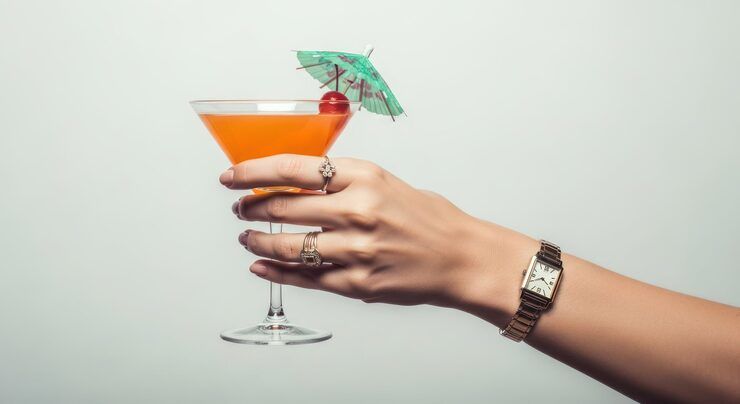
Cluster cocktail rings are statement jewellery pieces built around several gemstones or decorative elements arranged closely together. Instead of relying on one dominant stone, a cluster design combines multiple stones to create a larger visual composition across the top of the ring.
The style developed from broader traditions of gemstone jewellery in which smaller stones were positioned around a central element or arranged into floral, geometric, or abstract patterns. Modern cluster cocktail rings can range from vintage-inspired designs to contemporary arrangements featuring diamonds, sapphires, emeralds, rubies, amethyst, topaz, or other gemstones.
The term “cocktail ring” generally describes a prominent ring intended to attract visual attention. Cluster construction adds another design dimension because the overall appearance depends on the relationship between several stones rather than a single centerpiece.
Common Cluster Arrangements
Designers use different layouts to create distinctive silhouettes.
Floral clusters: Stones are positioned like petals around a central stone.
Halo clusters: Smaller stones surround a larger center element.
Geometric clusters: Rectangular, square, oval, or mixed shapes create structured patterns.
Asymmetrical clusters: Stones are arranged with deliberately uneven proportions.
Multi-color clusters: Several gemstone colors are combined within one composition.
Diamond clusters: Multiple diamonds create a bright, continuous visual surface.
The setting can be made from materials such as yellow gold, white gold, rose gold, platinum, or other jewellery metals, depending on the design and market.
Gemstone Combinations
The visual character of a cluster ring depends heavily on stone selection. Designers may combine stones according to color, hardness, transparency, shape, or symbolism.
| Gemstone | Common Visual Character | Typical Design Role |
|---|---|---|
| Diamond | Bright and highly reflective | Center or surrounding stones |
| Sapphire | Blue to various color ranges | Center or contrast stone |
| Ruby | Strong red tones | Focal or accent stone |
| Emerald | Green with distinctive inclusions | Center or color contrast |
| Amethyst | Purple | Accent or main stone |
| Topaz | Several color varieties | Larger cluster elements |
| Garnet | Deep red and other varieties | Vintage-inspired designs |
Gemstone durability also matters. The Mohs hardness scale provides a useful starting point when considering how different stones may perform in everyday jewellery.
Why Cluster Cocktail Rings Matter Today
Cluster cocktail rings remain relevant because they combine several design possibilities in a single jewellery piece. Their larger visual footprint can be created through multiple smaller stones rather than depending entirely on one large gemstone.
This approach can be particularly useful for people interested in statement jewellery, gemstone rings, diamond cluster rings, fine jewellery design, and colored gemstone jewellery.
Creating Visual Scale
A group of smaller gemstones can create a substantial overall appearance. The arrangement, spacing, setting height, and stone shapes determine how large the finished ring appears.
This makes cluster construction an important concept in jewellery design because visual impact can come from composition rather than simply gemstone dimensions.
Supporting Creative Design
Cluster settings provide designers with considerable flexibility. Stones can be matched by color, contrast, shape, or size.
For example, a blue sapphire surrounded by diamonds creates a different visual effect from an arrangement of sapphires, rubies, and emeralds.
Connecting Vintage and Contemporary Styles
Cluster rings appear in historical jewellery traditions as well as modern collections. Vintage-inspired designs may use symmetrical floral arrangements, while contemporary jewellery can use irregular shapes and mixed gemstone colors.
This allows cluster cocktail rings to work across several aesthetic categories without being restricted to one period.
Recent Trends in Cluster Cocktail Rings
During 2025 and 2026, broader jewellery design trends continued to emphasize individuality, colored gemstones, distinctive silhouettes, and combinations of traditional craftsmanship with contemporary styling.
Growth of Colored Gemstone Designs
Colored gemstones continue to attract attention within fine jewellery. Sapphire, ruby, emerald, tourmaline, spinel, and other stones provide designers with alternatives to predominantly diamond-based compositions.
Cluster rings are particularly suitable for this trend because several colors can be incorporated into one arrangement.
Mixed Shapes and Asymmetry
Modern jewellery design increasingly uses contrasting gemstone cuts. Oval, pear, cushion, emerald, marquise, and round shapes can appear together.
Asymmetrical clusters can create a less formal appearance while retaining the substantial visual character associated with cocktail rings.
Vintage-Inspired Jewellery
Interest in historical jewellery aesthetics continues to influence contemporary design. Floral clusters, intricate metalwork, and old-style gemstone arrangements are frequently reinterpreted using modern proportions.
Vintage-inspired cluster designs can reference Art Deco geometry, Edwardian ornamentation, or mid-century jewellery without reproducing historical pieces exactly.
Responsible Jewellery Information
Gemstone origin and material transparency have become increasingly important subjects in the international jewellery industry. Consumers and jewellery professionals may increasingly encounter information about gemstone origin, laboratory reports, recycled metals, chain-of-custody systems, and responsible sourcing.
For cluster rings containing several stones, documentation can be particularly useful because the identity and characteristics of individual gemstones may differ.
Global Laws, Regulations and Jewellery Policies
Cluster cocktail rings are affected by jewellery regulations concerning metal purity, gemstone disclosure, consumer information, trade documentation, and responsible sourcing. Requirements vary between jurisdictions.
United States
In the United States, the Federal Trade Commission provides guidance concerning jewellery marketing and the disclosure of information about precious metals, gemstones, laboratory-created stones, and treatments.
The FTC Jewelry Guides are particularly relevant when jewellery descriptions identify gemstone types, treatments, laboratory-created materials, or precious-metal content.
European Union
European jewellery businesses may need to consider consumer protection, product information, precious-metal hallmarking requirements in individual member states, and rules affecting imported materials.
The European Union also has broader regulations concerning supply chains and responsible sourcing of certain minerals. Requirements can depend on the material and commercial circumstances involved.
United Kingdom
The United Kingdom has established hallmarking requirements for certain precious-metal articles. Items meeting specified weight thresholds may need appropriate hallmark information before being represented as particular precious-metal fineness categories.
The precise requirements depend on the metal, article, weight, and applicable UK rules.
International Gemstone Trade
International gemstone trade can involve customs documentation, import requirements, origin information, treatment disclosure, and restrictions connected with particular materials.
The Kimberley Process is relevant to rough diamond trade because it establishes an international certification framework intended to prevent conflict diamonds from entering legitimate rough-diamond markets.
For a cluster cocktail ring containing multiple gemstones, appropriate documentation depends on the stones, metals, country of origin, and transaction.
Tools and Resources for Cluster Cocktail Rings
Several resources can help users understand gemstones, ring dimensions, metal markings, and jewellery design.
Gemstone Identification Resources
Gemological references can help explain:
Gemstone varieties
Color characteristics
Hardness
Treatments
Synthetic and laboratory-created materials
Optical properties
Common inclusions
Laboratory reports from recognized gemological organizations can provide additional information for significant gemstones.
Ring Size and Design Tools
Digital ring-size charts and measurement tools can help users understand sizing systems used in different regions. However, finger measurements can vary with temperature, time of day, and measurement technique.
Jewellery CAD software can also be used to visualize cluster arrangements before physical production.
Useful Research Resources
Gemological reference databases
Precious-metal hallmark databases
Ring-size conversion charts
CAD jewellery design platforms
Gemstone treatment guides
Diamond grading references
Jewellery trade publications
Customs and import guidance from relevant governments
Consumer-protection guidance
Laboratory gemstone reports
Design Factors to Compare
| Factor | Why It Matters |
|---|---|
| Stone arrangement | Determines overall visual balance |
| Gemstone hardness | Helps indicate suitability for regular wear |
| Setting height | Influences comfort and durability |
| Metal type | Affects appearance and structural characteristics |
| Stone color | Establishes contrast or harmony |
| Cut and shape | Influences light performance and composition |
| Ring size | Affects proportions and finger coverage |
| Documentation | Helps clarify gemstone and metal characteristics |
These tools and references are useful for research and education, but a qualified jeweller or gemologist may be appropriate when professional examination or laboratory identification is required.
Frequently Asked Questions
What is a cluster cocktail ring?
A cluster cocktail ring is a prominent ring that combines multiple gemstones or decorative elements in a closely arranged composition. The stones may form floral, geometric, symmetrical, or asymmetrical patterns.
Are cluster rings only made with diamonds?
No. Cluster rings can contain diamonds, sapphires, rubies, emeralds, amethyst, topaz, garnet, tourmaline, and many other gemstones. Some designs combine several gemstone varieties and colors.
Are cluster cocktail rings suitable for everyday wear?
Suitability depends on the gemstone hardness, setting construction, ring profile, and individual design. Rings with delicate settings or softer gemstones may require more careful handling than designs using durable stones and protective settings.
How can gemstone information be verified?
Gemological laboratory reports can provide information about gemstone identity, treatments, and other characteristics. For valuable or unusual stones, independent gemological examination can provide additional documentation.
What should be considered when choosing a cluster design?
Important factors include gemstone type, color, hardness, arrangement, metal, setting height, ring size, comfort, and the intended frequency of wear. The relationship between the individual stones is especially important because cluster designs depend on overall composition.
Conclusion
Cluster cocktail rings demonstrate how jewellery design can create visual impact through the arrangement of multiple gemstones rather than relying on one dominant stone. Their combination of color, shape, setting, and proportion allows designers to create floral, geometric, vintage-inspired, and contemporary compositions.
Current jewellery trends continue to support experimentation with colored gemstones, mixed cuts, asymmetrical arrangements, and historical design references. These developments make cluster rings relevant to both traditional jewellery aesthetics and modern statement jewellery.
Understanding gemstone characteristics is important when evaluating a cluster design. Hardness, treatment, transparency, color, cut, and setting construction can all influence appearance and practical use.
International jewellery regulations also make accurate material information important. Precious-metal marking, gemstone disclosure, consumer-protection rules, import documentation, and responsible sourcing requirements vary by jurisdiction.
For anyone researching cluster cocktail rings, diamond cluster rings, colored gemstone rings, or fine jewellery design, a combination of gemological references, hallmark information, ring-sizing resources, and professional laboratory documentation can provide a clearer understanding of the materials and design.
Ultimately, the defining characteristic of a cluster cocktail ring is its composition. Multiple stones work together as a single visual arrangement, giving designers a broad creative framework for combining color, proportion, texture, and geometric form.