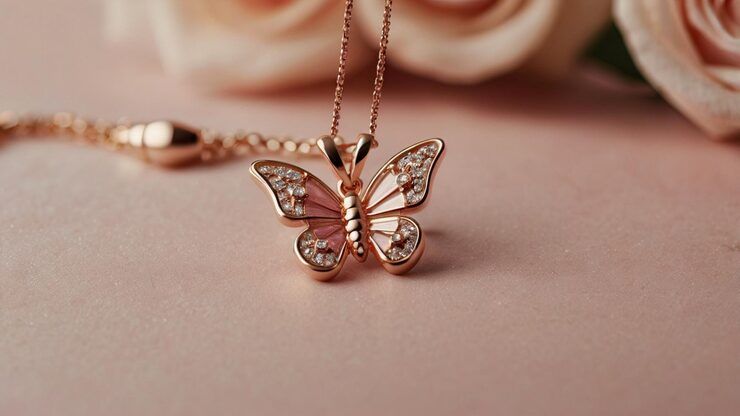
Butterfly pendants are decorative jewelry pieces shaped like butterflies or inspired by their wings, patterns, and natural forms. They are commonly worn on necklaces and are available in a wide range of materials, including gold, sterling silver, platinum, stainless steel, and decorative alloys.
Butterfly designs have remained recognizable in jewelry because they combine a distinctive natural shape with several possible meanings. Depending on personal and cultural interpretation, butterflies may represent transformation, renewal, freedom, beauty, or personal growth.
Modern butterfly pendants range from simple geometric outlines to detailed pieces featuring gemstones, enamel, textured metal, or moving wings. Understanding their materials, construction, and design characteristics can help people evaluate jewelry more confidently.
Understanding Butterfly Pendant Designs
A butterfly pendant usually consists of a central body and two pairs of wings, although some designs use an abstract outline or only a partial butterfly shape.
The pendant may be attached directly to a chain through a built-in loop or through a separate bail. Its proportions, thickness, weight, and attachment design influence how it hangs and how comfortable it feels during everyday wear.
Common design categories include:
Minimalist butterfly pendants: Simple outlines and clean geometric shapes.
Gemstone butterfly pendants: Designs incorporating diamonds, sapphires, emeralds, or other stones.
Enamel butterfly pendants: Colored surfaces that create detailed wing patterns.
Vintage-inspired pendants: Ornamental details influenced by earlier jewelry periods.
Nature-inspired designs: Wings with textures, curved edges, or lifelike proportions.
Personalized pendants: Pieces incorporating initials, engraved dates, or symbolic details.
Some pendants feature symmetrical wings, while others use asymmetrical shapes to create a more contemporary appearance.
Materials Used in Butterfly Jewelry
The material influences appearance, durability, maintenance, and the way a pendant responds to everyday wear.
Gold is used in yellow, white, and rose-colored jewelry. Gold purity is commonly expressed in karats, with 24-karat gold representing nearly pure gold and lower-karat alloys containing greater proportions of other metals.
Sterling silver typically contains 92.5% silver and 7.5% other metals, commonly copper. It is widely used for detailed decorative jewelry and can develop tarnish over time.
Platinum is a dense precious metal used in fine jewelry. Its weight and material characteristics make it suitable for certain gemstone settings and durable pendant designs.
Stainless steel is used in some contemporary jewelry because it offers strength and generally requires relatively little maintenance.
Other materials include brass, titanium, glass, enamel, ceramic, and synthetic or natural gemstones. Material descriptions should be checked carefully because surface plating and solid-metal construction are different.
Gemstones and Decorative Details
Gemstones can change the appearance of a butterfly pendant through color, brilliance, texture, and contrast.
Diamonds are frequently used to create sparkling wing patterns, while colored gemstones can produce more varied designs. Sapphires, rubies, emeralds, amethyst, and topaz are examples of stones used in decorative jewelry.
Enamel creates colored surfaces without requiring a gemstone for each decorative element. Some designs also use small pearls, engraved patterns, or contrasting metal finishes.
When evaluating gemstone jewelry, useful details include:
Whether the stone is natural, laboratory-grown, or imitation
The stone's dimensions and setting method
Whether a grading report is available
The type of metal surrounding the stone
The security of the setting
The manufacturer's description of treatments, where applicable
A gemstone's appearance alone does not establish its origin, quality, or treatment history.
Why Butterfly Pendants Remain Popular
Butterfly pendants combine a recognizable natural motif with a wide range of design possibilities. Their shape can be adapted to delicate everyday jewelry, formal accessories, contemporary styles, or pieces with personal significance.
Symbolism and Personal Meaning
Butterflies undergo a dramatic transformation during their life cycle. This biological process has influenced the symbolism associated with butterflies in different cultures.
People may choose butterfly jewelry to represent a personal transition, a new stage of life, remembrance, or an appreciation of nature. These meanings are not universal, and interpretations differ among individuals and cultural traditions.
Fashion and Personal Styling
Butterfly pendants can be worn with different clothing styles because their size, material, and decorative details vary considerably.
Small metal pendants may suit simple daily outfits, while larger gemstone designs can create a more noticeable focal point. Layering a butterfly pendant with other necklaces is another styling approach, although chain lengths and pendant sizes should be considered to prevent tangling.
Craftsmanship and Jewelry Design
Butterfly motifs allow jewelry designers to explore symmetry, texture, color, metalworking, and stone placement.
Fine wing details may require precise casting, engraving, polishing, or stone setting. The quality of these processes influences the final appearance and the durability of delicate components.
Recent Trends and Developments
Jewelry design continues to evolve through changes in personalization, material transparency, digital design, and consumer interest in the origins of precious metals and gemstones.
Nature-Inspired Jewelry
Nature-inspired motifs remain an established category within jewelry design. Butterfly shapes can be interpreted through delicate outlines, sculptural metalwork, colorful enamel, or gemstone arrangements.
Contemporary designs often combine recognizable natural forms with simplified silhouettes, allowing traditional motifs to fit modern jewelry styles.
Personalization and Digital Design
Computer-aided design and digital manufacturing tools allow designers to test pendant proportions, chain attachments, surface patterns, and stone placement before physical production.
These tools can improve the consistency of complex shapes and make it easier to develop customized designs. Actual quality still depends on material selection, manufacturing accuracy, and finishing.
Responsible Material Sourcing
Interest in supply-chain transparency has increased attention to the origin of precious metals and gemstones. Recycled metals, documented sourcing practices, and traceability information are increasingly discussed in the jewelry industry.
However, environmental or ethical claims should be supported by clear documentation. A product description alone does not establish that a material is responsibly sourced or has a lower environmental impact.
Specific fashion trends also vary by market, season, and designer. A particular pendant style should not be considered universally popular without reliable market evidence.
Jewelry Laws, Hallmarking, and Consumer Protection
Jewelry regulations differ between countries. Rules can cover precious-metal purity, product descriptions, gemstone disclosures, labeling, and advertising claims.
Hallmarking and Metal Purity
Hallmarking systems help identify the precious-metal content of qualifying jewelry.
In India, the Bureau of Indian Standards operates the gold hallmarking framework, including the Hallmark Unique Identification system for applicable hallmarked gold jewelry. Requirements and exemptions can vary by product and applicable rules.
In the United States, the National Gold and Silver Stamping Act regulates certain markings used to represent the fineness of gold and silver articles.
Consumers should distinguish between a metal purity mark, a manufacturer's identification mark, and a marketing description. These provide different kinds of information.
Gemstone Disclosure
Gemstone descriptions should accurately identify relevant characteristics. Natural diamonds, laboratory-grown diamonds, and diamond simulants are different categories and should not be represented as interchangeable.
Laboratory-grown diamonds have essentially the same chemical composition and crystal structure as natural diamonds, but their origins differ. Clear identification helps consumers understand what a jewelry piece contains.
Advertising and Product Claims
Jewelry descriptions should avoid unsupported statements about gemstone quality, metal purity, ethical sourcing, durability, or investment value.
Claims concerning precious metals and gemstones should be consistent with applicable consumer-protection and advertising rules in the relevant country.
Tools and Resources for Evaluating Butterfly Pendants
Several resources can help people understand jewelry materials and evaluate design details.
Metal Purity References
Official hallmarking authorities provide information about metal purity marks, registration requirements, and applicable standards. These resources can help distinguish solid precious-metal jewelry from plated or base-metal products.
Gemstone Identification and Grading
Gemological institutions publish educational material about diamond grading, colored gemstones, treatments, laboratory-grown stones, and gemstone identification.
A professional gemological report can provide additional information for certain higher-value gemstone pieces. Such a report should be checked for the exact stone it describes.
Digital Design Tools
Computer-aided design software can be used to develop pendant shapes, model dimensions, examine chain attachments, and test gemstone placement.
Simple design sketches can also record:
Pendant height and width
Approximate thickness
Metal type and purity
Gemstone dimensions
Bail opening size
Chain compatibility
Surface finish
These details help make the design easier to communicate and evaluate.
Jewelry Care Resources
Jewelry manufacturers and gemological institutions provide care guidance based on metal type, gemstone hardness, treatments, and setting construction.
General cleaning methods should not automatically be applied to every piece. Some gemstones, coatings, adhesives, and enamel surfaces require special handling.
Frequently Asked Questions
What materials are commonly used for butterfly pendants?
Common materials include gold, sterling silver, platinum, stainless steel, brass, enamel, and gemstones. The appropriate material depends on the intended design, appearance, maintenance requirements, and personal preferences.
Are butterfly pendants suitable for everyday wear?
Many simple butterfly pendants can be worn regularly, provided their construction suits everyday use. Delicate wings, protruding gemstones, and thin attachment loops may require additional care to prevent damage or snagging.
What does a butterfly pendant symbolize?
Butterflies are often associated with transformation, renewal, freedom, and beauty. Their meaning varies according to personal experience and cultural interpretation.
How should a butterfly pendant be cleaned?
Cleaning depends on the materials and construction. A soft cloth and suitable gentle cleaning method may be appropriate for some pieces, but porous gemstones, treated stones, enamel, and delicate settings may require specialist guidance.
How can someone verify the metal and gemstone description?
Look for appropriate purity marks, manufacturer documentation, and relevant gemstone reports. For significant concerns, an independent jeweler or qualified gemologist can assess the piece. Visual appearance alone cannot reliably confirm metal purity or gemstone origin.
Conclusion
Butterfly pendants combine nature-inspired design, personal symbolism, and jewelry craftsmanship in a versatile decorative form. Their appearance ranges from minimalist metal outlines to intricate pieces featuring colored enamel, precious metals, and gemstones.
Understanding metal purity, gemstone characteristics, construction quality, and care requirements can help people make informed decisions about jewelry. Hallmarking systems and clear gemstone disclosures also support greater transparency.
As jewelry design continues to incorporate digital modeling, personalization, and interest in material sourcing, butterfly pendants remain an adaptable example of how natural forms influence contemporary accessories. Careful attention to verified product information and appropriate maintenance helps preserve both their appearance and structural quality.