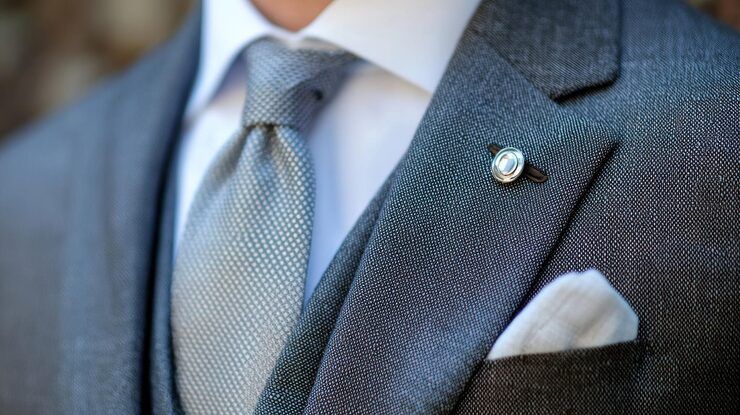
Executive tie pins are small accessories designed to secure a necktie and help maintain a neat appearance. They are commonly associated with business attire, formal occasions, professional meetings, and traditional menswear. Depending on their design, they can also serve as decorative details that complement a suit, shirt, cufflinks, and other accessories.
Although the terms tie pin and tie bar are often used interchangeably, they refer to different fastening mechanisms. A traditional tie pin passes through the fabric, sometimes using a chain or backing, while a tie bar clips the tie to the shirt placket. A tie tack generally uses a decorative front with a pin and protective backing.
These distinctions matter when selecting an accessory because different designs affect fabric care, fastening strength, and overall appearance.
Understanding Executive Tie Pin Designs
Executive tie pins are available in understated, traditional, and contemporary styles. Their appearance often reflects the setting in which they are worn.
Common designs include:
Classic metal tie pins: Simple designs in gold-tone, silver-tone, or polished metal.
Tie bars: Straight clips that hold the tie against the shirt.
Tie tacks: Decorative pins secured with a backing.
Engraved tie pins: Accessories featuring initials, dates, or simple patterns.
Gemstone-accented designs: Pieces featuring decorative stones or crystal details.
Corporate-style accessories: Designs incorporating restrained geometric patterns or organizational symbols.
Minimalist tie pins: Small accessories with clean lines and limited decoration.
For formal business settings, simple designs are often easier to coordinate with different suits and shirts. More decorative designs may be appropriate for celebrations, formal dinners, and events where personal style is encouraged.
Materials Used in Executive Tie Pins
The material influences appearance, durability, maintenance, and compatibility with other accessories.
Stainless steel is commonly used for its strength and resistance to corrosion. Sterling silver has a distinctive appearance but can tarnish and may require periodic polishing. Gold and gold-plated finishes provide a different visual effect, while brass and other base metals are used in a variety of decorative designs.
Some tie pins incorporate enamel, gemstones, crystal elements, or textured finishes.
When evaluating materials, it is useful to distinguish solid precious metal from plated metal. A plated finish consists of a surface layer over another material, and its long-term appearance depends on the plating quality, wear, and care.
How to Choose a Suitable Tie Pin
Choosing an executive tie pin involves considering the tie's width, fabric, fastening mechanism, and the formality of the occasion.
A useful starting point is the relationship between the accessory and the tie. A tie bar generally looks balanced when it spans approximately one-half to three-quarters of the tie's width rather than extending beyond the edges.
The fastening mechanism also matters. A clip-style tie bar is generally suitable for holding the tie against the shirt without piercing the fabric. A traditional pin may leave a small hole, particularly in delicate or tightly woven materials.
Before selecting an accessory, consider:
The width and thickness of the tie
The fabric's sensitivity to punctures
The color of the suit and shirt
Whether other metal accessories are being worn
The formality of the event
The ease of fastening and removal
A well-coordinated accessory should complement the outfit without becoming its most prominent feature.
Why Executive Tie Pins Matter
Executive tie pins combine a practical function with traditional professional styling. They help keep a tie in position and can create a more organized appearance during activities such as presentations, conferences, ceremonies, and formal meetings.
Professional Appearance
In business environments where formal clothing remains common, small details can contribute to a coordinated appearance. A tie pin can help prevent the tie from moving excessively while walking, standing, or leaning forward.
However, dress expectations vary by workplace, industry, and region. Some modern workplaces favor business-casual clothing and do not routinely require neckties or formal accessories.
Practical Function
A properly fitted tie bar secures the tie to the shirt, reducing movement and helping keep the tie away from food, equipment, or other surfaces.
This practical function can be useful during travel, conferences, and long working days. The accessory should remain secure without pulling the tie or creating excessive tension in the fabric.
Personal Style and Coordination
Tie pins can complement other accessories, including cufflinks, watches, belt buckles, and shirt buttons. Matching every metal finish is not essential, but a consistent approach can make an outfit appear more coordinated.
For example, a simple silver-tone tie bar can complement a charcoal suit and white shirt, while a gold-tone accessory may coordinate with warmer colors such as brown, beige, or navy.
Recent Trends in Executive Tie Pins
During 2025 and 2026, broader menswear trends continued to include minimalist accessories, vintage-inspired details, textured metal finishes, and more flexible approaches to formal dressing.
Minimalist Professional Accessories
Minimalist designs remain relevant to business attire because they work with different tie patterns and suit colors. Slim bars, brushed metal surfaces, and simple geometric shapes provide visual detail without overwhelming an outfit.
Vintage-Inspired Formalwear
Interest in traditional menswear has also supported the continued use of classic accessories such as tie tacks, engraved pins, and decorative metal pieces.
These designs draw on earlier formalwear traditions while appearing in contemporary combinations with modern suits and shirts.
More Flexible Dress Codes
Professional clothing has become more varied across many workplaces. Some environments continue to favor traditional suits, while others allow knitwear, open collars, and less structured jackets.
As a result, executive tie pins are increasingly an optional styling choice rather than a universal component of professional clothing. Their suitability depends on the occasion, dress code, and wearer's preferences.
These observations describe broader fashion directions rather than a single formal industry rule.
Laws, Policies, and Workplace Considerations
Executive tie pins are ordinary clothing accessories, and there is generally no special national law governing their everyday use. However, workplace dress codes, safety requirements, and organizational policies can influence whether they are appropriate in a particular environment.
Workplace Dress Codes
Some organizations establish clothing guidelines for client meetings, official ceremonies, hospitality environments, and public-facing responsibilities.
A tie pin may fit a formal dress code, but employees should follow their organization's actual requirements rather than assuming that all executive roles require traditional accessories.
Occupational Safety
In workplaces involving machinery, electrical equipment, food preparation, or other physical hazards, accessories may need to be removed or secured.
A protruding pin can create a snagging hazard around moving machinery. Certain environments may restrict jewelry or require specific protective clothing. Safety requirements should take priority over styling preferences.
Material Identification and Consumer Information
When evaluating precious-metal accessories, material descriptions should be accurate. Solid gold, gold-plated metal, sterling silver, and silver-tone base metal are different categories.
Applicable consumer-protection and product-labeling laws vary by country. Buyers should review product descriptions and material specifications carefully, particularly when a piece is represented as containing precious metals or gemstones.
Tools and Resources for Selecting and Maintaining Tie Pins
Several simple resources can help with selection, coordination, and care.
Outfit Coordination
A wardrobe-planning application or a basic spreadsheet can record suit colors, shirt colors, tie patterns, and accessory finishes.
A simple coordination guide is shown below.
| Clothing Combination | Accessory Style | Styling Consideration |
|---|---|---|
| Navy suit and white shirt | Silver-tone tie bar | Clean, understated contrast |
| Charcoal suit and pale-blue shirt | Brushed metal bar | Restrained professional appearance |
| Brown suit and cream shirt | Gold-tone tie pin | Warm color coordination |
| Black suit and white shirt | Minimalist dark or silver-tone bar | Formal, simple detailing |
| Patterned tie and plain shirt | Plain metal tie bar | Avoids competing patterns |
These are general styling suggestions rather than strict rules.
Care and Maintenance
Proper care can help preserve the appearance of metal accessories.
Wipe the accessory with a soft cloth after use.
Keep it dry before storing it.
Follow material-specific polishing instructions.
Store it separately from items that could scratch its surface.
Avoid harsh cleaning chemicals unless the manufacturer confirms compatibility.
Inspect the fastening mechanism periodically.
Plated finishes may wear with repeated friction, while sterling silver can tarnish through exposure to air and certain chemicals.
Measuring and Fit
A ruler can help compare tie width with the length of a tie bar. The accessory should generally remain within the edges of the tie and hold it without excessive pressure.
A simple wardrobe checklist can also help ensure that the accessory is suitable for the event, comfortable to wear, and compatible with the tie fabric.
Frequently Asked Questions
What is the difference between a tie pin and a tie bar?
A traditional tie pin passes through the tie fabric and is secured with a backing or related mechanism. A tie bar clips the tie to the shirt placket. A tie bar avoids deliberately puncturing the tie fabric.
How wide should an executive tie bar be?
A common styling guideline is to choose a bar approximately one-half to three-quarters of the tie's width. The bar should not extend beyond the tie's edges.
Are executive tie pins appropriate for modern business attire?
Yes, when they suit the workplace dress code and the occasion. They are optional in many modern workplaces, where business-casual clothing is common.
Which materials are commonly used for executive tie pins?
Common materials include stainless steel, sterling silver, brass, gold, gold-plated metal, and other plated alloys. Some designs incorporate enamel, crystal, or gemstones.
How should a tie pin be maintained?
Wipe it with a soft cloth, store it in a dry place, and use cleaning methods appropriate to its material. Avoid harsh chemicals and inspect clips or pin backings for wear.
Conclusion
Executive tie pins are small but functional accessories that combine practical tie control with traditional professional styling. Their designs range from minimalist metal bars to engraved pins and decorative pieces, allowing them to complement different formal and business outfits.
Selecting an appropriate accessory requires attention to tie width, fabric, material, fastening mechanism, and the dress code of the occasion. Recent menswear trends show continued interest in minimalist designs and vintage-inspired details, while workplace expectations increasingly vary by industry and setting.
With suitable coordination and basic maintenance, an executive tie pin can remain a useful addition to formalwear. The most important considerations are comfort, fabric protection, appropriate styling, and compliance with any relevant workplace safety requirements.