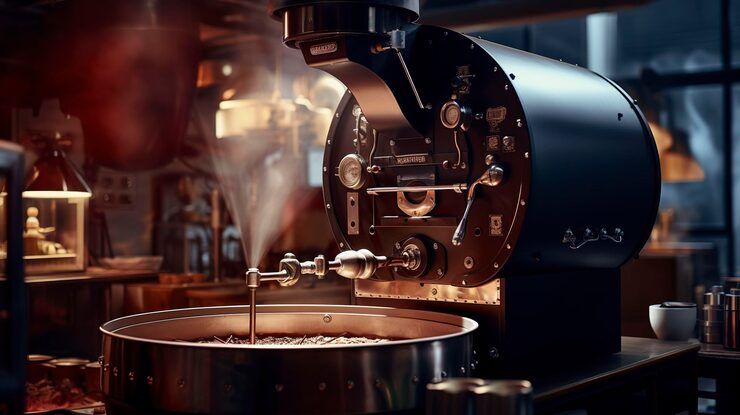
Coffee roasting machines are specialized devices that heat green coffee beans to develop the aroma, flavor, color, and texture associated with roasted coffee. The roasting process transforms the physical and chemical properties of coffee beans through controlled heat, airflow, and time.
Coffee beans are the seeds of coffee cherries. After harvesting and processing, they are generally dried and prepared for transport before reaching a roasting facility. Green coffee beans have a different appearance and flavor profile from roasted beans, so roasting is an essential stage in preparing coffee for grinding, brewing, and consumption.
Coffee roasting machines range from small countertop appliances and sample roasters to commercial systems capable of processing large batches. The appropriate equipment depends on production volume, bean characteristics, desired flavor profile, energy requirements, and the level of process control needed.
Understanding Coffee Roasting Equipment
A coffee roasting machine typically includes a heating system, a roasting chamber, temperature sensors, airflow controls, and a cooling arrangement. Some models also include software for recording roasting profiles and monitoring production.
During roasting, heat causes moisture loss and a series of chemical reactions. The beans change color, expand, and develop compounds responsible for their aroma and flavor.
Common types of coffee roasting machines include:
Drum roasters: Rotate beans inside a heated drum and transfer heat through contact, convection, and radiation.
Fluid-bed roasters: Use heated air to suspend and roast the beans.
Direct-fired roasters: Apply heat from a burner to the roasting system, with the design determining how heat reaches the beans.
Electric roasters: Use electrical heating elements to generate heat.
Sample roasters: Process small quantities for testing green coffee quality and developing roast profiles.
Industrial coffee roasters: Handle larger batches and may incorporate automated loading, unloading, exhaust treatment, and production monitoring.
Each design has different characteristics. Drum roasters are widely used in specialty and commercial coffee production, while fluid-bed systems rely heavily on heated airflow to transfer energy to the beans.
How the Coffee Roasting Process Works
Roasting generally follows several stages, although the exact temperature, duration, and airflow depend on the equipment and desired result.
Drying phase: Green coffee beans absorb heat and lose moisture. Their color gradually changes from green toward yellow.
Browning phase: Chemical reactions, including Maillard reactions, contribute to the development of color and aroma. The beans gradually become more brown as roasting continues.
First crack: As internal pressure increases, beans may produce audible cracking sounds. This stage is an important reference point for many roasting profiles.
Development phase: Roasting continues to shape acidity, sweetness, body, bitterness, and aromatic complexity. The result depends on the temperature trajectory, airflow, and duration.
Cooling phase: The roasted beans are cooled quickly to limit continued heating and help maintain the intended roast profile.
After cooling, beans may be rested before packaging or grinding. The appropriate resting period depends on the coffee, roast level, packaging method, and brewing requirements.
Why Coffee Roasting Machines Matter
Coffee roasting equipment influences product consistency, production capacity, energy use, and the ability to reproduce a particular flavor profile. For coffee producers, cafés, specialty roasters, and food manufacturers, controlling the roasting process is essential to maintaining predictable results.
Flavor Development and Quality Control
Roasting changes the chemical composition of green coffee beans. Temperature, airflow, moisture content, bean density, and roasting duration all influence the final characteristics.
Careful control can help roasters develop profiles suited to espresso, filter coffee, cold brew, and other preparation methods.
Important quality indicators include:
Bean color and surface appearance
Moisture loss during roasting
Roast duration and temperature
Aroma and flavor consistency
Bean expansion and physical condition
Uniformity within a batch
Roasting profiles should be evaluated through sensory testing as well as machine measurements. Identical temperature readings do not always produce identical flavor outcomes when green coffee characteristics differ.
Production Efficiency
Commercial roasting systems help manage larger quantities of coffee while maintaining repeatable operating conditions. Automated controls can reduce manual adjustments, record production data, and make it easier to reproduce established roasting profiles.
Energy efficiency is another consideration. Insulation, burner performance, airflow design, exhaust heat recovery, and batch scheduling can influence the amount of energy used per kilogram of roasted coffee.
Recent Developments in Coffee Roasting Technology
During 2025 and 2026, coffee roasting technology continued to emphasize automation, digital roast profiling, energy management, and environmental performance.
Digital Roast Profiling
Digital control systems allow operators to record temperature changes, roasting duration, airflow, and other process variables. Some systems also provide software-based profile comparisons and production records.
These tools help identify differences between batches and support repeatable roasting practices. However, software measurements still need to be interpreted alongside sensory evaluation and green coffee quality.
Electrification and Energy Efficiency
Electric heating systems have attracted attention as coffee producers evaluate energy consumption and emissions from roasting operations. Electric roasters can provide precise heating control, although their overall environmental performance depends on electricity generation, equipment design, and operating conditions.
Gas-fired systems remain widely used, particularly in larger roasting facilities. Comparisons should account for the entire process rather than assuming that one heating method is always more efficient.
Emissions Management
Coffee roasting produces smoke, particulate matter, and volatile organic compounds. Environmental performance therefore depends on exhaust design, filtration, afterburners, and the characteristics of the roasting process.
During 2025 and 2026, emissions control and energy monitoring remained important considerations for roasters planning equipment upgrades and facility improvements.
Artificial Intelligence and Process Monitoring
Some modern industrial systems use data analysis and automated controls to identify changes in roasting behavior. These approaches can help operators compare batches, monitor temperature patterns, and identify deviations from established profiles.
However, automated systems cannot eliminate the need for skilled evaluation. Bean origin, processing method, storage conditions, and moisture content can all influence roasting outcomes.
Laws, Regulations, and Food Safety Policies
Coffee roasting facilities must follow applicable food safety, workplace safety, fire protection, and environmental regulations. Requirements vary by country, region, facility size, and equipment configuration.
Food Safety in the United States
In the United States, coffee roasting businesses may be subject to relevant provisions of the Federal Food, Drug, and Cosmetic Act and applicable Food and Drug Administration regulations.
Depending on the operation, facilities may need to follow current good manufacturing practices and preventive-control requirements under the Food Safety Modernization Act. Registration and other obligations depend on the nature of the facility and applicable exemptions.
Roasters should maintain suitable procedures for equipment cleanliness, pest control, ingredient handling, traceability, and packaging hygiene.
European Union Food Safety
In the European Union, Regulation (EC) No. 852/2004 establishes general food hygiene requirements. Food businesses must follow applicable hygiene procedures and maintain controls appropriate to their activities.
Roasting facilities may also need to consider environmental rules covering emissions, energy use, and industrial installations, depending on their location and scale.
Worker and Fire Safety
Coffee roasting involves hot surfaces, rotating machinery, combustible materials, and potentially flammable dust. Facilities should assess hazards and implement suitable safeguards.
Important precautions include:
Machine guards and emergency-stop systems
Adequate ventilation and exhaust management
Fire detection and suppression arrangements
Safe handling of hot roasted beans
Regular inspection of bearings and moving parts
Dust control and housekeeping procedures
Appropriate training and protective equipment
The applicable requirements should be confirmed with local food safety, fire safety, workplace safety, and environmental authorities.
Tools and Resources for Coffee Roasting
Technical resources can help operators evaluate equipment, monitor quality, and improve process consistency.
Roast Profiling Software
Roast profiling applications can record bean temperature, environmental temperature, airflow, burner output, and roasting duration. Some platforms support profile comparisons and production reports.
These records can help identify repeatability issues and document changes made during testing.
Temperature Measurement Tools
Thermocouples and other temperature sensors provide data about conditions inside the roasting machine. Their readings should be interpreted according to sensor placement, response time, and equipment design.
Calibration and routine maintenance are important for reliable measurements.
Coffee Quality Assessment
Useful quality-control tools include:
Digital scales for batch measurement
Moisture meters for green coffee assessment
Color measurement devices for roast consistency
Sample roasters for small-batch testing
Cupping equipment for sensory evaluation
Production logs for tracking roast profiles
Equipment Comparison Table
Evaluation Factor | What to Examine |
|---|---|
Batch capacity | Required output per roasting cycle |
Heating system | Gas, electric, or other approved design |
Temperature control | Sensor accuracy and control range |
Airflow | Adjustment options and exhaust design |
Cooling system | Cooling speed and bean handling |
Energy use | Consumption per kilogram of roasted coffee |
Emissions | Smoke treatment and filtration requirements |
Maintenance | Cleaning access and component replacement |
Automation | Data recording and profile repeatability |
The best equipment configuration depends on the facility's production goals, available utilities, operating environment, and required coffee quality.
Frequently Asked Questions
What are coffee roasting machines used for?
Coffee roasting machines heat green coffee beans under controlled conditions to develop their color, aroma, and flavor. They range from small sample roasters to industrial systems used for larger production batches.
What is the difference between drum and fluid-bed coffee roasters?
Drum roasters rotate beans in a heated drum, transferring heat through several mechanisms. Fluid-bed roasters use heated air to suspend and roast the beans. Both can produce different roast profiles depending on their design and operation.
How does roasting temperature affect coffee flavor?
Temperature influences the rate of moisture loss and chemical reactions during roasting. The final flavor also depends on roast duration, airflow, bean characteristics, and the development stage. Temperature alone does not determine the result.
How can coffee roasting consistency be improved?
Consistency can be improved by recording roast profiles, monitoring temperature and airflow, measuring batch quantities, maintaining equipment, and evaluating samples through sensory testing. Consistent green coffee storage and preparation are also important.
What should be considered when selecting industrial coffee roasting equipment?
Important considerations include batch capacity, heating method, energy consumption, temperature control, cooling performance, emissions management, maintenance requirements, food safety, and local regulations.
Conclusion
Coffee roasting machines play a central role in transforming green coffee beans into roasted coffee with specific flavor and aroma characteristics. Different equipment designs provide different approaches to heat transfer, airflow control, production capacity, and process monitoring.
Recent developments in digital profiling, electrification, emissions management, and automated monitoring demonstrate the industry's continuing focus on consistency and operational efficiency. At the same time, food safety, workplace protection, and environmental compliance remain essential considerations for roasting facilities.
Selecting suitable equipment requires an understanding of production requirements, bean characteristics, energy consumption, maintenance needs, and applicable regulations. Combining reliable machinery with accurate measurements and careful sensory evaluation helps maintain consistent roasting results across different batches and coffee varieties.