Dubai skyline photography focuses on the city's distinctive combination of supertall buildings, modern architecture, highways, waterfronts, desert surroundings, and illuminated urban landscapes. The city's rapid architectural development has created many different viewpoints, from ground-level streets to observation decks and waterfront promenades.
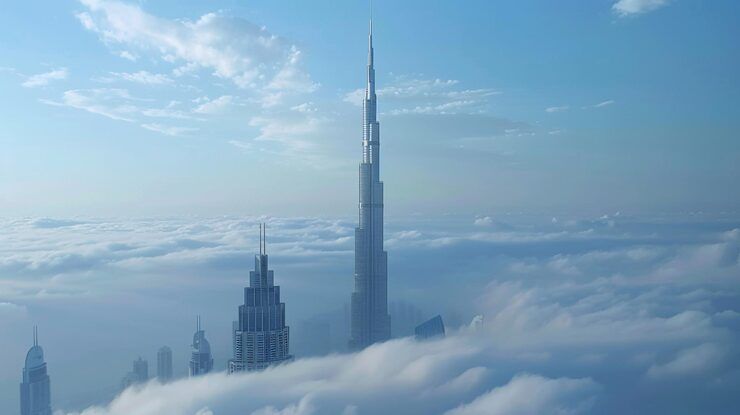
The Burj Khalifa is the most recognizable element of the skyline. At 828 metres, it remains the world's tallest building and provides multiple observation levels for photographing Downtown Dubai and the surrounding city. (visitdubai.com)
However, photographing Dubai does not require standing beside the Burj Khalifa. Locations such as Dubai Creek Harbour, Dubai Frame, Downtown Dubai, Dubai Water Canal, Palm Jumeirah, and elevated viewing platforms provide different compositions.
Major Dubai Skyline Photography Locations
| Location | Best Subject | Useful Time |
|---|---|---|
| Dubai Creek Harbour | Downtown skyline and Burj Khalifa | Sunrise or blue hour |
| Burj Park | Burj Khalifa and Downtown | Evening |
| Dubai Frame | Old and modern Dubai | Sunset |
| Downtown Dubai | Burj Khalifa architecture | Blue hour |
| Dubai Water Canal | Reflections and towers | After sunset |
| Palm Jumeirah | Coastal skyline | Sunset |
| Sky Views Dubai | Elevated Downtown panorama | Day or night |
| The View at The Palm | Palm and city panorama | Sunset |
| Dubai Marina | High-rise waterfront architecture | Blue hour |
| Sheikh Zayed Road viewpoints | Linear cityscape | Night |
The official Dubai tourism authority describes Dubai Creek Harbour's Viewing Point as a 70-metre walkway extending 26 metres over the water, with views toward Burj Khalifa, Sheikh Zayed Road, and other major structures. (visitdubai.com)
Why Dubai Skyline Photography Matters
Dubai's skyline provides a visual record of rapid urban development. Photography can document how high-rise districts, roads, waterfronts, public spaces, and architectural landmarks interact.
For travelers, cityscape photography is also a practical way to explore different parts of Dubai. A photographer looking for the same building from several angles may visit Downtown Dubai, Dubai Creek Harbour, Zabeel Park, Palm Jumeirah, and other districts.
Photography also has educational applications. Architectural images can help explain:
- Building scale and proportion
- Urban planning
- Modern engineering
- Lighting design
- Waterfront development
- Transportation infrastructure
- Public-space design
- Changing city skylines
The official Dubai tourism guide published a dedicated photography-spots article on April 13, 2026, highlighting locations including Dubai Frame, Dubai Creek Harbour, Burj Park, and waterfront viewpoints. (visitdubai.com)
Photography Conditions by Time of Day
| Time | Photography Characteristics | Suitable Subjects |
|---|---|---|
| Sunrise | Softer light and fewer people | Waterfront skyline |
| Morning | Clear architectural details | Buildings and roads |
| Afternoon | Strong shadows and contrast | Architectural forms |
| Sunset | Warm light and changing sky | Skyline silhouettes |
| Blue hour | Balanced sky and city lights | Downtown and waterfront |
| Night | Artificial lighting and reflections | High-rise cityscape |
Blue hour is particularly useful for skyline photography because the remaining daylight can retain detail in the sky while building lights become visible.
Recent Developments in Dubai Skyline Photography
Dubai's architectural landscape continues to change, creating new photographic viewpoints and compositions.
New Photography Guidance in 2026
On April 13, 2026, Visit Dubai published an updated guide to photogenic locations around the city. The guide highlighted waterfront areas, Dubai Frame, Burj Park, and other locations that provide views of major landmarks. (visitdubai.com)
This reflects the growing importance of photography in destination planning. Official tourism information now frequently identifies specific viewpoints and recommended photography locations.
Dubai Creek Harbour Viewing Point
The Dubai Creek Harbour Viewing Point remains an important ground-level location for skyline photography. Its position over Dubai Creek allows photographers to capture the Downtown skyline from across the water rather than from within the central district. (visitdubai.com)
This creates a wider composition that can include water, boats, roads, towers, and the Burj Khalifa within the same frame.
Burj Khalifa Observation Levels
The Burj Khalifa continues to provide some of Dubai's highest public viewpoints. Visit Dubai identifies observation areas on floors 124 and 125, as well as the level 148 observation experience at approximately 555 metres. (visitdubai.com)
For photographers, elevated viewpoints provide a different perspective from ground-level images and can reveal the geometry of roads, buildings, and surrounding districts.
Dubai Frame
Dubai Frame provides another distinctive photographic composition. Its 150-metre structure is designed so that visitors can see different parts of Dubai from either side, creating a visual contrast between older and newer parts of the city. (visitdubai.com)
Laws and Policies for Photography in Dubai
Photography in Dubai is affected by UAE federal law, Dubai regulations, privacy considerations, location-specific policies, and rules governing drones and aerial photography.
Visitors should distinguish between ordinary travel photography and professional or organized filming activities because different permissions may apply.
Photographing People
The UAE Government's official visitor guidance states that people should not be photographed without their permission. It also advises visitors that photography of certain government buildings and military installations is prohibited. Photographing aircraft and plane spotting are also identified as prohibited activities. (u.ae)
For skyline photographers, this means that a building may be a suitable subject while the surrounding circumstances can still create privacy or security considerations.
A practical approach is to:
- Avoid photographing people closely without permission.
- Do not photograph restricted government or military locations.
- Avoid photographing sensitive infrastructure.
- Follow signs at attractions and public spaces.
- Ask venue staff when photography rules are unclear.
Photography at Cultural Locations
Dubai Culture provides a photography and filming permit process for its locations. A No Objection Certificate can be requested through the Dubai Now application for shoots at Dubai Culture and Arts Authority sites. (visitdubai.com)
This is especially relevant for organized, professional, or larger photography projects.
Drone Photography
Aerial skyline photography requires additional caution.
The UAE Government states that drone operations are regulated under Federal Decree-Law No. 26 of 2022 concerning the regulation of civil use of unmanned aircraft and related activities. Recreational users must register their drone, operate only in approved zones, comply with flight restrictions, maintain line of sight, and follow privacy requirements. (u.ae)
The official guidance also identifies restrictions around airports, heliports, controlled areas, people, and private or public property. Camera use must comply with applicable privacy laws.
Before flying a drone, photographers should therefore verify the current approved zone through the official My Drone Hub application and check applicable permissions.
Public Conduct
Dubai Police guidance also emphasizes respecting other people's privacy when photographing during public events and celebrations. (dubaipolice.gov.ae)
Rules can change according to location, event, or activity, so official notices should take priority over general photography advice.
Tools and Resources for Dubai Skyline Photography
Photography planning is easier when location, weather, light, and regulations are considered together.
Visit Dubai
Visit Dubai provides official information about major viewpoints, attractions, neighborhoods, and photography locations.
Its 2026 photography guide includes several locations suitable for different skyline compositions. (visitdubai.com)
My Drone Hub
Drone photographers should use the UAE's official My Drone Hub resources to check approved flying areas and applicable requirements before operating an unmanned aircraft. (u.ae)
Digital Maps
Mapping applications are useful for locating:
- Viewpoints
- Metro stations
- Waterfront promenades
- Parking areas
- Pedestrian routes
- Observation decks
- Public parks
- Alternative shooting locations
Satellite imagery can also help photographers understand building orientation and potential sunset compositions.
Weather and Visibility Applications
Visibility can significantly affect skyline photography. Dust, humidity, haze, clouds, and wind can change how far distant buildings appear.
Useful information includes:
- Hourly weather forecasts
- Visibility
- Cloud cover
- Wind conditions
- Sunrise and sunset
- Civil twilight
- Air-quality information
Camera Planning Tools
Photographers can use depth-of-field calculators, exposure calculators, focal-length guides, and sun-position applications to prepare compositions.
A basic equipment checklist might include:
- Camera or smartphone
- Wide-angle lens
- Telephoto lens for compressed skyline views
- Tripod where permitted
- Lens cloth
- Spare battery
- Memory card
- Polarizing filter where appropriate
- Neutral-density filter for selected daytime techniques
Composition Comparison
| Technique | Result |
|---|---|
| Wide angle | Emphasizes scale and surrounding environment |
| Telephoto | Compresses distant buildings |
| Leading lines | Uses roads, bridges, and walkways |
| Reflections | Adds symmetry and visual depth |
| Silhouette | Emphasizes building outlines |
| Long exposure | Creates smooth water and light effects |
| Vertical framing | Emphasizes skyscraper height |
Frequently Asked Questions
What is the best place for Dubai skyline photography?
There is no single location suitable for every composition. Dubai Creek Harbour is useful for broad views of Downtown, while Burj Park provides closer views of Burj Khalifa. Dubai Frame provides a distinctive architectural frame, and elevated locations such as Sky Views provide panoramic perspectives. (visitdubai.com)
What is the best time to photograph the Dubai skyline?
Sunrise, sunset, and blue hour are generally useful because changing natural light combines with the city's architecture and artificial illumination. The most suitable time depends on the desired composition.
Can tourists photograph buildings in Dubai?
Ordinary travel photography is possible in many public areas, but restrictions apply to certain government and military locations, private situations, people, and specific venues. Visitors should follow signs and official guidance. (u.ae)
Can I use a drone for Dubai skyline photography?
Drone use is regulated in the UAE. Recreational operators must follow registration, approved-zone, flight-safety, privacy, and other requirements. The official UAE guidance should be checked before every flight because aviation rules and designated zones can change. (u.ae)
What camera lens is useful for Dubai skyline photography?
A wide-angle lens can capture large architectural scenes, while a telephoto lens can isolate individual towers and compress distant buildings. A standard zoom can provide flexibility when photographing from crowded observation areas.
Conclusion
Dubai skyline photography combines architecture, urban planning, waterfront landscapes, transportation infrastructure, and changing natural light. The city provides a wide range of perspectives, from ground-level promenades to observation decks hundreds of metres above the streets.
Recent official tourism guidance published in April 2026 continues to highlight Dubai's growing range of photography locations, including Dubai Creek Harbour, Dubai Frame, Burj Park, and waterfront settings. (visitdubai.com)
The most important part of photographing Dubai is not simply finding a tall building. Good results depend on viewpoint, light, weather, composition, equipment, and awareness of local regulations.
Photographers should also pay particular attention to privacy and security rules. Drone photography requires additional registration and operational requirements, while certain government, military, aviation, and private subjects are restricted. (u.ae)
By combining official location information with weather tools, digital maps, camera-planning applications, and current UAE regulations, photographers can explore Dubai's skyline while respecting the city's laws and public spaces.