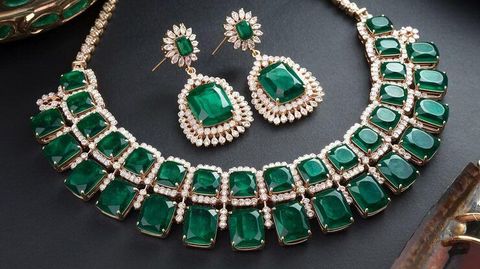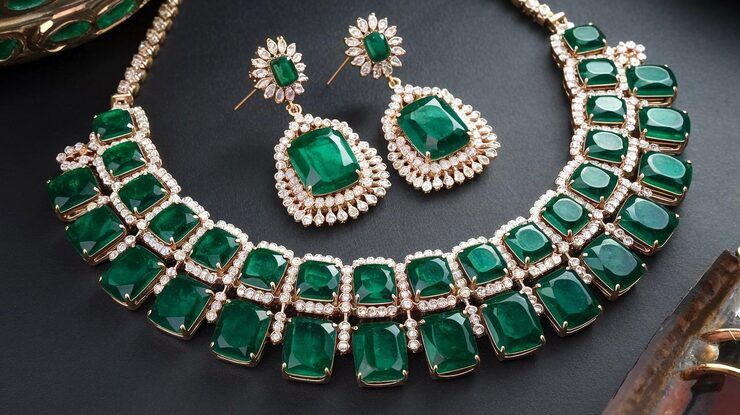
Royal emerald necklace sets are jewelry collections centered on emerald gemstones, often paired with matching earrings, pendants, bracelets, or other decorative pieces. These sets are associated with formal occasions, traditional jewelry, ceremonial dress, and heritage-inspired design.
Emeralds are a green variety of the mineral beryl. Their color generally comes from trace amounts of chromium, vanadium, or a combination of these elements. The appearance of an emerald depends on its color, transparency, inclusions, cut, and overall craftsmanship.
The word “royal” in jewelry descriptions usually refers to an elaborate appearance, traditional design influences, or an association with formal and ceremonial jewelry. It does not automatically mean that a piece belonged to a royal family or has an official historical connection.
Understanding Royal Emerald Necklace Designs
Royal-style emerald necklace sets often combine colored gemstones with precious metals and decorative settings. Designs may be inspired by historical court jewelry, traditional cultural ornaments, or contemporary formal jewelry.
Common design features include:
Large central emeralds
Graduated gemstone arrangements
Diamond or colorless gemstone accents
Gold or platinum settings
Matching drop earrings
Layered necklace structures
Floral and geometric motifs
Intricate metalwork
Pear-shaped, oval, or rectangular emerald cuts
Some sets emphasize a single prominent emerald, while others use multiple stones arranged symmetrically. The overall appearance depends on the relationship between gemstone size, color, metal setting, and decorative details.
Types of Emerald Necklace Sets
Traditional necklace sets: These often feature detailed metalwork, repeated gemstone patterns, and matching earrings. They may reflect regional jewelry traditions and ceremonial styles.
Contemporary emerald sets: Modern designs may use simpler settings, geometric forms, or smaller emeralds arranged with diamonds.
Vintage-inspired designs: These incorporate decorative elements associated with earlier jewelry periods, such as intricate filigree, milgrain edges, and symmetrical gemstone arrangements.
Statement necklace sets: These emphasize larger stones, multiple rows, or elaborate designs intended for formal clothing and special occasions.
The term “royal emerald necklace” is descriptive rather than a standardized gemstone classification. Design, craftsmanship, and documented history should be evaluated separately.
Why Royal Emerald Necklace Sets Matter
Emerald necklace sets combine gemstone science, jewelry craftsmanship, cultural traditions, and personal style. Understanding these elements helps consumers, collectors, designers, and students of gemology evaluate jewelry more accurately.
Cultural and Historical Significance
Green gemstones have appeared in jewelry across different civilizations. Emeralds became particularly associated with wealth, status, and decorative artistry in various historical settings.
Traditional necklace sets can also reflect regional techniques, including gemstone inlay, hand engraving, filigree, and elaborate goldwork. Their cultural significance depends on the particular design tradition and documented history.
Gemstone Quality and Appearance
Emerald quality is influenced by several factors:
Color: Rich green color is highly valued, although hue, tone, and saturation all affect appearance.
Clarity: Natural emeralds commonly contain internal inclusions, sometimes described in the trade as a garden.
Cut: The cut influences how the gemstone displays its color and how it fits into the overall design.
Carat weight: This measures gemstone weight rather than its physical dimensions.
Treatment: Many emeralds undergo clarity enhancement, commonly through oils or resins.
These characteristics should be considered together. A larger gemstone is not automatically more desirable than a smaller stone with better color, transparency, or craftsmanship.
Recent Developments and Jewelry Trends
During 2025 and 2026, fine jewelry design continued to reflect interest in colored gemstones, heritage-inspired craftsmanship, and greater transparency about gemstone origin and treatment.
Colored Gemstone Design
Emeralds remain a recognizable choice in colored gemstone jewelry. Contemporary designs combine green stones with diamonds, white metals, yellow gold, and contrasting gemstones.
Design approaches include both elaborate statement necklaces and more restrained pieces that emphasize the natural color of individual emeralds. The suitability of a design depends on personal preferences, cultural context, and intended use.
Traceability and Responsible Sourcing
Gemstone provenance has received growing attention across the jewelry industry. Buyers and collectors increasingly examine available information about mining origin, processing, treatment, and the chain of custody.
However, documentation standards differ, and a statement about a gemstone's origin should not be treated as independently verified unless supported by appropriate evidence.
Gemological Identification
Advances in gemological testing continue to support the identification of natural emeralds, laboratory-grown emeralds, imitations, and treatments.
Professional laboratories may use microscopy, spectroscopy, and other analytical techniques to assess gemstone characteristics. Not every treatment or origin determination can be established with equal certainty, and laboratory reports should be interpreted according to their stated scope.
Laws, Standards, and Consumer Protection
Rules governing emerald necklace sets depend on the country where jewelry is manufactured, imported, advertised, or sold. Relevant areas include gemstone descriptions, precious-metal purity, product labeling, consumer protection, and import documentation.
Gemstone Disclosure
Accurate descriptions should distinguish natural emeralds from laboratory-grown stones and imitations. Relevant treatments should also be disclosed in accordance with applicable national rules and recognized trade practices.
The Gemological Institute of America provides educational information about emerald identification, treatments, and laboratory reports. Its grading and identification terminology can help readers understand the differences between gemstone characteristics and marketing descriptions.
Precious-Metal Hallmarking
Some countries require or provide formal hallmarking systems for gold, silver, or platinum jewelry.
For example, India operates a Bureau of Indian Standards hallmarking framework for specified precious-metal articles. Requirements depend on the applicable regulations and product category.
Metal purity markings and gemstone documentation address different characteristics. A gold hallmark does not independently establish the identity, quality, or treatment status of an emerald.
Advertising and Consumer Information
Jewelry descriptions should avoid unsupported claims about gemstone origin, historical ownership, rarity, investment performance, or certification.
Terms such as “royal,” “antique,” and “museum quality” should not be interpreted as proof of official provenance. Documented evidence is necessary when a claim concerns historical ownership or a specific heritage connection.
Tools and Resources for Evaluating Emerald Jewelry
Several resources can help readers understand gemstone quality and jewelry construction.
Gemological Reference Materials
Educational resources from established gemological organizations explain emerald characteristics, common treatments, synthetic gemstones, and identification methods.
A laboratory report may provide information about gemstone identity, whether a stone is natural or laboratory-grown, detectable treatments, and other characteristics within the laboratory's stated scope.
Jewelry Evaluation Checklist
| Evaluation Factor | What to Examine |
|---|---|
| Gemstone identity | Natural emerald, laboratory-grown emerald, or imitation |
| Color | Hue, tone, saturation, and consistency |
| Clarity | Visible inclusions and transparency |
| Treatment | Available disclosure and laboratory findings |
| Metal | Gold, silver, platinum, or another material |
| Craftsmanship | Setting security, symmetry, and finishing |
| Documentation | Reports, receipts, and provenance records |
| Maintenance | Cleaning instructions and repair requirements |
Jewelry Care Resources
Emeralds can be sensitive to pressure, sudden temperature changes, and certain cleaning treatments, especially when their fractures have been filled with oil or resin.
Care practices should reflect the stone's condition and treatment history. Ultrasonic cleaners and steam cleaning can be unsuitable for some emeralds. A qualified jeweler or gemologist can advise on appropriate cleaning methods.
Frequently Asked Questions
What makes an emerald necklace set royal in style?
The description generally refers to an elaborate appearance, traditional motifs, prominent gemstones, or formal jewelry design. It does not establish royal ownership or historical authenticity.
Are natural emeralds different from laboratory-grown emeralds?
Yes. Natural emeralds form through geological processes, while laboratory-grown emeralds are produced under controlled conditions. Both have emerald's characteristic mineral composition, but their growth features and market classifications differ.
How can emerald quality be evaluated?
Color, clarity, cut, carat weight, treatment, and overall craftsmanship are important considerations. A qualified gemologist or recognized laboratory can help assess characteristics that are difficult to determine by visual inspection alone.
Do all emeralds require treatment?
No, but many emeralds receive clarity enhancement to improve their appearance. Treatment varies from stone to stone, so available disclosure and laboratory findings should be reviewed rather than assuming every emerald has the same treatment history.
How should an emerald necklace set be maintained?
Store the pieces separately to reduce scratching, avoid harsh chemicals, and use gentle cleaning methods appropriate to the gemstone and its treatment. Professional inspection can help identify loose settings or other damage.
Conclusion
Royal emerald necklace sets bring together green gemstones, decorative metalwork, cultural traditions, and contemporary jewelry design. Their appearance depends on gemstone characteristics, cutting techniques, setting quality, and the relationship between the necklace and its matching pieces.
Understanding emerald identification, clarity enhancement, precious-metal purity, and documentation can help readers distinguish descriptive claims from verifiable information. Recent attention to gemstone traceability and improved identification methods also highlights the importance of transparency within the jewelry industry.
Whether studied as an example of fine jewelry craftsmanship or as part of a broader interest in colored gemstones, emerald necklace sets are best understood through a combination of gemological knowledge, design appreciation, responsible sourcing information, and appropriate care.