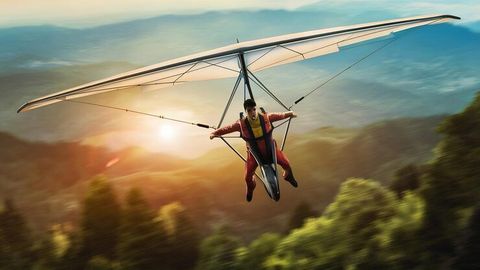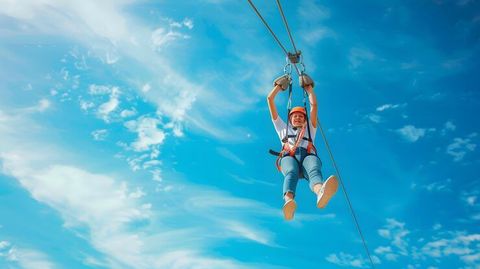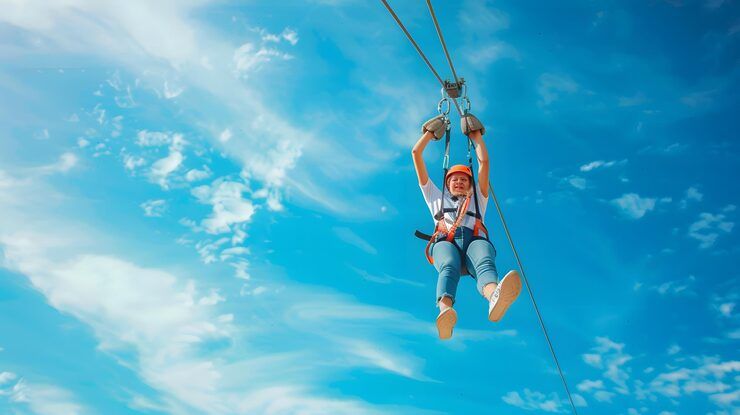
A sky swing is a large-scale adventure attraction that moves participants through a wide swinging arc, often from an elevated structure overlooking a valley, gorge, canyon, or other natural landscape. Unlike a conventional playground swing, a giant adventure swing uses engineered support structures, harnesses or restraints, attachment systems, and controlled operating procedures.
Sky swings are found at adventure destinations around the world. Their design can vary considerably. Some systems use cables attached to tall structures, while others combine a suspended passenger arrangement with a controlled release and pendulum-style movement.
The activity has become part of adventure tourism, extreme outdoor recreation, and scenic travel. Its appeal comes from combining a large physical movement with views of the surrounding landscape.
Because participants are elevated and exposed to significant movement, a sky swing requires careful engineering, equipment inspection, participant screening, operating procedures, and emergency planning. Understanding these factors gives travelers a more realistic view of how giant swing attractions are designed and managed.
How a Sky Swing Works
A large adventure swing generally uses a supporting structure, suspension cables or ropes, a passenger harness or restraint system, and an engineered swing mechanism.
Depending on the design, the sequence can include:
Participant briefing
Weight and eligibility assessment
Harness or restraint fitting
Equipment inspection
Positioning on the platform
Controlled release or launch
Pendulum-style movement
Gradual reduction in swing motion
Controlled recovery
The precise procedure depends on the attraction's engineering design.
The Physics Behind a Giant Swing
A sky swing converts gravitational potential energy into movement. When a participant is positioned at an elevated point and released within the engineered system, gravity causes movement through an arc.
The motion is influenced by factors such as:
Suspension length
Starting height
Participant mass
Cable or rope characteristics
Structural geometry
Release mechanism
Wind conditions
Damping or braking systems
These calculations should be performed by qualified engineers and equipment specialists. Participants should never attempt to modify a swing system or independently calculate operating parameters.
Why the Structure Matters
The supporting structure must be designed to handle the loads generated during operation. Dynamic forces can differ substantially from the static weight of a passenger.
Engineering considerations can include:
Structural strength
Anchor points
Cable or rope loading
Connection systems
Dynamic forces
Clearance
Platform design
Emergency access
Environmental exposure
Inspection requirements
For attractions located on cliffs, towers, or bridges, the surrounding terrain adds another layer of planning.
Why Sky Swing Adventures Matter Today
Growth of Adventure Tourism
Adventure attractions have become part of destination tourism in mountain, canyon, forest, and coastal regions. Giant swings can provide visitors with a different perspective of a landscape while also functioning as a recreational activity.
The subject is relevant to travelers researching:
Adventure travel destinations
Extreme sports travel
Outdoor recreation
Scenic tourism
Mountain tourism
Travel insurance for adventure activities
Family adventure planning
The attraction is not simply about height. Its design, movement, location, equipment, and operating procedures all influence the participant experience.
Accessibility and Participation
Sky swings can attract a broad range of visitors, but eligibility varies between attractions. Restrictions may involve age, body weight, height, medical conditions, pregnancy, mobility requirements, or other factors.
Participant requirements should be communicated before participation so people can determine whether the activity is appropriate for them.
Safety Management
A large swing involves multiple potential hazards. Safety management therefore relies on several layers rather than a single restraint.
Important areas can include:
Structural inspection
Harness inspection
Cable or rope inspection
Connection-point checks
Operator training
Participant briefing
Weather monitoring
Weight limits
Emergency procedures
Periodic engineering review
No recreational attraction can be described as completely without risk. Proper maintenance and operating procedures are intended to reduce foreseeable hazards.
| Factor | Why It Matters |
|---|---|
| Structure | Supports the overall attraction |
| Suspension system | Transfers loads during movement |
| Harness or restraint | Keeps participants secured |
| Participant weight | Affects operating parameters |
| Swing arc | Determines required clearance |
| Weather | Can affect operating conditions |
| Inspection | Identifies wear or damage |
| Emergency planning | Supports controlled response |
Recent Developments and Standards
Updated Aerial Adventure Standards
ASTM International maintains standards covering aerial adventure facilities. ASTM F2959-25b addresses aerial adventure courses and includes criteria relating to design, manufacture, installation, integration, operation, maintenance, auditing, and major modification. The standard specifically addresses systems where participants use harnesses to prevent or control falls from height.
ASTM also lists F2959-26a as the active version of the aerial-adventure-course standard in its current standards catalog.
A sky swing may not automatically fall within every provision of an aerial-adventure-course standard. Its classification depends on the design and applicable regulatory framework.
Increasing Attention to Risk Assessment
Modern adventure attractions increasingly emphasize formal risk assessment, inspection documentation, maintenance records, emergency planning, and participant information.
ASTM's recreation standards portfolio includes dedicated practices covering both aerial adventure courses and risk assessment for amusement rides and devices.
This reflects a broader movement toward structured safety management rather than relying only on operator experience.
Digital Inspection and Recordkeeping
Adventure facilities can now use digital systems to record equipment inspections, maintenance activities, incidents, staff training, and operational checks.
Useful digital records can help identify recurring equipment issues and establish whether scheduled inspections have been completed.
Technology is a supporting tool, however. Physical inspection by appropriately qualified personnel remains essential for structural and safety-critical components.
Environmental Conditions
Sky swings located in exposed mountain or canyon environments may face additional environmental challenges.
Wind, rain, snow, temperature changes, corrosion, ultraviolet exposure, and natural hazards can influence equipment condition and operating decisions.
Attractions in areas prone to landslides, flooding, earthquakes, or severe storms may also require additional hazard-management procedures.
Laws, Regulations and Government Policies
New Zealand as a Regulatory Example
New Zealand provides a useful example because its regulatory system distinguishes between adventure activities and amusement devices.
WorkSafe New Zealand explains that amusement devices must be examined by an appropriate Chartered Professional Engineer or competent person, registered with WorkSafe where applicable, and operated under the required local-authority permit framework.
Whether a particular sky swing falls under amusement-device regulations, adventure-activity regulations, or another framework depends on its design and operation.
Amusement Devices Regulations
New Zealand's Amusement Devices Regulations 1978 remain in force, with the current legislation version shown as at April 5, 2026. The regulations cover matters including examination, registration, permits, maintenance, inspections, incident notification, and operator training.
The regulations require engineering examination of applicable amusement devices. The examination considers matters such as construction, braking or safety systems, passenger restraint, dynamic loads, critical speeds, vibration, and other engineering factors.
Local authorities can also assess the site and device before issuing the relevant operating permit. The assessment can consider ground stability, clearance from fixed or moving objects, protective barriers, and compliance with local bylaws.
Adventure Activity Regulations
New Zealand's Health and Safety at Work (Adventure Activities) Regulations 2016 establish a separate framework for covered adventure activities. WorkSafe states that the regulations include registration and safety-audit requirements for applicable operators. Amendments made in 2023 strengthened risk communication and registration requirements, with the changes taking effect on April 1, 2024.
The distinction is important because not every attraction using the word "adventure" is automatically regulated in exactly the same way.
2026 Legislative Development
New Zealand legislation amended the Health and Safety at Work framework in 2026 to identify certain adventure-activity and amusement-device hazards within a schedule addressing critical-risk hazards. The legislation specifically lists hazards associated with the construction, erection, operation, alteration, and certain repairs of amusement devices.
Travelers should therefore rely on current government information rather than older tourism articles when researching regulatory requirements.
Tools and Resources for Sky Swing Planning
Weather Resources
Weather can influence whether an elevated swing operates on a particular day.
Useful resources include:
National meteorological agencies
Local weather stations
Wind forecasts
Rainfall information
Severe-weather alerts
Mountain weather forecasts
Satellite and radar information
Strong winds, lightning, heavy rain, snow, or other hazardous conditions may affect operations.
Safety and Equipment Documentation
A professionally managed attraction may maintain records covering:
Structural inspections
Harness inspections
Cable and rope checks
Anchor-point assessments
Maintenance schedules
Operator training
Incident records
Emergency procedures
Weather-related operating decisions
Participants generally do not need to perform engineering calculations themselves. These responsibilities belong within the attraction's established safety system.
Travel and Insurance Resources
People researching adventure travel insurance should carefully review policy definitions. A giant swing may be classified differently from ordinary sightseeing or other recreational activities.
Useful planning resources include:
National tourism authorities
Government safety regulators
Local weather agencies
Travel insurance documents
Emergency information
Destination transportation information
Local health and accessibility information
Participant Preparation
Before participating, travelers can consider:
Review age and weight requirements.
Check health-related restrictions.
Follow the safety briefing.
Wear appropriate clothing and footwear.
Secure loose personal items.
Inform staff about relevant mobility requirements.
Check current weather conditions.
Review travel insurance exclusions.
Follow all operator instructions.
Understand the recovery procedure before the activity begins.
Frequently Asked Questions
What is a sky swing?
A sky swing is a large engineered swing designed for recreational use, usually involving a harness or restraint system and a substantial swinging arc. It may be installed on a tower, bridge, cliff, platform, or other supporting structure.
How does a giant swing stay safe?
Safety depends on several systems working together. These can include structural engineering, suitable suspension equipment, passenger restraints, inspection procedures, operator training, participant screening, clearance requirements, and emergency planning.
Can weather affect a sky swing?
Yes. Wind, lightning, heavy rainfall, snow, extreme temperatures, or other environmental conditions can affect operations. The attraction's operating procedures should determine whether conditions are appropriate.
Are sky swings regulated?
Yes, but the exact rules depend on the country and the design of the attraction. In New Zealand, applicable attractions may fall under amusement-device or adventure-activity frameworks, with requirements involving examination, registration, permits, safety audits, and risk management.
Does travel insurance cover sky swing activities?
Coverage varies by policy. Some travel insurance policies may classify large adventure attractions under specific recreational or adventure categories. Travelers should check the policy's activity definitions, exclusions, geographical limitations, and eligibility conditions before participating.
Conclusion
Sky swing adventures combine structural engineering, mechanical systems, outdoor recreation, and adventure tourism. The large swinging movement creates a distinctive experience, but the attraction depends on carefully designed structures, suspension systems, participant restraints, operating procedures, and maintenance programs.
Recent developments in technical standards demonstrate continued attention to the design, inspection, operation, and auditing of aerial adventure attractions. ASTM's updated F2959 series provides one example of how the industry continues to develop structured technical guidance.
New Zealand provides another useful example through its combination of amusement-device regulations and adventure-activity requirements. Current rules address engineering examination, registration, local permits, inspections, operator training, risk communication, and safety auditing where applicable.
For travelers, sensible preparation includes checking eligibility requirements, understanding weather conditions, reviewing relevant travel insurance documentation, following safety instructions, and using current government information when researching regulations.
A sky swing may look simple from the participant's perspective, but its safe operation involves engineering, inspection, human factors, environmental assessment, and structured risk management. Understanding those elements provides a clearer and more informed view of modern adventure tourism.