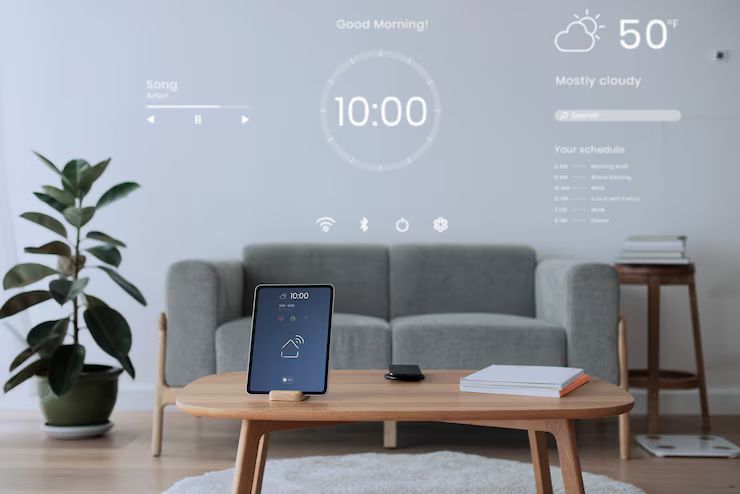
Smart sensors are electronic devices designed to detect physical or environmental changes and convert that information into digital data that can be processed, analyzed, or transmitted. They exist because traditional sensors, while capable of measurement, often required manual interpretation or standalone systems. Smart sensors combine sensing elements with processing capabilities, allowing them to filter data, make basic decisions, and communicate results automatically.
Smart sensors developed alongside advances in microelectronics, embedded systems, and digital communication. As devices became smaller and more powerful, it became possible to combine sensing, processing, and connectivity into a single unit. This integration allows smart sensors to function as part of larger systems rather than operating independently.
In educational and technical contexts, smart sensors are often introduced as a key element of modern digital systems. They convert physical signals—such as temperature, motion, or pressure—into usable data that supports automation and decision-making.
Importance: Why Smart Sensors Matter Today
Smart sensors are important because modern environments rely on automated and interconnected systems. Accurate, real-time data is essential for efficient operation and system responsiveness.
Key Reasons This Topic Matters
Smart sensors matter because they:
- Enable automation by responding to changing conditions
- Improve data accuracy through built-in processing
- Increase efficiency by reducing unnecessary data transmission
- Support scalability across large networks
They are used by engineers, researchers, planners, and consumers across various sectors. Smart sensors also help address challenges such as energy efficiency, safety monitoring, and predictive maintenance.
Recent Developments and Trends
Smart sensor technology has evolved during 2024 and 2025, driven by improvements in processing, energy use, and connectivity.
Edge Processing
In early 2024, smart sensors increasingly incorporated edge computing, allowing data to be processed locally rather than sent to centralized systems.
Low-Power Design
Mid-2024 developments focused on reducing energy consumption, extending the operational life of sensors in remote environments.
Interoperability
Late 2024 emphasized standardized communication protocols, enabling sensors from different systems to work together.
Data Reliability
Improved calibration and validation methods enhanced the accuracy and consistency of sensor data.
Trends Overview
| Trend Area | Description | Timeframe |
|---|---|---|
| Edge processing | Local data analysis within sensors | Early 2024 |
| Low-power design | Reduced energy consumption | Mid 2024 |
| Interoperability | Standard communication protocols | Late 2024 |
| Data reliability | Enhanced calibration and validation | 2023–2024 |
Laws and Policies: Regulatory Considerations
Smart sensors operate within frameworks related to data protection, safety, and technical standards.
Key Regulatory Areas
- Data privacy and protection requirements
- Safety standards for critical systems
- Calibration and performance guidelines
- Communication and interoperability standards
In the European Union, regulations such as the General Data Protection Regulation influence how sensor data is collected and processed.
International standards organizations also define performance and communication guidelines to ensure reliability and compatibility.
Tools and Resources for Smart Sensors
Various tools help in understanding, designing, and managing smart sensor systems. These resources are widely used in education and technical applications.
Useful Tools and References
- Sensor simulation software
- Data visualization tools
- Standards organization resources
- Embedded systems documentation
- Educational technology platforms
Common Types of Smart Sensors
| Sensor Type | Measures | Common Context |
|---|---|---|
| Temperature sensor | Heat changes | Environmental monitoring |
| Pressure sensor | Force per area | Industrial systems |
| Motion sensor | Movement | Security and automation |
| Optical sensor | Light levels | Imaging and detection |
Frequently Asked Questions
What makes a sensor “smart”?
A smart sensor includes processing and communication capabilities along with measurement functions.
Do smart sensors work independently?
They can operate independently but are often part of larger systems or networks.
Are smart sensors always connected to the internet?
No, some operate locally without continuous internet connectivity.
How is accuracy maintained?
Through calibration, signal processing, and validation methods built into the system.
Where are smart sensors used?
They are used in environmental monitoring, infrastructure systems, consumer devices, and research applications.
Conclusion: Smart Sensors in Modern Systems
Smart sensors play a crucial role in connecting the physical and digital worlds. By combining sensing, processing, and communication, they enable automated responses and informed decision-making.
Recent trends highlight advancements in edge computing, energy efficiency, and interoperability. Understanding smart sensors provides insight into how modern systems monitor, analyze, and respond to real-world conditions in a structured and efficient way.