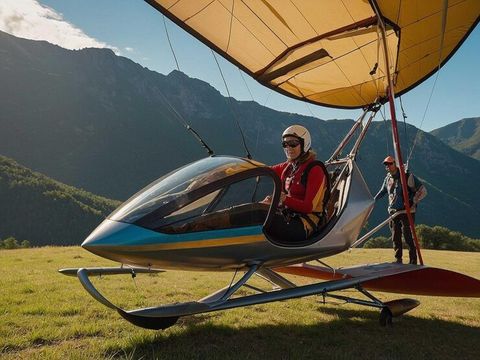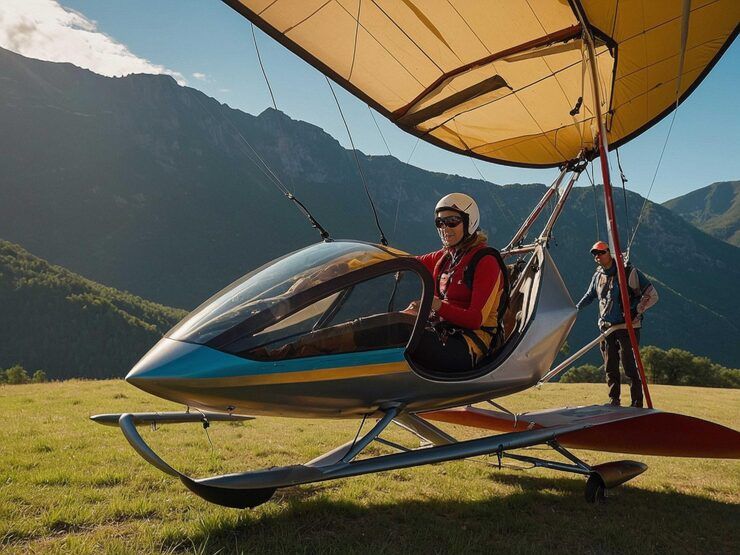
Hang gliding is a form of unpowered recreational aviation in which a pilot flies a lightweight aircraft with a rigid frame and flexible fabric wing. The pilot is normally suspended beneath the wing in a harness and controls the aircraft primarily through body movement and aerodynamic control.
Unlike powered aircraft, a hang glider does not normally use an engine. Pilots launch from suitable terrain and use gravity, wind, ridge lift, and thermal activity to maintain flight.
Hang gliding experiences can range from introductory training flights to longer cross-country flights conducted by experienced pilots. Mountain ridges, coastal cliffs, valleys, and elevated launch sites are common environments because terrain can create upward-moving air.
The activity combines adventure travel, aviation training, outdoor recreation, aerial sports, meteorology, navigation, and equipment management. Understanding these elements is useful for anyone researching hang gliding destinations or planning an introduction to free flight.
How Hang Gliding Works
A hang glider uses a triangular frame supporting a fabric wing. The wing creates aerodynamic lift as air moves across its surface.
The pilot generally controls the glider by shifting body weight relative to the frame. This changes the aircraft's attitude and direction.
Important equipment can include:
Hang glider wing
Control frame
Pilot harness
Helmet
Carabiner and hang strap
Reserve parachute
Variometer
Altimeter
GPS navigation equipment
Appropriate protective clothing
Before each flight, the equipment needs careful inspection and correct assembly. USHPA's safety guidance specifically emphasizes preflight awareness and equipment checks because assembly errors can create serious hazards.
Understanding Lift
Hang gliders can remain airborne by using naturally rising air.
Ridge lift occurs when wind encounters a mountain or ridge and is redirected upward.
Thermal lift develops when sunlight heats the ground, causing warmer air to rise.
Dynamic and terrain-influenced airflow can also affect flight conditions, particularly around mountains and coastal areas.
The strength and reliability of these air movements vary with weather, terrain, time of day, and season.
Why Hang Gliding Matters Today
A Distinctive Form of Adventure Travel
Hang gliding provides an aerial perspective without the use of a conventional engine-powered aircraft. Pilots can fly above mountain landscapes, coastlines, valleys, forests, and open countryside.
The activity is relevant to travelers researching:
Adventure travel destinations
Mountain tourism
Outdoor recreation
Aerial sports
Aviation training
Scenic flight experiences
Travel insurance for adventure activities
Unlike sightseeing from a conventional aircraft, hang gliding places the pilot directly in the surrounding atmosphere. This makes weather knowledge and decision-making central parts of the experience.
Training and Skill Development
Hang gliding requires progressive learning. Training commonly begins with ground handling and basic control exercises before students progress to higher launches and longer flights.
USHPA describes modern training as an incremental process that develops skills progressively rather than relying on trial and error.
A structured training approach can help pilots learn:
Launch technique
Landing technique
Weight-shift control
Weather interpretation
Equipment inspection
Airspace awareness
Emergency procedures
Flight planning
Risk assessment
Weather Is Central to the Activity
Weather is one of the most important factors affecting hang gliding. Wind, turbulence, thermals, cloud development, visibility, and precipitation can all influence a flight.
A general forecast may not describe conditions accurately at a particular launch site. Pilots therefore need to understand both regional weather patterns and local terrain effects.
| Factor | Influence on Hang Gliding |
|---|---|
| Wind speed | Affects launch, control and landing |
| Wind direction | Determines usable ridge lift |
| Thermals | Can provide additional altitude |
| Turbulence | Can affect wing stability |
| Cloud development | Indicates changing atmospheric conditions |
| Visibility | Affects navigation and terrain awareness |
| Terrain | Influences airflow and emergency options |
| Temperature | Helps determine thermal development |
Recent Developments in Hang Gliding
2025 Equipment Safety Notice
In October 2025, the United States Hang Gliding and Paragliding Association issued a safety notice concerning preflight awareness and possible control-frame assembly issues on certain hang gliders.
The notice encouraged pilots to use additional visual checks and emphasized that a thorough preflight inspection remains an important defense against assembly mistakes. Manufacturers were also working on measures intended to reduce the possibility of incorrect assembly on affected designs.
This development highlights an important principle in modern hang gliding: equipment technology can improve, but systematic inspection remains essential.
New Age Requirements in 2025
USHPA introduced minimum age requirements effective September 1, 2025. The organization established minimum ages of 14 for solo and tandem students, 16 for solo flight ratings, and 18 for instructor certifications for hang gliding and paragliding.
These are USHPA requirements and should not be confused with universal government regulations. Requirements in other countries can differ.
Digital Flight Planning
Digital technology has also become increasingly useful for recreational aviation. Pilots can combine weather forecasts, GPS navigation, terrain mapping, airspace information, and flight-recording tools.
The FAA's aeronautical information includes designated symbols for hang gliding activity areas when applicable, demonstrating how recreational flying areas can be incorporated into aviation information systems.
These technologies can improve situational awareness but cannot replace pilot training or sound judgment.
Laws, Regulations and Policies
United States Federal Rules
In the United States, hang gliders generally fall within the Federal Aviation Administration's regulatory framework for ultralight vehicles under 14 CFR Part 103, when the aircraft meets the applicable definition.
FAA and USHPA guidance identifies important Part 103 requirements affecting hang gliders and paragliders. These include recreational or sporting use, daylight operations, right-of-way requirements, and limitations involving clouds and populated areas.
The exact legal requirements depend on the aircraft and operating circumstances, so pilots should consult the current federal regulations rather than relying on simplified summaries.
Tandem Operations
Part 103 generally concerns single-occupant ultralight vehicles. Tandem training operations for hang gliders and paragliders can operate under specific FAA exemptions.
FAA Exemption 4721 allows certain USHPA tandem operations under defined conditions, with flights conducted for training purposes and subject to the exemption's requirements.
This distinction is important for people researching introductory tandem hang gliding because a tandem instructional flight is not automatically equivalent to unrestricted recreational passenger aviation.
Towing Operations
Some hang gliding pilots launch through aerotowing or other towing methods. FAA Exemption 4144 provides specific authorization for certain USHPA towing operations, subject to stated conditions and limitations.
Those requirements address matters such as pilot ratings, vehicle standards, towing procedures, records, and operational limitations.
Local Flying-Site Rules
Federal aviation requirements are only part of the planning process. Individual flying sites can have additional rules established by landowners, local authorities, clubs, or site-management organizations.
Pilots may need to consider:
Launch permissions
Landing areas
Local airspace
Wildlife restrictions
Park regulations
Seasonal limitations
Site-specific safety procedures
USHPA notes that pilots traveling internationally must comply with the laws of the country where they intend to fly and may need to meet requirements established by local organizations.
Tools and Resources for Hang Gliding
Weather Planning
Weather information is fundamental to flight preparation.
Useful resources include:
National meteorological agencies
Aviation weather information
Wind forecasts
Local weather stations
Radar and satellite imagery
Mountain weather forecasts
Official severe-weather alerts
USHPA emphasizes weather understanding as a central part of hang gliding and paragliding risk management.
Airspace and Navigation
Pilots can use aviation charts and digital navigation tools to understand the surrounding airspace and terrain.
Useful resources include:
Official aeronautical charts
GPS navigation applications
Digital terrain maps
Airspace databases
NOTAM information
Local flying-site maps
National aviation authority publications
Before traveling internationally, pilots should verify whether their normal navigation tools accurately represent the destination's airspace.
Training and Safety Resources
USHPA provides educational resources covering training, ratings, safety, risks, tandem flying, and international travel.
The organization also maintains accident-analysis and safety resources designed to support continuing pilot education.
A basic preparation checklist can include:
Review the current weather.
Inspect the glider before assembly and launch.
Confirm the harness and hang strap.
Check the reserve parachute.
Review local airspace.
Confirm launch and landing areas.
Understand emergency procedures.
Follow instructor or site requirements.
Carry appropriate identification.
Review travel insurance conditions.
Travel Insurance Considerations
Travel insurance policies can classify hang gliding as an adventure or high-risk activity. Coverage can vary according to the type of flight, location, pilot status, training activity, and policy exclusions.
Travelers researching adventure travel insurance should read the actual policy wording rather than assuming that standard travel coverage automatically includes hang gliding.
Frequently Asked Questions
What is a hang gliding experience?
A hang gliding experience generally involves learning or participating in unpowered flight using a rigid-frame glider. Depending on the location and regulations, an introductory experience may involve structured training or an approved tandem arrangement.
Is hang gliding safe?
Hang gliding has inherent aviation and outdoor risks. Safety depends on training, weather assessment, equipment condition, launch technique, landing ability, airspace awareness, and pilot decision-making. USHPA identifies weather, equipment, judgment, and decision-making as important areas of risk management.
What weather is suitable for hang gliding?
Suitable conditions depend on the pilot, aircraft, location, and experience level. Strong winds, severe turbulence, thunderstorms, poor visibility, or rapidly changing conditions can make flying inappropriate. Local conditions should be assessed before launch.
Do I need training to fly a hang glider?
Yes. Proper training is essential for learning launch, flight, landing, equipment, meteorology, and emergency procedures. In the United States, USHPA provides a structured rating system, while applicable FAA requirements also need to be followed.
Does travel insurance cover hang gliding?
Not necessarily. Hang gliding may be specifically excluded or classified as an adventure activity in some policies. Travelers should check the policy's activity definitions, exclusions, geographical limitations, and eligibility requirements before participating.
Conclusion
Hang gliding combines aviation, meteorology, outdoor recreation, and skill development. Its ability to use natural rising air allows pilots to explore mountain ridges, valleys, coastlines, and other landscapes without a conventional engine.
Recent developments have placed continued attention on equipment inspection, pilot education, age requirements, airspace awareness, and structured safety practices. The October 2025 USHPA safety notice demonstrated why detailed preflight checks remain important even as equipment continues to evolve.
In the United States, hang gliding is generally associated with the FAA's Part 103 ultralight framework, while specific tandem and towing activities can operate under defined exemptions. Local flying-site requirements can add another layer of rules.
For travelers and new pilots, responsible preparation begins with appropriate training, current weather information, equipment inspection, airspace awareness, and knowledge of local regulations. International pilots should also verify the requirements of the destination country before flying.
Hang gliding is therefore not simply a scenic outdoor activity. It is a form of aviation that requires technical knowledge, physical awareness, careful planning, and continuous attention to changing environmental conditions.