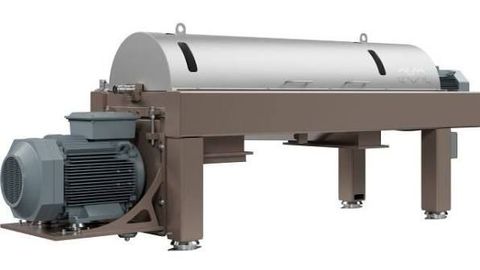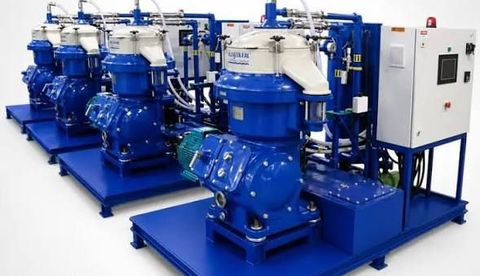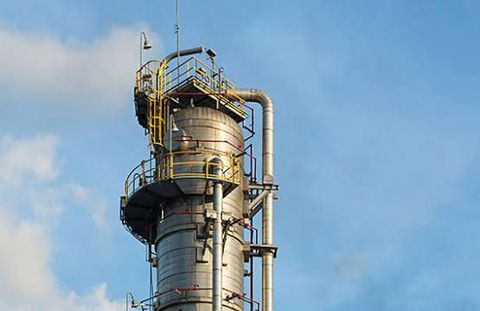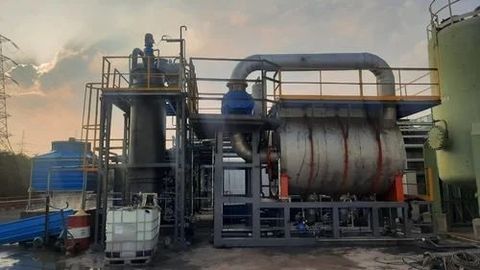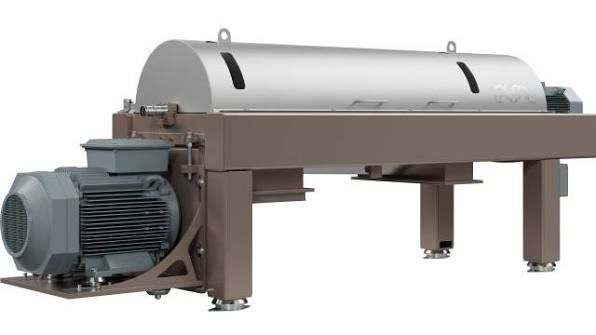
Industrial decanter systems are separation machines used in processing environments to separate solid particles from liquids, or to divide materials with different densities.
They are commonly associated with continuous processing operations where mixtures need to be clarified, concentrated, or dewatered before moving to another production stage.
An industrial decanter generally uses centrifugal force to accelerate separation. A rotating bowl creates a strong centrifugal field, while an internal conveyor moves separated solids toward an outlet. Depending on the application, the system may handle wastewater, food-processing residues, mineral slurries, chemical mixtures, or other industrial materials.
The basic principle is straightforward: materials with different densities respond differently to centrifugal force. However, actual performance depends on factors such as feed characteristics, solids concentration, particle size, viscosity, rotation speed, and equipment configuration.
How Industrial Decanter Systems Work
A typical system receives a liquid-solid mixture through a feed arrangement. Centrifugal force causes denser particles to move toward the outer part of the rotating bowl, while the lighter liquid remains closer to the central region.
An internal conveyor gradually transports the separated solids toward a discharge area. The clarified liquid exits through a separate outlet. This continuous arrangement allows separation to take place while material keeps moving through the processing line.
Common Industrial Applications
Industrial decanter systems can be used across several sectors. Common applications include:
- Wastewater treatment and sludge dewatering
- Food and beverage processing
- Chemical processing
- Mineral and aggregate processing
- Oil and industrial liquid treatment
- Pulp and paper operations
- Bio-based processing environments
The exact configuration varies according to the material being processed and the required separation characteristics.
Importance
Processing delays can develop when separation equipment becomes overloaded, poorly adjusted, or exposed to feed conditions outside its intended operating range. Reduced separation efficiency can increase the amount of liquid remaining with solids or allow unwanted particles to remain in the clarified liquid.
For industrial facilities, understanding decanter performance can therefore help explain why downstream processes sometimes experience inconsistent material conditions. A separation stage that operates differently from its normal range can influence filtration, drying, storage, transport, and subsequent processing.
Factors That Influence Performance
Several operating conditions affect industrial decanter systems. Feed flow determines how much material enters the equipment during a given period. Solids concentration influences the amount of material that must be transported through the bowl.
Particle size and density also matter because separation depends partly on how different materials respond to centrifugal force. Liquid viscosity can affect movement within the rotating bowl, while temperature may influence viscosity and other physical properties.
| Performance Factor | Potential Effect |
|---|---|
| Feed flow | Influences equipment loading |
| Solids concentration | Affects solids transport |
| Particle size | Influences separation behavior |
| Liquid viscosity | Affects particle movement |
| Rotation speed | Changes centrifugal conditions |
| Solids discharge | Influences continuous operation |
Recognizing Processing Changes
Operators may monitor indicators such as liquid clarity, solids dryness, vibration, feed pressure, throughput, and changes in power consumption. These observations can help identify changes in operating conditions before they develop into larger processing interruptions.
Routine inspection is also relevant because wear on rotating components, conveyor sections, seals, and other parts can influence operating behavior. Monitoring should follow the equipment manufacturer's operating requirements and applicable workplace procedures.
Tools and Resources
Several resources can help readers understand industrial decanter systems and their operating principles. Manufacturer technical manuals can provide information about equipment configuration, operating ranges, component identification, and maintenance intervals.
Engineering reference materials can help explain centrifugal separation, fluid behavior, particle settling, and solids handling. Process-design calculators may also be used to examine flow rates, residence conditions, density differences, and related engineering parameters.
Useful resources include:
- Equipment operation and maintenance manuals
- Centrifugal separation reference guides
- Process flow diagrams
- Preventive inspection checklists
- Equipment monitoring logs
- Industrial process calculation tools
- Workplace safety documentation
A simple monitoring template can record feed conditions, operating observations, vibration readings, discharge characteristics, and inspection dates. Comparing these records over time can make changes in equipment behavior easier to identify.
FAQs
What are industrial decanter systems used for?
Industrial decanter systems are primarily used to separate solids from liquids or separate materials with different densities. Applications include wastewater treatment, food processing, chemical operations, mineral processing, and other continuous industrial processes.
How do industrial decanter systems separate materials?
They use centrifugal force generated by a rotating bowl. Denser solids move outward, while lighter liquid remains closer to the center. An internal conveyor then transports separated solids toward a discharge point.
What affects industrial decanter system performance?
Feed flow, solids concentration, particle size, density, liquid viscosity, temperature, rotation speed, and solids discharge conditions can all influence separation behavior.
How can processing delays develop around decanter equipment?
Delays may occur when feed conditions change, equipment becomes overloaded, separation performance declines, or maintenance-related issues affect operation. Monitoring operating conditions can help identify changes in process behavior.
Are industrial decanter systems suitable for every separation process?
No. Suitability depends on the physical characteristics of the materials, required separation results, operating conditions, and equipment configuration. Different separation technologies may be appropriate for different applications.
Conclusion
Industrial decanter systems play an important role in continuous solid-liquid separation across multiple processing environments. Their performance depends on feed characteristics, operating conditions, equipment configuration, and the condition of key components. Understanding these factors provides useful context for interpreting changes in separation behavior and processing flow. Regular monitoring and accurate operating records can help explain variations before they become more disruptive to connected processes.