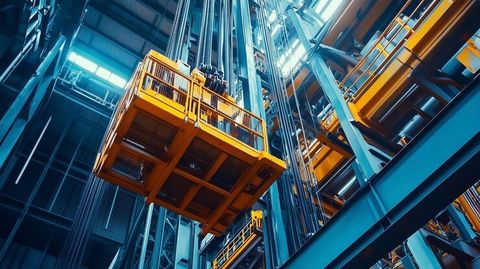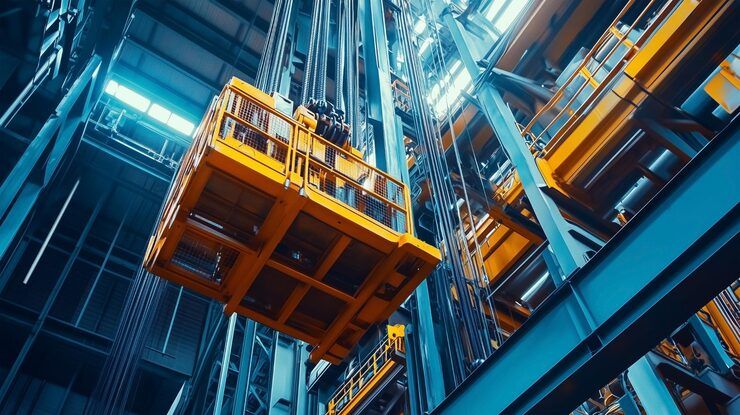
Industrial lifts are mechanical systems designed to move people, materials, equipment, or goods between different heights or levels. They are widely used in factories, warehouses, manufacturing facilities, construction environments, logistics centers, and other industrial workplaces where vertical movement is part of everyday operations.
Unlike ordinary passenger elevators, industrial lifts are generally designed around the requirements of a particular working environment. Their construction, lifting mechanism, load capacity, operating controls, and safety features can vary significantly depending on the intended application.
Understanding basic industrial lift facts helps facility managers, operators, engineers, and general readers recognize how these systems work and what factors influence their safe and efficient use.
What Is an Industrial Lift?
An industrial lift is a lifting system engineered to raise or lower loads or people within a controlled vertical path. Depending on its design, it may use hydraulic power, electric motors, mechanical components, or a combination of technologies.
Industrial lifts can be permanently installed or designed for specific workplace tasks. Some systems move materials between floors, while others raise vehicles, machinery, pallets, containers, or workers.
The main purpose is to make vertical transportation more controlled and practical while reducing the physical effort required to move heavy or bulky items manually.
How Do Industrial Lifts Work?
The operating principle depends on the type of lift. However, most systems contain several basic components that work together.
Lifting mechanism: This provides the force needed to raise or lower the platform or cabin. Hydraulic cylinders, electric motors, chains, cables, screws, and other mechanical arrangements may be used.
Platform or cabin: This is the part that carries the load or occupants. Its dimensions and construction depend on the application.
Guide system: Rails, columns, frames, or other structural components keep the moving platform aligned during operation.
Control system: Buttons, switches, control panels, sensors, or automated systems regulate movement.
Safety equipment: Braking mechanisms, emergency stops, overload protection, interlocks, guards, and position sensors can help reduce operational risks.
The lifting cycle generally involves loading, securing the load, initiating movement, reaching the required height, positioning, unloading, and returning the platform when necessary.
Major Types of Industrial Lifts
Industrial lifts come in several forms because different workplaces have different vertical transportation requirements.
Hydraulic Lifts
Hydraulic lifts use pressurized fluid to generate movement through a cylinder and piston arrangement. They are commonly associated with applications requiring substantial lifting force and controlled movement.
Their design can be suitable for material handling, vehicle lifting, manufacturing environments, and other heavy-duty applications.
Electric Lifts
Electric industrial lifts use an electric motor and mechanical transmission components to move the lifting platform. Depending on the design, these systems can provide controlled and repeatable vertical movement.
They are often used where electrical infrastructure and automated operation are important considerations.
Scissor Lifts
Scissor lifts use linked supports that expand and contract in a scissor-like arrangement. They can provide a stable elevated working platform and are commonly associated with maintenance, installation, inspection, and material-handling activities.
Goods Lifts
Goods lifts are primarily intended to transport materials between different levels. Their design can accommodate pallets, boxes, machinery, or other industrial loads.
They are particularly useful in multi-level warehouses and manufacturing facilities where materials must frequently move between floors.
Vertical Platform Lifts
These lifts use a vertically moving platform and can be designed for controlled movement of people, equipment, or materials depending on the application and applicable requirements.
Vehicle Lifts
Vehicle lifts raise automobiles, industrial vehicles, or other equipment to provide access underneath or around the vehicle. They are frequently used in maintenance and inspection environments.
Where Are Industrial Lifts Used?
Industrial lifts can be found across many sectors because vertical movement is a common requirement.
In manufacturing, lifts can transport components, raw materials, tools, and finished products between production levels.
In warehousing and logistics, they can help move pallets and other goods between floors or elevated storage areas.
In automotive facilities, vehicle lifts provide access for inspection, servicing, and maintenance activities.
In construction and infrastructure, specialized lifting equipment can support work at elevated locations, although the appropriate equipment depends on the specific task and environment.
In commercial and industrial buildings, goods lifts can support material movement where stairs or conventional transportation methods are unsuitable for heavy loads.
Important Industrial Lift Safety Facts
Safety is one of the most important considerations when operating any lifting equipment. A lift should be selected, installed, operated, inspected, and maintained according to its intended purpose and applicable safety requirements.
One important principle is load capacity. A lift should not be operated beyond its specified rated capacity. The total load includes the items placed on the platform and, where applicable, people or equipment traveling with them.
Load stability is equally important. Materials should be positioned securely and distributed appropriately to prevent shifting during movement.
Operators should understand the controls and normal operating procedures before using the equipment. Unauthorized or untrained operation can create unnecessary risks.
Safety systems such as emergency stops, door or gate interlocks, overload protection, brakes, guards, and limit switches should be maintained in working condition.
The surrounding area also matters. Clear access, adequate lighting, appropriate floor conditions, and protection from obstacles can improve operational safety.
Industrial Lift Maintenance
Regular maintenance helps identify wear, damage, and developing mechanical problems before they interfere with normal operation.
Maintenance programs may include inspection of hydraulic systems, electrical components, cables or chains, structural elements, brakes, guide systems, controls, sensors, and safety devices.
Hydraulic systems should be checked for signs of leakage or abnormal pressure behavior. Mechanical components may require inspection for excessive wear, corrosion, looseness, or deformation.
Maintenance records can also be useful. Documenting inspections, repairs, component replacements, and testing provides a history of the equipment and helps organizations manage recurring issues.
The appropriate inspection frequency depends on the equipment design, operating conditions, usage level, manufacturer requirements, and applicable regulations.
Factors to Consider When Selecting an Industrial Lift
Choosing an industrial lift requires more than considering how much weight it can raise. The working environment and intended task should also be evaluated.
Important considerations include:
- Rated load capacity: Determine the maximum intended load.
- Lifting height: Establish the vertical distance the equipment must cover.
- Platform dimensions: Ensure the platform can accommodate the intended load safely.
- Operating frequency: Consider how often the lift will be used.
- Power source: Evaluate available electrical or hydraulic infrastructure.
- Installation space: Check available floor area, ceiling height, access, and structural requirements.
- Operating environment: Consider dust, moisture, temperature, chemicals, and other workplace conditions.
- Control requirements: Determine whether manual, automatic, or integrated controls are appropriate.
- Safety requirements: Identify applicable workplace and equipment safety standards.
A properly selected lift should match the actual operating requirements rather than simply providing the highest possible capacity.
Industrial Lift Technology and Automation
Modern industrial lifting systems can incorporate sensors, electronic controls, position monitoring, and automated operating functions. These technologies can improve consistency and provide operators with more information about equipment status.
In connected industrial environments, lifting equipment may also become part of broader automation systems. Data from sensors can help monitor operating cycles, equipment conditions, and maintenance requirements.
Automation does not eliminate the need for human oversight. Operators and maintenance personnel still need appropriate procedures, training, inspections, and safety controls.
Common Industrial Lift Facts to Remember
Several basic facts summarize the role of these systems:
- Industrial lifts are designed for controlled vertical transportation.
- Different lift mechanisms serve different industrial applications.
- Rated capacity is an essential operating specification.
- Load stability is important even when the total weight is within the rated limit.
- Safety devices require regular inspection and maintenance.
- Operating conditions influence equipment selection and service requirements.
- Preventive maintenance can help identify problems before they become operational disruptions.
- Training and correct operating procedures remain important even with automated systems.
- Lift selection should consider height, capacity, dimensions, environment, frequency, and safety requirements together.
Conclusion
Industrial lifts play an important role in workplaces where materials, equipment, vehicles, or people need to move vertically. Their designs range from hydraulic and electric systems to scissor, goods, platform, and vehicle lifts, with each type serving different operational needs.
The most useful industrial lift facts are closely connected to practical requirements: understanding the lifting mechanism, matching capacity to the intended load, maintaining stable loads, using appropriate safety systems, and following a structured maintenance program.
For anyone evaluating industrial lifting equipment, understanding the application first is essential. The right system depends on the environment, lifting height, load characteristics, operating frequency, available space, control requirements, and applicable safety rules.