Industrial lubricants are formulated fluids, greases, and specialty compounds used to reduce friction, control heat, prevent wear, protect surfaces, and support reliable operation of industrial machinery. They are used across manufacturing, automotive production, mining, power generation, chemical processing, food production, metalworking, and other industrial environments.
Modern lubricant formulations can combine base oils with additive packages designed for specific operating temperatures, loads, speeds, pressures, contamination levels, and equipment requirements.
Why Industrial Lubricants Matter
Industrial machinery contains moving components such as gears, bearings, chains, shafts, compressors, hydraulic components, and rotating assemblies. Without appropriate lubrication, direct surface contact can increase friction, heat generation, wear, corrosion, and maintenance requirements.
Lubricants form a protective film between contacting surfaces. Depending on the formulation and application, they can also help remove heat, prevent oxidation, control deposits, and protect components from moisture and contaminants.
Lubricant selection therefore depends on equipment design, operating conditions, lubricant viscosity, additive chemistry, and manufacturer specifications.
Types of Industrial Lubricants
Industrial lubricants are available in several major categories.
Industrial Lubricating Oils
Lubricating oils are used in gears, hydraulic systems, turbines, compressors, bearings, and other machinery. Their viscosity and additive chemistry are selected according to operating conditions.
Industrial Greases
Greases combine base oil with a thickener and performance additives. They can remain in place on bearings, gears, joints, and other components where conventional oil circulation may not be practical.
Hydraulic Fluids
Hydraulic fluids transfer power through hydraulic systems while providing lubrication and corrosion protection. They are used in presses, injection molding machines, mobile equipment, and industrial hydraulic machinery.
Gear Oils
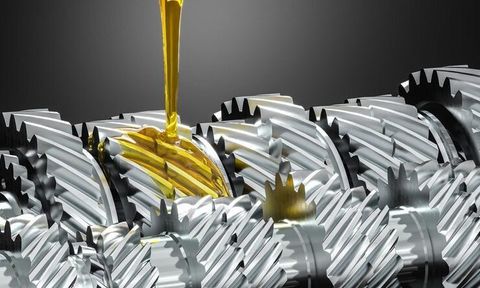
Industrial gear oils are formulated to protect gears operating under significant loads, pressure, and sliding contact. They can contain additives designed for wear protection, oxidation resistance, and corrosion control.
Compressor Oils
Compressor lubricants support compressors by reducing friction and assisting with heat management, sealing, and component protection.
Turbine Oils
Turbine oils are formulated for lubrication and heat-management requirements in turbines and associated rotating equipment.
Metalworking Fluids
Metalworking lubricants and fluids support machining, grinding, forming, cutting, and other metal-processing operations. They can provide cooling, lubrication, corrosion protection, and chip-management functions.
Industrial Lubricant Formulations
A typical lubricant formulation combines a base fluid with carefully selected additives.
| Formulation Component | Primary Function |
|---|---|
| Base oil | Provides the primary lubricating medium |
| Viscosity modifiers | Controls viscosity behavior |
| Anti-wear additives | Helps reduce surface wear |
| Antioxidants | Helps resist oxidation |
| Corrosion inhibitors | Protects metal surfaces |
| Detergents/dispersants | Controls deposits and contaminants |
| Defoamers | Reduces foam formation |
Base oils can be mineral, synthetic, or other specialized fluid types. Synthetic formulations can be engineered for specific temperature ranges, oxidation resistance, or operating conditions.
Industrial Lubricant Manufacturing Process
Manufacturing processes vary according to the lubricant formulation.
1. Base Oil Selection
Manufacturers select base oils according to viscosity, temperature range, oxidation stability, equipment requirements, and intended application.
2. Additive Selection
Additives are selected to provide properties such as wear protection, corrosion resistance, oxidation control, foam suppression, and viscosity stability.
3. Blending
Base oils and additives are combined using controlled mixing and heating procedures where required. Accurate dosing is important for maintaining formulation consistency.
4. Filtration
The blended lubricant may undergo filtration to remove unwanted particles and maintain product cleanliness.
5. Quality Testing
Laboratory testing can evaluate viscosity, flash point, pour point, oxidation stability, wear characteristics, corrosion behavior, and other formulation properties.
6. Packaging
Finished lubricants can be packaged in drums, pails, containers, bulk tanks, or other formats according to distribution and industrial-use requirements.
Lubricant Performance and Formulation Technologies
Modern industrial lubricant manufacturers use formulation technologies designed around specific machinery requirements.
Synthetic base fluids can support demanding temperature conditions, while specialized additive packages can improve resistance to oxidation, wear, corrosion, and deposits.
Food-processing applications may require lubricants formulated for incidental food-contact environments, while mining and heavy industrial equipment can require formulations designed for high loads, dust, moisture, and severe operating conditions.
Industrial Lubrication Systems
Lubricants can be delivered manually or through automated systems.
Automatic lubrication systems can supply measured quantities of lubricant to bearings, gears, chains, and other components at programmed intervals.
Centralized lubrication systems connect multiple lubrication points to a common supply system. Sensors and controllers can monitor lubricant delivery and system conditions.
These technologies can help standardize lubrication intervals and reduce variation in lubricant application.
Industrial Lubricant Comparison
| Lubricant Type | Main Function | Typical Applications |
|---|---|---|
| Hydraulic fluid | Power transmission and lubrication | Hydraulic machinery |
| Gear oil | Gear protection | Industrial gearboxes |
| Compressor oil | Lubrication and cooling | Compressors |
| Turbine oil | Component lubrication | Turbines |
| Industrial grease | Long-lasting lubrication | Bearings and joints |
| Metalworking fluid | Cooling and lubrication | Machining operations |
Industrial Lubricant Cost Factors
The overall cost of an industrial lubricant depends on the base oil, additive package, viscosity grade, formulation complexity, performance requirements, packaging format, order volume, and application specifications.
Specialty synthetic formulations and lubricants designed for demanding environments can have different formulation economics from conventional mineral-oil products.
For industrial procurement, additional considerations include storage requirements, delivery quantities, compatibility with existing equipment, lubricant change intervals, and laboratory testing requirements.
Global Manufacturers and Suppliers
The industrial lubricant market includes lubricant manufacturers, formulation companies, distributors, bulk suppliers, specialty chemical companies, and industrial lubrication-system providers.
When evaluating an industrial lubricant supplier, technical factors can include:
Lubricant formulation
Viscosity grade
Base-oil type
Additive technology
Equipment compatibility
Operating temperature range
Load requirements
Industry specifications
Packaging options
Technical documentation
For large facilities, suppliers may provide bulk lubricant deliveries, specialty formulations, lubrication equipment, and technical documentation for industrial applications.
Industrial Applications
Industrial lubricants are used across many sectors:
Automotive manufacturing
Aerospace manufacturing
Mining
Power generation
Chemical processing
Oil and gas
Steel and metal processing
Food and beverage production
Plastics manufacturing
Cement production
Paper and pulp manufacturing
General industrial machinery
In mining operations, lubricants can support large gearboxes, bearings, conveyors, crushers, and other heavy equipment. In manufacturing plants, hydraulic fluids, gear oils, greases, and specialty lubricants support production machinery and automated systems.
How to Select Industrial Lubricants
Before selecting an industrial lubricant, evaluate:
Equipment manufacturer specifications
Operating temperature
Load and pressure
Operating speed
Lubricant viscosity
Material compatibility
Moisture and contamination exposure
Required additive properties
Lubrication method
Replacement and maintenance intervals
Using an inappropriate viscosity or incompatible formulation can affect lubrication performance. Equipment documentation and lubricant technical data should therefore be reviewed before changing products or formulations.
Frequently Asked Questions
What are industrial lubricants?
Industrial lubricants are oils, greases, fluids, and specialty compounds used to reduce friction, control wear, manage heat, and protect machinery components.
What are the main types of industrial lubricants?
Common categories include hydraulic fluids, gear oils, compressor oils, turbine oils, industrial greases, bearing lubricants, and metalworking fluids.
What are industrial lubricants made from?
Most formulations contain a base fluid or base oil combined with additives designed to provide specific performance characteristics.
What affects industrial lubricant selection?
Equipment specifications, viscosity, temperature, load, speed, contamination, material compatibility, and operating environment all influence lubricant selection.
What industries use industrial lubricants?
Mining, manufacturing, automotive, aerospace, power generation, chemical processing, food production, metalworking, oil and gas, and many other industries use industrial lubrication products.
Conclusion
Industrial lubricants play an important role in controlling friction, wear, heat, corrosion, and contamination across industrial machinery. Different formulations are designed for applications ranging from hydraulic equipment and gearboxes to compressors, turbines, bearings, and metalworking systems.
Advances in synthetic base oils, additive chemistry, formulation technology, condition monitoring, and automated lubrication systems are expanding the range of industrial lubrication solutions. Selecting the appropriate lubricant requires careful consideration of equipment specifications, operating conditions, formulation characteristics, and maintenance requirements.