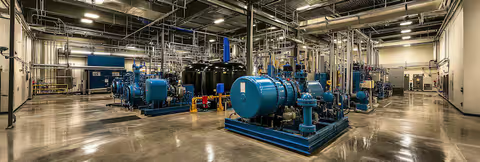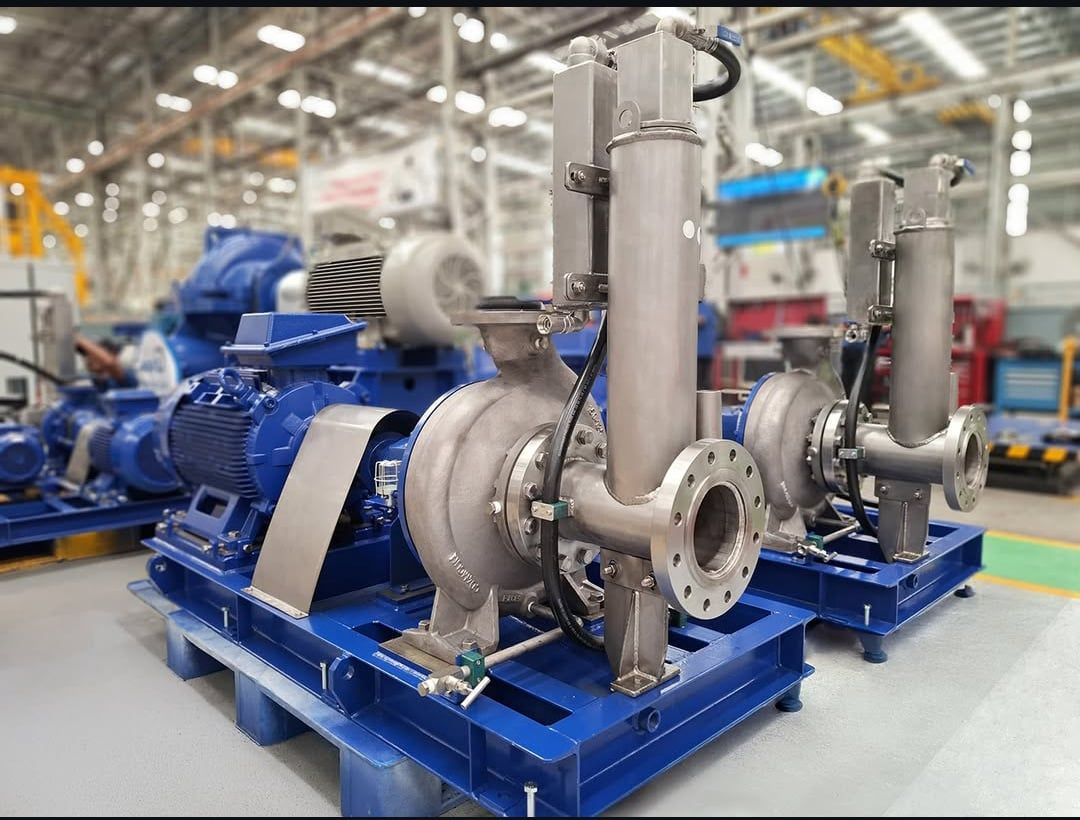
Industrial pumps are essential components in many industrial operations. They move liquids through pipelines, transfer fluids between storage tanks, maintain circulation in processing systems, and support water supply, cooling, wastewater treatment, and chemical handling. Industrial pump suppliers help businesses identify suitable pumping equipment based on operating requirements, fluid characteristics, and installation conditions.
A supplier's role can extend beyond providing equipment. Depending on the organization, it may include technical guidance, product documentation, system compatibility checks, spare parts availability, installation support, and maintenance assistance. These services can help industrial facilities select equipment that meets their operational needs.
Choosing an industrial pump supplier requires more than comparing product descriptions. Buyers should understand the different pump technologies, the conditions under which they operate, and the information needed to evaluate their suitability. This knowledge helps maintenance teams, engineers, procurement professionals, and plant managers make informed decisions.
What Do Industrial Pump Suppliers Provide?
Industrial pump suppliers provide equipment designed for specific fluid movement requirements. Their product ranges may include centrifugal pumps, positive displacement pumps, submersible pumps, diaphragm pumps, and specialized chemical transfer systems.
Some suppliers focus on particular industries, while others serve a broad range of applications. An industrial supplier may support manufacturing plants, commercial buildings, agricultural operations, power generation facilities, mining sites, or municipal water systems.
Technical assistance is another important consideration. Pump performance depends on factors such as flow rate, pressure, fluid temperature, viscosity, and system resistance. A supplier that understands these variables can help identify equipment that matches the intended application.
Depending on the supplier, additional support may include pump selection guidance, installation documentation, operating instructions, replacement components, troubleshooting, and maintenance planning. The exact scope of support should be confirmed before an equipment decision is made.
Common Types of Industrial Pumps
Centrifugal Pumps
Centrifugal pumps use a rotating impeller to transfer energy to a liquid, increasing its velocity before converting much of that energy into pressure. They are widely used for water circulation, cooling systems, irrigation, industrial processing, and general liquid transfer.
These pumps are often suitable for relatively low-viscosity liquids and continuous operation. However, their performance changes according to the system's flow and pressure requirements.
When evaluating centrifugal pumps, users should consider the pump curve, operating point, efficiency, suction conditions, and compatibility with the liquid. Correct sizing helps avoid unnecessary energy consumption and unstable operation.
Positive Displacement Pumps
Positive displacement pumps move liquid by repeatedly trapping and displacing a defined volume. Common examples include gear pumps, screw pumps, piston pumps, and progressive cavity pumps.
They are frequently used when handling viscous liquids, lubricants, certain chemicals, and fluids that require controlled flow. Their suitability depends on the specific design and the characteristics of the material being transferred.
These pumps require particular attention to pressure protection. If the discharge line becomes blocked, pressure can rise rapidly unless the system includes appropriate safeguards. Buyers should confirm the pump's allowable operating conditions and required protective equipment.
Submersible Pumps
Submersible pumps operate while immersed in the liquid they are designed to handle. They are commonly used in wastewater management, drainage, groundwater applications, sumps, and certain industrial process systems.
Because the pump operates below the liquid surface, installation requirements differ from those of many surface-mounted pumps. Important considerations include liquid level, motor protection, cable arrangements, solids handling, and access for servicing.
For wastewater applications, the pump's ability to handle suspended solids or fibrous materials must match the characteristics of the liquid. Selecting an unsuitable design can increase the likelihood of blockages and maintenance interruptions.
Diaphragm Pumps
Diaphragm pumps use a flexible membrane to move fluid through a chamber. Depending on their design, they may be operated mechanically, electrically, or using compressed air.
These pumps are used in chemical transfer, dosing, wastewater handling, and applications where fluid isolation from certain moving components is useful. Some models can handle abrasive or chemically aggressive liquids when constructed from compatible materials.
Supplier guidance is particularly important when evaluating chemical compatibility, diaphragm material, operating pressure, and flow requirements. Not every diaphragm pump is suitable for every hazardous, corrosive, or high-temperature fluid.
Industries That Depend on Industrial Pumps
Industrial pumps serve many sectors because liquid movement is a fundamental part of production and infrastructure.
In manufacturing, pumps circulate cooling fluids, transfer process liquids, and support equipment operation. Chemical processing facilities use specialized pumps to move raw materials, intermediate products, and finished liquids while accounting for chemical compatibility and containment requirements.
Water and wastewater treatment facilities rely on pumps for raw water intake, filtration processes, sludge handling, and treated water distribution. Food and beverage production may require sanitary pump designs that support hygiene, cleaning, and product quality requirements.
Oil and gas operations, power generation facilities, mining sites, and agricultural systems also use pumping equipment for different fluid handling tasks. Each application introduces its own operating conditions, maintenance requirements, and safety considerations.
Understanding the industry application helps narrow the selection because a pump suitable for clean water may not perform reliably with sludge, abrasive slurry, viscous material, or corrosive chemicals.
How to Evaluate Industrial Pump Suppliers
Technical Knowledge and Product Range
A supplier should be able to explain the differences between available pump designs and identify the information required for equipment selection. This includes the intended flow rate, total dynamic head, fluid properties, operating temperature, and installation environment.
A broad product range may be useful for facilities with different pumping requirements. However, product variety alone does not establish suitability. The supplier's ability to match equipment to the actual operating conditions is equally important.
Documentation and Quality Requirements
Technical documentation helps users verify equipment specifications and understand operating limitations. Relevant documents may include performance curves, dimensional drawings, material specifications, installation instructions, and maintenance guidance.
Depending on the application, buyers may also need to verify compliance with applicable industry standards, environmental requirements, electrical regulations, or sanitary design criteria.
Certifications and standards should be relevant to the equipment and intended use. Buyers should confirm the scope and validity of any claimed certification rather than assuming that every product from a supplier meets the same requirements.
Spare Parts and Maintenance Support
Pump reliability depends partly on the availability of suitable replacement components. Seals, bearings, impellers, diaphragms, and other parts may wear over time, depending on operating conditions.
Before selecting a supplier, consider how replacement parts are identified, whether technical assistance is available, and how servicing is arranged. Facilities that depend on continuous operation may need a documented maintenance plan and access to critical spare parts.
Communication and Application Assessment
A reliable evaluation process begins with clear technical communication. Suppliers should request relevant operating information rather than recommending equipment based only on a general description.
Buyers can assess this process by asking how the proposed pump will meet the required flow, pressure, fluid compatibility, and operating conditions. Clear explanations make it easier to compare alternatives and identify possible limitations before installation.
Important Factors When Selecting an Industrial Pump
Pump selection starts with the liquid itself. Density, viscosity, temperature, corrosiveness, abrasiveness, and the presence of suspended solids can influence the pump type and material selection.
The required flow rate determines how much liquid must be transferred within a given period. Total dynamic head represents the energy required to move the liquid through the system, accounting for elevation differences, pressure requirements, and friction losses. Both values are necessary for selecting an appropriate pump.
Material compatibility is especially important when handling chemicals or abrasive fluids. The casing, impeller, seals, and other wetted components must be suitable for the liquid and operating temperature.
Energy efficiency also deserves attention. Pumps often operate for long periods, so an inefficient selection can increase electricity consumption throughout the equipment's service life. Variable-speed control may improve performance in systems with changing demand, provided it is compatible with the pump and the process.
Installation space, available power, suction conditions, noise, maintenance access, and environmental conditions should also be considered. Evaluating the complete system is generally more useful than selecting a pump based on one specification alone.
Industrial Pump Maintenance and Operational Reliability
Regular maintenance helps identify wear, leakage, vibration, and performance changes before they lead to larger problems. The required maintenance schedule depends on pump design, operating hours, fluid characteristics, and manufacturer recommendations.
Common inspection activities include checking seals, monitoring bearing condition, reviewing vibration levels, inspecting pipe connections, and observing changes in flow or pressure. Unusual noise, excessive heat, frequent leakage, and unexpected energy consumption may indicate an underlying issue.
Cavitation is another important concern. It occurs when local pressure falls sufficiently for vapor bubbles to form and then collapse. This can produce noise, vibration, reduced performance, and damage to pump components. Correct suction conditions and suitable system design help reduce this risk.
Maintenance should be carried out by appropriately trained personnel following established procedures. Before servicing a pump, the equipment should be isolated from its energy sources and any stored pressure or hazardous fluid should be managed safely.
Industrial pump suppliers can contribute to reliability by providing correct operating information, replacement parts guidance, and technical support suited to the equipment.
Conclusion-Free Guide to Making an Informed Supplier Choice
Selecting an industrial pump supplier involves understanding the required application, comparing suitable pump technologies, reviewing technical documentation, and assessing ongoing support. Flow rate, total dynamic head, fluid characteristics, material compatibility, energy efficiency, and maintenance requirements all influence the final equipment choice.
A structured evaluation helps industrial facilities distinguish between equipment that simply matches a general description and equipment designed for their actual operating conditions. By discussing requirements clearly and verifying specifications before installation, buyers can make better-informed decisions about industrial pumping systems and their long-term operation.