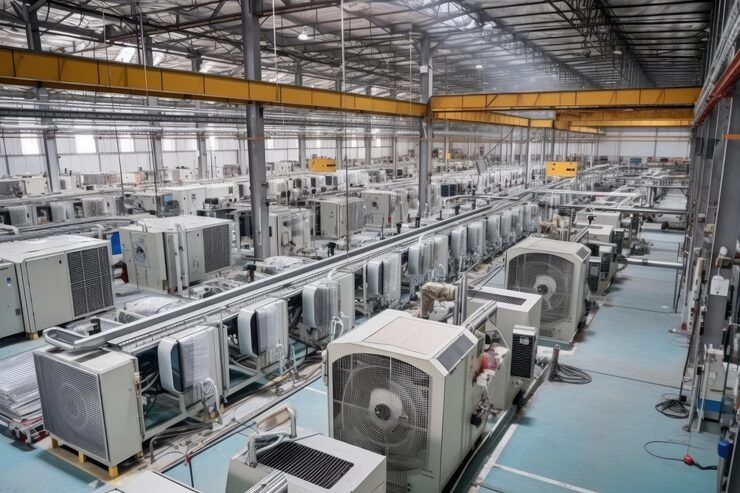
Industrial refrigerators are engineered cooling systems designed to maintain controlled temperatures for products, materials, equipment, and processes. Unlike household refrigeration units, industrial and commercial refrigeration systems are designed around larger capacities, continuous operation, specialized temperature ranges, and demanding operating environments.
Industrial refrigeration can include cold rooms, walk-in refrigerators, refrigerated cabinets, blast chillers, process cooling systems, refrigerated warehouses, and specialized low-temperature equipment. These systems are used across food processing, pharmaceuticals, healthcare, chemicals, logistics, agriculture, hospitality, and manufacturing.
Context
What Are Industrial Refrigerators?
Industrial refrigerators are refrigeration units or integrated cooling systems designed for large-scale storage and industrial processes. They remove heat from an enclosed space or process stream and transfer that heat to another location through a refrigeration cycle.
Depending on the application, an industrial refrigeration system may include compressors, condensers, evaporators, expansion devices, refrigerant piping, temperature controls, insulation, fans, sensors, and monitoring equipment.
How Industrial Refrigeration Works
Most vapor-compression refrigeration systems operate through four primary stages:
- Compression – The compressor raises the pressure and temperature of the refrigerant vapor.
- Condensation – The condenser releases heat and converts the refrigerant into a liquid.
- Expansion – An expansion device reduces refrigerant pressure.
- Evaporation – The refrigerant absorbs heat from the cooled space or process.
The refrigerant then returns to the compressor, completing the cycle.
Major Types of Industrial Refrigerators
Industrial cooling equipment can be configured for different temperature ranges and applications.
| System Type | Typical Temperature Purpose | Common Applications |
|---|---|---|
| Walk-In Refrigerator | Chilled storage | Food and beverage facilities |
| Cold Room | Controlled low temperature | Warehouses and distribution |
| Blast Chiller | Rapid cooling | Food processing |
| Industrial Freezer | Frozen storage | Food and pharmaceutical products |
| Reach-In Refrigerator | Accessible chilled storage | Commercial kitchens |
| Refrigerated Warehouse | Large-scale temperature control | Logistics |
| Process Refrigerator | Controlled process cooling | Manufacturing |
| Ultra-Low-Temperature Unit | Very low temperatures | Research and specialized storage |
Actual operating temperatures depend on the equipment design and application.
Walk-In Refrigeration Systems
Walk-in refrigerators provide enclosed refrigerated areas large enough for personnel to enter. They are commonly used in food processing, hospitality, distribution, and commercial storage.
These systems typically use insulated panels, evaporators, refrigeration units, temperature controls, doors, lighting, and monitoring equipment.
Blast Chillers and Freezers
Blast chilling systems rapidly remove heat from products by circulating cold air at controlled velocities.
They are frequently used where rapid cooling is necessary to maintain product handling requirements and reduce the time products remain within undesirable temperature ranges.
Industrial Cold Rooms
Cold rooms provide temperature-controlled storage for products and materials. Their dimensions can range from relatively small chambers to large warehouse environments.
Temperature sensors and monitoring systems can provide continuous information about internal conditions.
Importance
Why Industrial Refrigeration Matters
Temperature control is essential for many industrial processes and storage operations. Products can undergo physical, chemical, or biological changes when exposed to unsuitable temperatures.
Industrial refrigeration systems provide controlled environments that help organizations maintain specified storage or processing conditions.
Supporting Food Processing
Food processing facilities use refrigeration throughout production, storage, and distribution. Cooling systems can support ingredient storage, product chilling, frozen storage, and temperature-controlled logistics.
System design needs to consider product load, ambient conditions, door openings, airflow, insulation, and cleaning requirements.
Pharmaceutical and Healthcare Applications
Temperature-controlled environments are used for certain pharmaceutical products, biological materials, laboratory substances, and medical supplies.
The required temperature range depends on the specific material and applicable storage specifications.
Industrial Process Cooling
Some manufacturing processes require controlled cooling rather than refrigerated storage. Industrial refrigeration can remove heat from process fluids, machinery, chemical processes, or production environments.
Process cooling systems can therefore be integrated with heat exchangers, pumps, tanks, and automated controls.
Cold-Chain Logistics
Refrigerated warehouses, vehicles, distribution centers, and storage rooms form part of temperature-controlled supply chains.
Monitoring equipment can record temperature conditions during storage and handling, providing information for quality management.
Cooling Technologies
Vapor-Compression Systems
Vapor-compression refrigeration is widely used in commercial and industrial applications. It uses a compressor, condenser, expansion device, and evaporator to transfer heat.
System performance depends on refrigerant properties, compressor design, operating conditions, heat-exchanger efficiency, and ambient temperature.
Ammonia Refrigeration
Ammonia is used in many large-scale industrial refrigeration systems. It has thermodynamic properties that make it suitable for certain industrial applications.
Because ammonia requires careful handling, systems using it need appropriate engineering controls, leak detection, ventilation, emergency planning, and trained personnel.
Carbon Dioxide Refrigeration
Carbon dioxide is another refrigerant used in commercial and industrial applications. CO₂ systems can operate at relatively high pressures and therefore require equipment designed for the relevant operating conditions.
System architecture can include transcritical or subcritical configurations depending on the application.
Hydrocarbon Refrigerants
Certain hydrocarbon refrigerants, such as propane and isobutane, are used in selected refrigeration applications.
Their flammability requires equipment design, charge management, electrical considerations, ventilation, and applicable safety measures.
Absorption Refrigeration
Absorption refrigeration uses thermal energy rather than relying solely on mechanical compression. Common working pairs include ammonia-water and water-lithium bromide.
These systems can be considered where suitable heat sources are available.
Manufacturing Systems and Equipment
Compressors
Compressors circulate refrigerant through the system. Industrial systems can use reciprocating, screw, scroll, centrifugal, or other compressor configurations.
Selection depends on refrigeration capacity, operating pressure, refrigerant type, temperature range, and application.
Condensers
Condensers reject heat from the refrigerant to the surrounding environment. Air-cooled, water-cooled, and evaporative configurations are commonly used.
Evaporators
Evaporators absorb heat from the refrigerated space or process. Their design affects airflow, heat-transfer performance, temperature distribution, and defrost requirements.
Expansion Devices
Expansion valves and related devices regulate refrigerant flow into the evaporator and create the pressure reduction required for evaporation.
Electronic expansion valves can provide precise flow control in automated refrigeration systems.
Temperature Sensors
Temperature sensors provide information about refrigerated spaces and process conditions.
Common technologies include resistance temperature detectors, thermistors, and thermocouples.
Refrigeration Controls
Control systems coordinate compressors, fans, valves, defrost cycles, alarms, and temperature settings.
Modern systems can connect refrigeration equipment with building-management systems, energy-monitoring platforms, and remote monitoring interfaces.
Industrial Applications
Food and Beverage Manufacturing
Refrigeration is used for raw-material storage, processing, chilling, freezing, finished-product storage, and distribution.
Applications include meat processing, dairy production, seafood handling, beverage manufacturing, frozen foods, and prepared foods.
Pharmaceutical Manufacturing
Pharmaceutical facilities can use controlled-temperature rooms, cold storage, freezers, and process-cooling systems.
Monitoring and documentation requirements depend on the materials being stored and the applicable manufacturing framework.
Chemical Processing
Chemical facilities may require cooling for reactors, condensers, process fluids, storage systems, and temperature-sensitive materials.
Industrial refrigeration can be integrated with heat exchangers and process-control systems.
Agriculture and Produce Storage
Refrigerated storage helps maintain appropriate conditions for fruits, vegetables, dairy products, meat, and other temperature-sensitive agricultural products.
Humidity and airflow can be important alongside temperature control.
Hospitality and Commercial Kitchens
Restaurants, hotels, institutional kitchens, and food distribution facilities use commercial refrigerators, freezers, cold rooms, and refrigerated preparation equipment.
System selection depends on storage capacity, operating schedule, ambient conditions, and food-handling procedures.
Industrial Warehousing
Temperature-controlled warehouses use large refrigeration systems to maintain defined storage conditions across substantial spaces.
Automated monitoring can track temperature trends and identify deviations.
Manufacturers and Suppliers
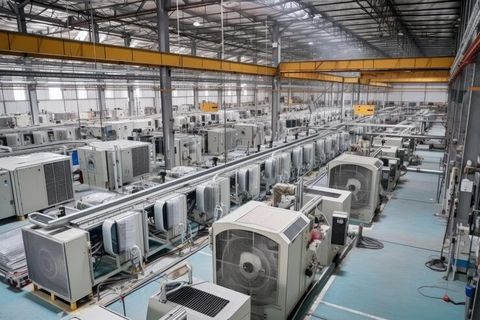
The industrial refrigeration ecosystem includes manufacturers of compressors, condensers, evaporators, refrigeration packages, cold-room equipment, controls, sensors, and complete refrigeration systems.
When evaluating industrial refrigerator manufacturers or suppliers, organizations can consider:
- Required temperature range
- Refrigeration capacity
- Refrigerant type
- Compressor configuration
- Insulation performance
- Environmental conditions
- Control architecture
- Monitoring capabilities
- Energy requirements
- Maintenance access
- Applicable standards
- Facility integration
The equipment should be selected according to the actual thermal load and operating conditions rather than capacity alone.
Recent Updates
Natural Refrigerants
The refrigeration industry continues to examine refrigerants with lower environmental impact. Ammonia, carbon dioxide, and selected hydrocarbons are used in various applications depending on technical and safety requirements.
Refrigerant selection must consider system pressure, flammability, toxicity, regulations, efficiency, and equipment compatibility.
Smart Refrigeration
Connected refrigeration systems can use sensors and digital controls to monitor temperature, pressure, energy use, compressor operation, and other parameters.
Data can be displayed through centralized dashboards or integrated into facility-management platforms.
Energy Monitoring
Industrial refrigeration can consume substantial electrical energy, particularly in large warehouses and continuously operating facilities.
Energy meters and monitoring systems can help operators understand consumption patterns and evaluate equipment performance.
Variable-Speed Compressors
Variable-speed technology allows compressor output to adjust according to changing refrigeration demand.
This can help match system operation with actual load conditions and may reduce unnecessary cycling.
Predictive Maintenance
Sensors can monitor compressor vibration, discharge temperature, pressure, current, and other indicators.
Analyzing these measurements can help identify changes in equipment condition and support maintenance planning.
Automated Defrost Management
Refrigeration systems can accumulate ice on evaporators under certain operating conditions. Automated defrost systems can initiate defrost cycles based on programmed schedules or measured conditions.
More responsive control strategies can help coordinate defrost operation with refrigeration demand.
Laws or Policies
Refrigerant Regulations
Refrigerants are subject to environmental and safety regulations that vary by jurisdiction. Requirements can address refrigerant selection, handling, recovery, leakage, technician qualifications, and equipment operation.
Facilities should verify the requirements applicable to their location and refrigerant type.
Food Safety Requirements
Food facilities using industrial refrigerators need to follow applicable food-safety requirements for storage temperatures, hygiene, monitoring, and handling.
Specific requirements vary according to product category and jurisdiction.
Pharmaceutical Storage
Pharmaceutical refrigeration may be subject to Good Manufacturing Practice, storage, distribution, and temperature-monitoring requirements.
Facilities should establish procedures based on the characteristics of the stored materials and applicable regulatory expectations.
Pressure and Equipment Safety
Refrigeration systems contain pressurized components. Compressors, receivers, piping, vessels, and other equipment may be subject to pressure-equipment and mechanical-safety requirements.
Electrical Safety
Industrial refrigeration equipment requires appropriate electrical protection, grounding, control-system design, and installation practices.
The exact requirements depend on equipment type, facility environment, and local regulations.
Tools and Resources
Temperature Monitoring Systems
Digital temperature monitoring systems can continuously record temperatures in refrigerators, cold rooms, warehouses, and freezers.
Alerts can notify authorized personnel when measurements move outside configured ranges.
Refrigeration Control Software
Control platforms can manage compressors, evaporators, condenser fans, valves, defrost systems, and alarms.
Energy Monitoring Tools
Energy meters and analytics platforms can track electricity consumption and identify operational trends.
Leak Detection
Refrigerant detection systems can monitor areas where refrigerant leakage may create safety or environmental concerns.
Maintenance Platforms
Computerized maintenance management systems can record inspections, calibration activities, equipment faults, component replacement, and maintenance history.
FAQs
What are industrial refrigerators?
Industrial refrigerators are large-scale refrigeration units or integrated cooling systems designed for temperature-controlled storage and industrial processes.
What types of industrial refrigeration systems are used?
Common systems include cold rooms, walk-in refrigerators, blast chillers, industrial freezers, refrigerated warehouses, process refrigeration systems, and specialized low-temperature units.
Which refrigerants are used in industrial refrigeration?
Industrial systems can use refrigerants such as ammonia, carbon dioxide, selected hydrocarbons, and other refrigerants depending on system design, application, regulations, and safety requirements.
What industries use industrial refrigerators?
Food processing, pharmaceuticals, healthcare, chemicals, agriculture, logistics, hospitality, manufacturing, and temperature-controlled warehousing all use industrial refrigeration technologies.
What should be considered when selecting industrial refrigeration suppliers?
Important factors include temperature range, thermal load, refrigeration capacity, refrigerant, compressor configuration, controls, monitoring, energy requirements, maintenance access, and applicable regulations.
Conclusion
Industrial refrigerators and commercial refrigeration systems provide controlled cooling for storage, manufacturing, logistics, food processing, pharmaceutical applications, and industrial processes. Their operation depends on coordinated components such as compressors, condensers, evaporators, expansion devices, sensors, controls, and insulated enclosures.
Developments in natural refrigerants, connected monitoring, variable-speed equipment, energy analytics, predictive maintenance, and automated controls are influencing modern industrial refrigeration systems. Appropriate equipment selection requires careful evaluation of thermal loads, temperature requirements, refrigerant characteristics, facility conditions, safety considerations, energy use, and applicable regulations.