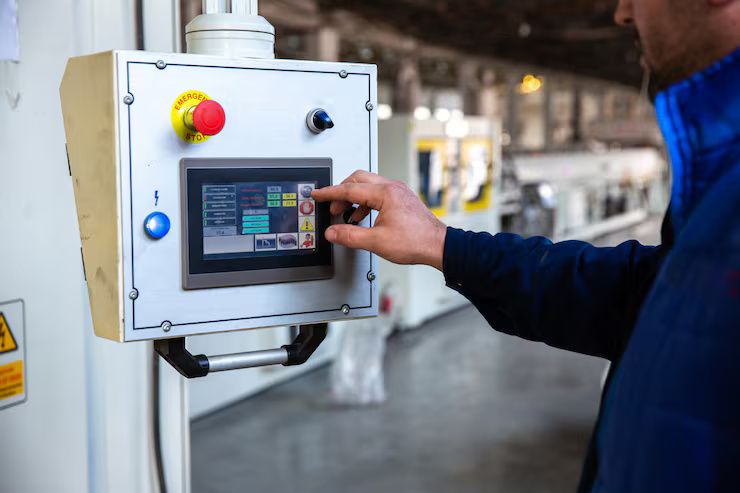
Industrial sensors are devices used to detect, measure, and report physical conditions within industrial environments. These conditions may include temperature, pressure, flow, level, vibration, proximity, or chemical composition. The data collected by sensors is sent to control systems, where it is analyzed and used to guide automated or semi-automated processes.
Industrial sensors are essential because modern operations rely on accuracy and consistency that manual observation cannot provide. They continuously measure physical conditions and supply real-time data to control systems.
In industrial environments, sensors act as a bridge between the physical world and digital systems. They are widely used in manufacturing, energy, utilities, transportation, and processing industries to monitor and control operations.
Importance: Why Industrial Sensors Matter Today
Industrial sensors are increasingly important due to automation, digitalization, and data-driven decision-making. Reliable sensor data enables systems to operate efficiently and safely.
Key Reasons This Topic Matters
Industrial sensors are important because they:
- Improve product quality by ensuring consistent conditions
- Detect equipment issues before failures occur
- Enhance safety by monitoring abnormal conditions
- Provide visibility into complex industrial processes
They support operators, engineers, maintenance teams, and organizations in managing efficiency and compliance.
Sensors also play a major role in industrial IoT systems, where connected devices provide data for analysis, trend identification, and predictive maintenance.
Recent Updates: Trends and Developments
Industrial sensor technology has evolved during 2024 and 2025 alongside advancements in automation and connectivity.
Expansion of Industrial IoT Sensors
More sensors now include built-in connectivity, allowing integration with industrial networks.
Edge Processing Capabilities
Sensors are increasingly capable of processing data locally before sending it to control systems, reducing delays.
Improved Durability
New sensor designs can operate in extreme conditions such as high temperatures, vibration, and corrosive environments.
Standardized Communication Protocols
Adoption of common protocols has improved compatibility across different industrial systems.
Energy Monitoring Integration
Sensors are now frequently used to track energy usage, supporting efficiency and sustainability efforts.
Laws and Policies: Regulatory Influence
Industrial sensors are governed by safety, quality, and data integrity regulations. These rules ensure accurate measurements and safe operations.
International Standards
The International Organization for Standardization provides guidelines for calibration, accuracy, and reliability.
Workplace Safety Regulations
In the United States, the Occupational Safety and Health Administration influences how sensors are used to monitor hazardous conditions.
Key Regulatory Considerations
- Process safety and accurate measurement
- Calibration and maintenance requirements
- Data traceability for audits
- Environmental monitoring compliance
Tools and Resources for Industrial Sensors
Various tools and resources help manage industrial sensors and ensure accurate performance. These tools support monitoring, calibration, and analysis.
Useful Tools and References
- Industrial control software and dashboards
- Calibration guides and standards
- Simulation and testing tools
- Technical documentation libraries
Sensor Types and Applications
| Sensor Type | Measured Variable | Typical Application Area |
|---|---|---|
| Temperature sensor | Heat level | Process control and safety |
| Pressure sensor | System pressure | Pipelines and hydraulic systems |
| Flow sensor | Fluid movement | Utilities and processing lines |
| Proximity sensor | Object detection | Automated machinery |
| Vibration sensor | Mechanical movement | Equipment condition monitoring |
Frequently Asked Questions About Industrial Sensors
What is the main role of an industrial sensor?
It measures physical conditions and provides data to control systems for monitoring and adjustment.
Are sensors only used in manufacturing?
No, they are also used in energy, utilities, transportation, and environmental monitoring.
How do sensors support automation?
They provide real-time data that allows systems to adjust operations automatically.
Do sensors require maintenance?
Yes, regular calibration and inspection are necessary to maintain accuracy.
What is the difference between sensors and controllers?
Sensors collect data, while controllers analyze that data and control system responses.
Conclusion: Sensors in Modern Industry
Industrial sensors are fundamental to modern industrial control processes. They enable accurate monitoring, support automation, and improve operational reliability.
Recent developments highlight a shift toward smarter, connected sensors integrated with digital systems. Understanding their role, trends, and regulations helps explain why they are essential in maintaining safe, efficient, and data-driven industrial environments.