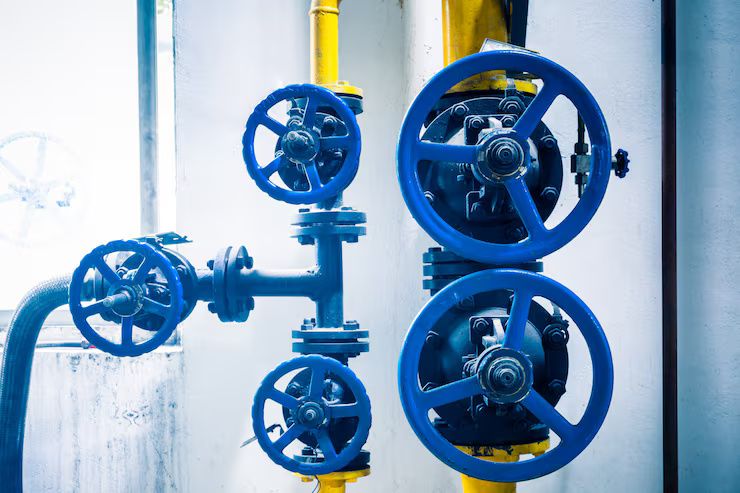
Industrial valves are mechanical devices designed to regulate, direct, or control the flow of liquids, gases, or slurries within a piping system. They exist because most industrial processes require precise management of flow, pressure, and direction to operate safely and efficiently. Without valves, it would be difficult to isolate equipment, control process conditions, or protect systems from overpressure and leaks.
Industrial valves have evolved from simple manual designs to advanced automated systems. They are now essential components in industries such as oil and gas, power generation, water treatment, manufacturing, and HVAC systems.
These valves are engineered to control fluid flow under specific pressure, temperature, and operational conditions, ensuring system reliability and efficiency.
Importance: Why Industrial Valves Matter Today
Industrial valves play a critical role in maintaining safety and efficiency in complex systems. Proper flow control helps prevent equipment damage and ensures stable operation.
Key Reasons for Importance
- Managing pressure and flow in pipelines
- Isolating equipment for maintenance
- Preventing backflow and system overload
- Supporting precision in automated processes
Reliable valve operation contributes to energy efficiency and long-term system performance.
Common Types of Industrial Valves and Their Functions
Industrial valves are categorized based on how they control fluid flow. Each type serves a specific purpose depending on system requirements.
Common Valve Types
- Gate valves for isolation
- Globe valves for flow regulation
- Ball valves for quick shutoff
- Butterfly valves for large pipe systems
- Check valves for preventing reverse flow
Valve Types and Applications
| Valve Type | Flow Control Function | Typical Use Case |
|---|---|---|
| Gate Valve | Isolation | Pipeline shutoff |
| Globe Valve | Throttling | Flow regulation |
| Ball Valve | On-off control | Process isolation |
| Butterfly Valve | Modulating flow | Large-diameter systems |
| Check Valve | Backflow prevention | Pump protection |
Understanding valve types helps ensure correct selection for different systems.
Valve Materials and Their Role in Flow Control
Material selection is essential for valve performance, durability, and safety. Different materials are used based on operating conditions.
Common Valve Materials
- Carbon steel for strength
- Stainless steel for corrosion resistance
- Cast iron for low-pressure systems
- Bronze and brass for moderate conditions
- Plastic-lined materials for chemical handling
Material Characteristics
| Material | Pressure Tolerance | Corrosion Resistance |
|---|---|---|
| Carbon Steel | High | Low |
| Stainless Steel | High | High |
| Cast Iron | Medium | Low |
| Bronze | Medium | High |
| Plastic-Lined | Low | Very High |
Proper material choice ensures long-term reliability and safety.
Recent Updates: Trends and Developments
Industrial valve technology continues to evolve with advancements in automation and sustainability.
Key Trends
- Increased use of smart valves with sensors
- Real-time monitoring of flow and pressure
- Updated standards for testing and certification
- Focus on low-emission valve designs
These developments improve efficiency, safety, and environmental performance.
Laws and Policies Affecting Industrial Valves
Industrial valves must comply with engineering standards and safety regulations.
Key Regulatory Areas
- Pressure equipment standards
- Workplace safety regulations
- Environmental emission controls
- Certification requirements for industrial use
Compliance ensures safe operation and reduces system risks.
Tools and Resources for Understanding Flow Control Systems
Various tools help engineers and technicians design and manage flow control systems effectively.
Helpful Tools and Resources
- Flow rate and pressure calculators
- Valve sizing charts
- Piping and instrumentation diagrams (P&ID)
- Fluid mechanics reference books
- Testing and inspection standards
Valve Selection Parameters
| Parameter | Purpose | Impact on Selection |
|---|---|---|
| Flow Rate | Volume per unit time | Determines valve size |
| Pressure Rating | Maximum operating pressure | Ensures safety |
| Temperature Range | Operating limits | Affects material choice |
These tools support accurate system design and operation.
FAQs: Common Questions About Industrial Valves
What is the main purpose of an industrial valve?
It controls, directs, or stops fluid flow within a system to ensure safe operation.
What is the difference between control and isolation valves?
Control valves regulate flow continuously, while isolation valves fully open or close a system.
Why is valve sizing important?
Proper sizing ensures efficient flow control and prevents system inefficiencies.
What causes valve leakage?
Leakage can result from wear, incorrect installation, or unsuitable materials.
How do automated valves improve systems?
They improve accuracy, response time, and overall system efficiency.
Flow Control System Trends
| Feature | Earlier Systems | Modern Systems |
|---|---|---|
| Manual Operation | Common | Reduced |
| Automated Actuation | Limited | Widespread |
| Real-Time Monitoring | Rare | Increasing |
| Emission Control | Moderate | High |
These trends highlight the shift toward smarter and more efficient flow control systems.
Conclusion
Industrial valves are essential for controlling fluid flow in modern industrial systems. Their proper selection, material choice, and operation ensure safety, efficiency, and reliability.
Recent advancements focus on automation, emission reduction, and improved standards. Regulations continue to guide safe and compliant usage.
Understanding industrial valves helps support better system design, maintenance, and long-term operational performance across industries.