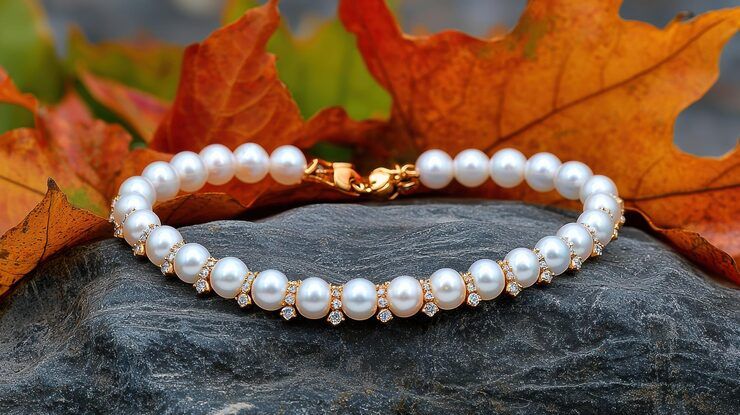
Pearl bracelets are jewelry pieces made with natural or cultured pearls arranged on a flexible strand, linked chain, or structured bracelet setting. They have been worn across different cultures for centuries and remain part of contemporary jewelry design because of their distinctive luster, smooth surfaces, and range of colors
Pearls differ from many gemstones because they form within certain mollusks rather than developing through the same geological processes as minerals. Natural pearls form without deliberate human intervention, while cultured pearls develop after human intervention initiates the formation process inside a mollusk.
Modern pearl bracelets may feature round pearls, irregular baroque pearls, freshwater pearls, saltwater pearls, or combinations of pearls with gold, silver, gemstones, and other materials. Their appearance depends on pearl type, size, shape, color, surface quality, and the design of the bracelet.
Understanding Pearl Bracelet Types
Pearl bracelets can be classified by the type of pearl, the arrangement of the beads, and the materials used in their construction.
Freshwater pearl bracelets generally feature pearls cultivated in freshwater mussels. These pearls are available in many shapes, sizes, and colors, making them common in contemporary jewelry designs.
Akoya pearl bracelets typically use cultured saltwater pearls known for their round shapes and reflective luster. White and cream colors are common, although other shades occur.
South Sea pearl bracelets feature pearls cultivated in certain species of large saltwater oysters. They are known for their relatively large sizes and colors that can include white, silver, and golden tones.
Tahitian pearl bracelets use cultured pearls from black-lipped oysters in French Polynesia. Their colors may include gray, green, peacock, and other dark overtones.
Baroque pearl bracelets feature pearls with irregular shapes rather than consistently spherical forms. Their varied outlines create distinctive patterns and textures.
Bracelet Construction and Design
The construction of a pearl bracelet affects its appearance, flexibility, durability, and maintenance requirements.
Common designs include:
Single-strand bracelets with pearls arranged in a line
Multistrand bracelets featuring several parallel rows
Pearl-and-chain designs combining pearls with metal links
Cuff bracelets incorporating pearls into a rigid structure
Charm bracelets with individual pearls and decorative elements
Elastic bracelets using a flexible internal cord
Graduated bracelets featuring pearls that change in size along the strand
Traditional pearl strands may use knots between individual pearls. These knots can help prevent pearls from rubbing directly against each other and may reduce the risk of losing multiple pearls if a strand breaks.
Why Pearl Bracelets Matter in Jewelry Design
Pearl bracelets occupy an important place in the jewelry industry because they combine natural variation with a wide range of design possibilities.
Cultural and Historical Significance
Pearls have appeared in ceremonial jewelry, formal accessories, family heirlooms, and traditional clothing across numerous cultures.
Their historical significance varies by region. In some societies, pearls have been associated with formal occasions, while other traditions incorporate them into everyday jewelry and personal adornment.
Pearl bracelets continue to appear in modern designs that combine historical influences with contemporary shapes and materials.
Jewelry Quality and Material Knowledge
Understanding pearl characteristics helps consumers, jewelry professionals, and collectors evaluate differences between individual pieces.
Important characteristics include:
Luster: The quality and intensity of reflected light from the pearl's surface.
Surface quality: The presence or absence of blemishes, pits, spots, or irregularities.
Shape: Whether the pearl is round, oval, drop-shaped, or baroque.
Size: The diameter of the pearl, commonly measured in millimeters.
Color: The main body color and any visible overtones.
Matching: The consistency of pearls in color, size, shape, and luster within one bracelet.
Nacre quality: The characteristics of the layered material deposited by the mollusk around the developing pearl.
These factors influence a bracelet's overall appearance. A perfectly round pearl is not automatically superior in every design, because baroque pearls may be selected intentionally for their individual character.
Responsible Pearl Sourcing
Pearl cultivation depends on aquatic environments and the health of the mollusks involved. Water quality, farming practices, ecosystem management, and local environmental conditions can influence production.
Environmental effects vary by farming location and method. Responsible sourcing therefore requires more than assuming that all cultured pearls have the same environmental footprint.
Documentation about origin, cultivation methods, processing, and supply-chain practices can help provide a clearer understanding of a pearl bracelet's background.
Recent Developments and Industry Trends
Pearl jewelry continues to evolve through changing design preferences, material traceability initiatives, digital jewelry identification, and discussions about environmental responsibility.
Contemporary Pearl Jewelry Design
During 2025 and 2026, contemporary jewelry design continued to include irregular baroque pearls, mixed-metal settings, asymmetrical arrangements, and combinations of pearls with other gemstones.
These styles reflect a broader interest in jewelry that combines traditional materials with less uniform shapes and more individual design features.
Pearl bracelets can also be incorporated into layered arrangements alongside metal chains, gemstone bracelets, and watches. The suitability of layering depends on the construction of each piece because hard surfaces and metal components can scratch softer pearl surfaces.
Digital Jewelry Identification
Digital product records and improved supply-chain documentation have become increasingly relevant to the wider jewelry sector.
For pearl bracelets, useful documentation may include pearl type, known geographic origin, treatment information, metal composition, and relevant laboratory identification.
However, a digital record or product description is only as reliable as the information it contains. Independent testing may be necessary when a pearl's identity or treatment status is uncertain.
Environmental Awareness
Environmental discussions within pearl cultivation increasingly focus on water quality, habitat management, responsible farming, and the effects of aquaculture on surrounding ecosystems.
The environmental impact of pearl production varies according to location, species, farming practices, and the management of the surrounding environment. Claims about sustainability should therefore be supported by specific evidence rather than broad assumptions.
Laws, Regulations, and Jewelry Standards
Pearl bracelets are affected by consumer-protection rules, gemstone disclosure practices, precious-metal regulations, and international trade requirements. The applicable rules depend on the country where the jewelry is produced, marketed, imported, or exported.
Pearl Identification and Disclosure
The jewelry industry distinguishes between natural pearls, cultured pearls, imitation pearls, and treated pearls.
Natural pearls form without deliberate human intervention. Cultured pearls form through human intervention in the mollusk, while imitation pearls are manufactured materials designed to resemble pearls.
Accurate descriptions are important because appearance alone cannot reliably establish whether a pearl is natural, cultured, or an imitation.
The United States Federal Trade Commission's Jewelry Guides provide guidance on truthful descriptions of pearls, gemstones, precious metals, and jewelry treatments. Businesses should use clear terminology and avoid misleading claims about pearl origin or characteristics.
Precious-Metal Hallmarks
Bracelets containing gold, silver, or platinum may be subject to metal-purity and hallmarking requirements.
For example, India's Bureau of Indian Standards administers hallmarking requirements for applicable precious-metal jewelry. These rules concern metal purity and identification rather than directly certifying the quality of the pearls themselves.
Requirements differ across jurisdictions, so a metal hallmark should not be interpreted as proof of pearl authenticity or geographic origin.
International Trade
Pearls and pearl jewelry may be subject to customs declarations, import requirements, export controls, and rules governing protected wildlife.
Ordinary cultured pearls are not automatically subject to the same restrictions as protected wildlife products. However, jewelry incorporating protected species or materials may require additional documentation.
Buyers and importers should check the relevant national authorities when dealing with international shipments or unusual materials.
Tools and Resources for Pearl Bracelet Evaluation
Several tools and resources can help with pearl identification, jewelry maintenance, and material research.
Gemological Testing
Gemological laboratories can examine pearls to help distinguish natural pearls, cultured pearls, and imitations. Laboratory reports may also address certain treatments and identifying characteristics.
This can be useful when evaluating an item whose description is uncertain or when documentation is important.
Jewelry Measurement Tools
Basic measurement tools help record bracelet dimensions and pearl characteristics.
Useful items include:
Digital calipers for measuring pearl diameter
Flexible measuring tapes for bracelet circumference
Magnification tools for examining surface characteristics
Jewelry scales where appropriate
Soft storage pouches to reduce contact with harder objects
Measurements alone cannot confirm authenticity, but they help describe and compare pieces consistently.
Care and Maintenance Resources
Pearls are relatively soft compared with many gemstones and can be affected by chemicals, abrasion, and improper storage.
General care practices include:
Wiping pearls gently with a soft cloth after wearing
Avoiding direct contact with perfumes and cleaning chemicals
Keeping pearls separate from harder jewelry
Avoiding ultrasonic cleaners unless a qualified professional confirms suitability
Storing pearl bracelets away from excessive heat and direct sunlight
Having traditional strands inspected periodically for cord wear
Pearls should not automatically be treated with the same cleaning methods used for diamonds or durable mineral gemstones.
Jewelry Documentation Checklist
| Detail | What to Record |
|---|---|
| Pearl type | Freshwater, Akoya, South Sea, Tahitian, or another identified type |
| Origin | Documented geographic origin, if known |
| Size | Pearl diameter in millimeters |
| Shape | Round, oval, drop, or baroque |
| Surface | Visible blemishes and irregularities |
| Treatments | Any known treatments or enhancements |
| Setting | Metal type and bracelet construction |
| Maintenance | Cleaning and inspection history |
Clear documentation helps maintain consistent records and supports informed jewelry evaluation.
Frequently Asked Questions
What is the difference between natural and cultured pearls?
Natural pearls form without deliberate human intervention, while cultured pearls develop after people initiate the pearl-forming process within a mollusk. Both are real pearls, although their formation methods differ.
Which pearls are commonly used in bracelets?
Freshwater, Akoya, South Sea, and Tahitian cultured pearls are commonly used. Baroque pearls are also popular in designs that emphasize irregular shapes and individual character.
How can pearl authenticity be checked?
Appearance alone is not enough to establish authenticity. A qualified gemologist or recognized gemological laboratory can examine a pearl to help distinguish natural, cultured, and imitation materials.
How should pearl bracelets be cleaned?
Gently wipe the pearls with a soft cloth and avoid harsh chemicals, abrasive cleaners, and unsuitable mechanical cleaning equipment. Store the bracelet separately from harder jewelry to reduce scratching.
Are cultured pearls environmentally sustainable?
Cultured pearl farming depends on local ecosystems, farming methods, water quality, and environmental management. Some practices may support responsible aquaculture, but sustainability should be evaluated using specific evidence about the production system.
Conclusion
Pearl bracelets combine natural materials, cultural traditions, and contemporary jewelry design. Their characteristics depend on pearl type, luster, surface quality, shape, size, construction, and the materials used in the bracelet.
Understanding these factors helps explain why pearl bracelets can vary considerably in appearance and composition. Knowledge of pearl identification, precious-metal standards, responsible sourcing, and appropriate care also helps support accurate descriptions and long-term preservation.
As jewelry design and documentation practices continue to evolve, reliable material information and responsible environmental management remain important considerations. A clear understanding of pearl characteristics provides a useful foundation for studying, evaluating, and caring for pearl bracelets.