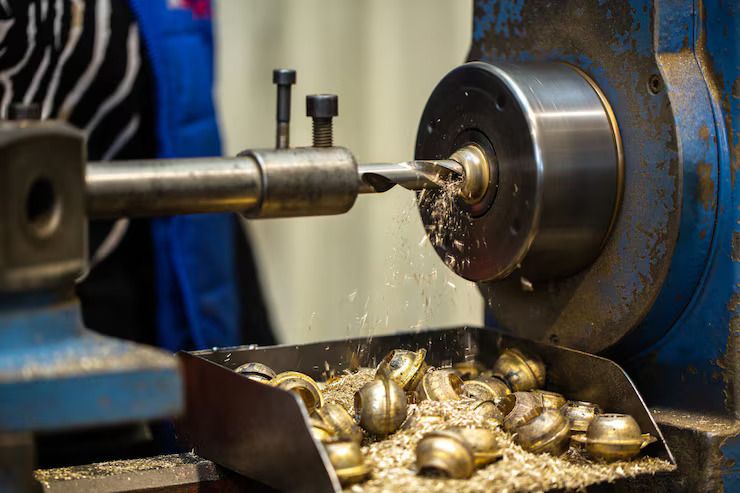
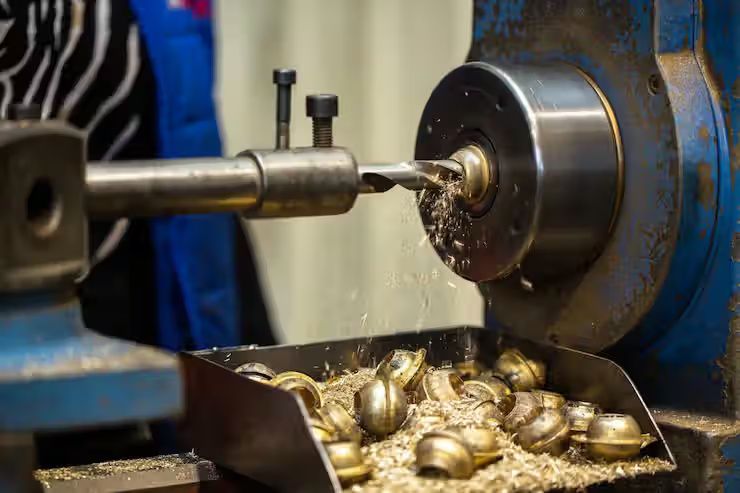
A lathe machine is a fundamental piece of industrial machining equipment used to shape materials such as metal, wood, or plastic. It works by rotating a workpiece around a fixed axis while a cutting tool removes material to create symmetrical shapes.
A lathe machine operates on a simple principle: the material rotates while a cutting tool shapes it into the desired form. This process, known as turning, is widely used in precision engineering and manufacturing industries.
From early manual designs to modern CNC (Computer Numerical Control) systems, lathe machines have evolved significantly. Today, CNC turning centers enable automated, high-precision production of complex components.
Importance of Lathe Machines in Modern Manufacturing
Role in Precision Engineering
Lathe machines are essential for producing components with tight tolerances. Parts such as shafts, bushings, and threaded fittings require high accuracy.
Industrial Applications
Lathe machining is widely used across industries, including:
- Automotive engineering
- Aerospace manufacturing
- Oil and gas equipment production
- Medical device manufacturing
- Heavy machinery fabrication
Contribution to Automation
CNC lathe machines support automated production systems by:
- Reducing manual intervention
- Improving repeatability
- Increasing production efficiency
- Enabling complex geometries
Problem-Solving Capabilities
Lathe machines help address manufacturing challenges such as:
- Rapid prototyping
- Custom component fabrication
- Repair and refurbishment
- Surface finishing and threading
Types of Lathe Machines
Common Lathe Machine Types
- Engine lathe
- CNC lathe machine
- Turret lathe
- Toolroom lathe
- Vertical lathe machine
Each type is designed for specific production requirements and levels of precision.
Main Components of a Lathe Machine
Key Parts and Functions
- Bed: Base structure supporting the machine
- Headstock: Contains the spindle and motor
- Tailstock: Supports the workpiece from the opposite end
- Carriage: Moves the cutting tool
- Chuck: Holds the material securely
In CNC lathes, these components are controlled through computerized systems for precise automation.
Basic Functions and Operations
Common Lathe Operations
- Turning (reducing diameter)
- Facing (creating flat surfaces)
- Thread cutting
- Knurling
- Drilling
- Boring
These operations are essential for shaping cylindrical and symmetrical components.
Manual vs CNC Lathe Comparison
| Feature | Manual Lathe | CNC Lathe Machine |
|---|---|---|
| Operation control | Hand-operated | Computer-programmed |
| Precision level | Operator-dependent | High repeatability |
| Production volume | Small batches | Large-scale production |
| Design complexity | Limited | Advanced geometries |
| Automation | Minimal | High |
CNC technology significantly enhances productivity and accuracy in manufacturing environments.
Recent Trends in Lathe Technology (2025–2026)
Industry 4.0 Integration
CNC turning centers are increasingly integrated with IoT sensors for real-time monitoring and predictive maintenance.
Advanced CNC Software
Modern CAM software improves machining simulation and toolpath optimization, enhancing efficiency.
Energy Efficiency Improvements
New machines focus on reducing energy consumption through efficient motors and optimized operations.
Automation and Robotics
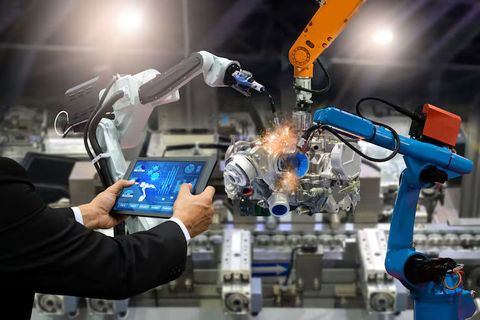
Robotic systems are used for material loading and unloading, improving workflow automation in high-volume production.
Laws, Policies, and Safety Regulations
Workplace Safety Standards
Lathe operations are governed by safety regulations that include:
- Machine guarding requirements
- Operator training guidelines
- Emergency stop systems
- Use of protective equipment
Regulatory Authorities
- In the United States: Occupational Safety and Health Administration
- In India: Directorate General Factory Advice Service and Labour Institutes
Environmental and Quality Standards
- Waste and coolant management regulations
- ISO 9001 quality management standards
Compliance ensures safe operation and consistent product quality.
Tools and Resources for Lathe Machining
Digital and Technical Tools
- CAD software for part design
- CAM software for toolpath generation
- Machining calculators (speed, feed, thread pitch)
- CNC simulation platforms
Educational and Industry Resources
- Technical training platforms
- Manufacturing engineering tutorials
- Industry standards and guidelines
Industrial Applications Overview
| Industry | Example Components Produced |
|---|---|
| Automotive | Axles, shafts, brake parts |
| Aerospace | Engine components, fittings |
| Oil and Gas | Drill collars, threaded pipes |
| Medical | Surgical instruments |
| General Eng. | Fasteners, bushings |
Lathe machines support both large-scale and precision manufacturing processes.
FAQs
What is the difference between a lathe and a milling machine?
A lathe rotates the workpiece, while a milling machine rotates the cutting tool.
What materials can be processed?
Materials include metals (steel, aluminum), plastics, and wood.
Is CNC suitable for small workshops?
Yes, compact CNC machines are available for small-scale production and prototyping.
Why is operator training important?
Training ensures safe operation, accurate machining, and compliance with regulations.
What is Industry 4.0 in machining?
It refers to digital integration using automation, sensors, and data-driven systems.
Conclusion
Lathe machines are fundamental to modern manufacturing, enabling precise shaping of components across industries. From manual systems to advanced CNC turning centers, they support both traditional and automated production processes.
Recent advancements highlight automation, digital integration, and energy efficiency as key trends. Regulatory frameworks ensure safe and responsible operation.
Understanding lathe machine basics, components, and technologies provides valuable insight into how modern industrial production systems function.