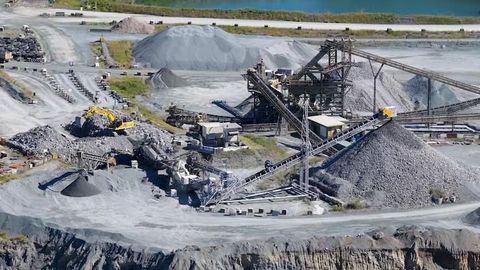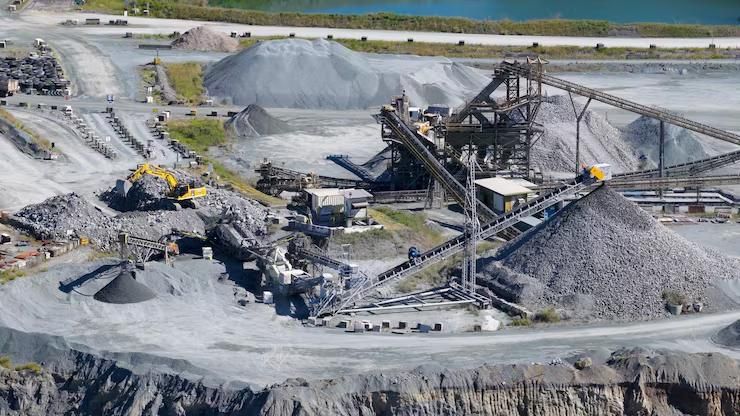
Mineral processing machinery refers to the equipment used to separate valuable minerals from mined rock, remove unwanted materials, and prepare mineral products for further processing or industrial use. These machines are used in mining operations, mineral beneficiation plants, quarrying facilities, and metal production industries.
Minerals are rarely extracted in a form that can be used directly. Mined material often contains a mixture of valuable minerals, waste rock, clay, and other impurities. Mineral processing uses physical and, in some cases, chemical methods to separate these components according to differences in size, density, magnetic properties, surface characteristics, or chemical behavior.
The selection of machinery depends on the type of ore, the mineral composition, the required product specifications, and the characteristics of the processing plant. Iron ore, copper ore, gold-bearing rock, limestone, phosphate, and industrial minerals may require different combinations of equipment.
How mineral processing works
Mineral processing generally involves several stages. Not every operation uses every stage, and the sequence varies according to the material being processed.
Crushing: Reduces large pieces of mined rock into smaller fragments.
Grinding: Reduces particle size further to release valuable minerals from surrounding rock.
Screening and classification: Separates particles according to size or settling behavior.
Separation: Concentrates valuable minerals using gravity, magnetic, electrical, or flotation methods.
Dewatering: Removes water from mineral concentrates or waste streams.
Material handling: Moves ore, concentrates, and processing residues between equipment and storage areas.
The overall objective is to produce a mineral concentrate or other usable material while managing waste and process water appropriately.
Importance of Mineral Processing Machinery
Mineral processing machinery plays an important role in the supply of raw materials used in construction, manufacturing, energy systems, electronics, and metal production. Materials such as copper, iron ore, lithium-bearing minerals, phosphate, and industrial sand undergo different processing stages before they can be used in downstream industries.
Without suitable processing equipment, separating valuable minerals from surrounding rock can be difficult and inefficient. The equipment used influences particle size, mineral recovery, product quality, water consumption, energy demand, and the volume of residual material requiring management.
Major types of mineral processing equipment
Crushing and grinding equipment
Crushers reduce mined rock to a manageable size before further treatment. Jaw crushers are commonly used for primary crushing, while cone crushers and impact crushers serve different secondary or tertiary crushing applications.
Grinding mills, including ball mills, rod mills, and semi-autogenous grinding mills, reduce particle size further. The correct grinding conditions are important because valuable minerals must often be liberated from the surrounding rock before separation can take place.
Screening and classification equipment
Vibrating screens separate particles according to size and help control the material entering downstream equipment. Hydrocyclones and classifiers separate particles according to their behavior in a moving fluid.
Effective classification helps prevent unsuitable particle sizes from entering processes that require a narrower feed range. Screen design, water flow, particle characteristics, and equipment condition all influence separation performance.
Gravity separation machinery
Gravity separation uses differences in mineral density to separate materials. Equipment may include shaking tables, jigs, spiral concentrators, and dense-medium separation systems.
These technologies are used in applications such as coal preparation and the processing of selected gold, tin, tungsten, and other mineral deposits. Their effectiveness depends on differences in density, particle size, and the characteristics of the feed material.
Flotation equipment
Flotation machines separate minerals according to differences in their surface properties. Air bubbles attach to selected mineral particles, allowing them to rise into a froth that can be collected.
Flotation is widely used in the processing of copper, lead, zinc, and certain other ores. Reagent selection, water chemistry, particle size, aeration, and operating conditions influence the separation process.
Magnetic and electrical separation equipment
Magnetic separators use differences in magnetic response to separate minerals. They are used in iron ore processing and in the recovery or removal of magnetic materials from mineral mixtures.
Electrical and electrostatic separators exploit differences in electrical properties. These systems are used for certain mineral sands and other materials when the mineral characteristics are suitable.
Washing and dewatering machinery
Washing equipment removes clay, dust, and other unwanted surface materials from mineral products. Dewatering equipment, including thickeners, filter presses, and vacuum filters, removes water from concentrates and process residues.
Managing water effectively can reduce the amount of water carried into subsequent processing stages. The appropriate system depends on particle size, slurry composition, moisture requirements, and the planned handling of residual materials.
Manufacturing Processes and Industrial Applications
Mineral processing machinery is manufactured through a combination of mechanical engineering, metal fabrication, machining, component assembly, and performance testing. Because these machines often operate under abrasive conditions and substantial mechanical loads, their construction must account for wear, vibration, structural forces, and maintenance requirements.
How mineral processing machinery is manufactured
Engineering and design: Engineers assess the material characteristics, throughput requirements, operating environment, and expected mechanical loads. Computer-aided design and engineering calculations help determine equipment dimensions, structural arrangements, and component specifications.
Material selection: Structural steel, wear-resistant steel, cast iron, specialized alloys, and abrasion-resistant liners may be selected according to the machine's function. Components exposed to highly abrasive materials may require replaceable wear parts.
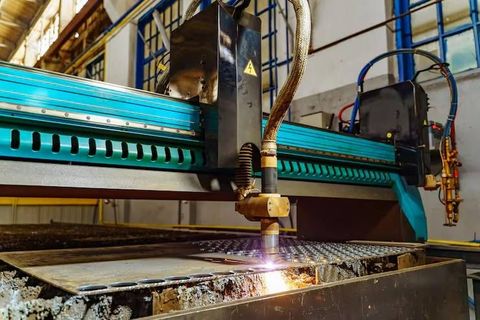
Fabrication and machining: Steel plates and structural sections are cut, formed, welded, and machined. Shafts, gears, bearing housings, and other precision components require appropriate dimensional control.
Component assembly: Motors, gearboxes, bearings, hydraulic systems, screens, liners, and control equipment are installed according to the machine design. Assembly accuracy influences mechanical performance and operating stability.
Inspection and testing: Manufacturers may conduct dimensional inspections, weld examinations, vibration checks, load tests, and functional trials as appropriate. The testing procedure depends on the equipment category and applicable technical specifications.
Automation and control integration: Modern machinery may incorporate variable-frequency drives, sensors, programmable logic controllers, and centralized monitoring systems. These features help operators observe machine conditions and coordinate equipment across a processing plant.
Industrial applications
Mineral processing equipment supports several major industries.
Mining and metal production: Crushing, grinding, and separating ores containing iron, copper, gold, nickel, and other metals.
Construction materials: Processing limestone, granite, sand, gravel, and aggregates used in concrete, roads, and building materials.
Coal preparation: Separating coal from unwanted mineral matter and managing particle-size distribution.
Industrial minerals: Processing silica, feldspar, kaolin, gypsum, and other materials used in glass, ceramics, chemicals, and manufacturing.
Fertilizer production: Processing phosphate rock and potash-bearing minerals for agricultural applications.
Mineral sands: Separating minerals such as ilmenite, rutile, zircon, and other valuable components from sand deposits.
Battery-material supply chains: Processing selected lithium, graphite, nickel, and other mineral-bearing materials for subsequent refining and manufacturing.
The equipment configuration varies substantially among these applications. A plant designed for hard, abrasive iron ore may require a different crushing and grinding arrangement from a facility processing soft limestone or fine mineral sands.
Recent Developments in Mineral Processing
Developments from 2024 through 2026 reflect growing interest in automation, energy efficiency, water management, and the processing of more complex mineral deposits. These trends are influenced by changing ore characteristics, environmental requirements, operating conditions, and demand for minerals used in modern industrial technologies.
Automation and intelligent process control
Mineral processing plants increasingly use sensors, industrial automation systems, and digital monitoring tools to observe equipment performance. Measurements such as motor current, vibration, pressure, slurry density, and material flow can help operators identify changes in operating conditions.
Advanced process-control software can use this information to adjust selected operating parameters within defined limits. Such systems still require suitable instrumentation, reliable data, and appropriate operator oversight.
Energy-efficient crushing and grinding
Crushing and grinding can account for a substantial share of the energy used in many mineral processing operations. Consequently, plant designers examine equipment configuration, particle-size control, mill operation, and alternative comminution technologies to improve overall efficiency.
High-pressure grinding rolls and other specialized technologies are used in suitable applications. Their effectiveness depends on ore hardness, feed characteristics, plant layout, and the requirements of downstream separation.
Water recovery and tailings management
Water availability and the management of mineral-processing residues remain important operational concerns. Thickening, filtration, water recycling, and dry-stacking approaches are used where technically and environmentally appropriate.
The suitability of dry stacking or other tailings-management methods depends on residue characteristics, local climate, geotechnical conditions, and regulatory requirements. No single approach is appropriate for every mine.
Processing complex and lower-grade ores
Some mineral deposits contain lower concentrations of valuable minerals or more complicated mixtures of minerals. Processing such ores may require finer grinding, improved separation techniques, additional pre-concentration, or more detailed mineralogical analysis.
Ore sorting systems can use sensors to distinguish selected rock types before material enters energy-intensive processing stages. Their effectiveness depends on whether the valuable and unwanted material can be reliably distinguished using the chosen sensing technology.
Laws, Standards, and Environmental Requirements
Mineral processing plants are subject to requirements covering mining operations, worker safety, machinery, pollution control, water use, waste management, and land rehabilitation. The applicable rules depend on the country, mineral type, processing activity, and location of the facility.
Regulatory considerations in India
In India, mineral processing operations may need to comply with applicable provisions of mining legislation, environmental laws, factory and occupational safety requirements, and conditions established through environmental clearances or operating approvals.
The Mines and Minerals (Development and Regulation) Act, 1957, forms part of India's regulatory framework for mineral development. Environmental requirements may arise under the Environment (Protection) Act, 1986, and related rules, notifications, and approvals. The exact obligations depend on the nature and classification of the operation.
Industrial facilities may also be subject to applicable pollution-control requirements administered by the Central Pollution Control Board and relevant State Pollution Control Boards. These can address dust emissions, wastewater discharge, and other environmental impacts.
International technical standards
Depending on the equipment and operating environment, manufacturers and plant operators may consider:
ISO 9001 for quality management systems.
ISO 14001 for environmental management systems.
ISO 45001 for occupational health and safety management systems.
Applicable machinery safety standards and electrical safety requirements.
Equipment-specific engineering codes and inspection procedures.
These standards have different scopes and legal status. Their applicability depends on contractual requirements, jurisdiction, equipment design, and relevant regulations.
Tools and Resources for Mineral Processing
Engineers and plant operators use technical tools to evaluate ore properties, design processing flowsheets, monitor equipment, and manage operating conditions.
Common technical resources
Mineral analysis and laboratory testing: Determine mineral composition, particle-size distribution, density, hardness, and liberation characteristics.
Process simulation software: Helps evaluate crushing, grinding, classification, and separation arrangements before a plant is built or modified.
Equipment monitoring systems: Record operating conditions such as vibration, temperature, pressure, and motor load to support maintenance planning.
Mass-balance calculations: Track material entering and leaving different processing stages to assess production performance and identify losses.
Environmental monitoring equipment: Measures selected dust, water-quality, and other environmental parameters according to applicable requirements.
Factors affecting machinery selection
Selection factor | Importance |
|---|---|
Ore characteristics | Determines the appropriate separation method |
Required throughput | Influences equipment capacity and plant layout |
Particle-size requirements | Affects crushing, grinding, and classification |
Abrasiveness | Influences wear rates and liner selection |
Water availability | Affects wet processing and recycling arrangements |
Energy demand | Influences equipment configuration and operating efficiency |
Maintenance access | Affects inspection, component replacement, and downtime |
Environmental conditions | Influences dust control, wastewater management, and tailings handling |
Selecting machinery requires an understanding of the complete processing system rather than evaluating individual machines in isolation.
Frequently Asked Questions
What is mineral processing machinery used for?
Mineral processing machinery separates valuable minerals from mined material and prepares them for further treatment or industrial use. Typical equipment includes crushers, grinding mills, screens, flotation machines, separators, and dewatering systems.
What are the main types of mineral processing equipment?
The main categories include crushing, grinding, screening, classification, gravity separation, flotation, magnetic separation, washing, and dewatering equipment. The combination depends on the ore and the intended product.
How does mineral processing equipment work?
Different machines use different physical principles to reduce particle size or separate materials. These include mechanical breakage, particle-size classification, density differences, magnetic properties, and differences in mineral surface behavior.
Which industries use mineral processing machinery?
Mining, construction materials, metal production, coal preparation, fertilizer manufacturing, industrial minerals, and mineral-sands processing all use mineral processing equipment. Selected technologies are also used in supply chains for battery-related materials.
What factors influence mineral processing equipment selection?
Important factors include ore composition, hardness, abrasiveness, required throughput, target particle size, separation characteristics, energy demand, water availability, maintenance requirements, and environmental obligations.
Conclusion
Mineral processing machinery converts mined material into concentrates, industrial minerals, and other products through crushing, grinding, separation, and dewatering. Different equipment types serve different functions, and the appropriate configuration depends on the characteristics of the ore and the intended output. Automation, improved process control, energy management, and water recovery continue to influence equipment design and plant operation. Safety, maintenance, and environmental compliance remain essential considerations throughout the processing cycle.