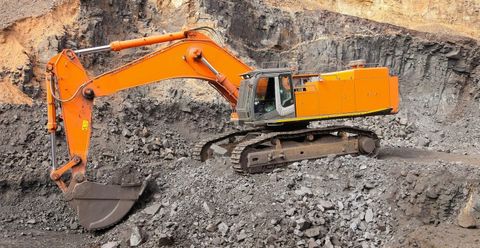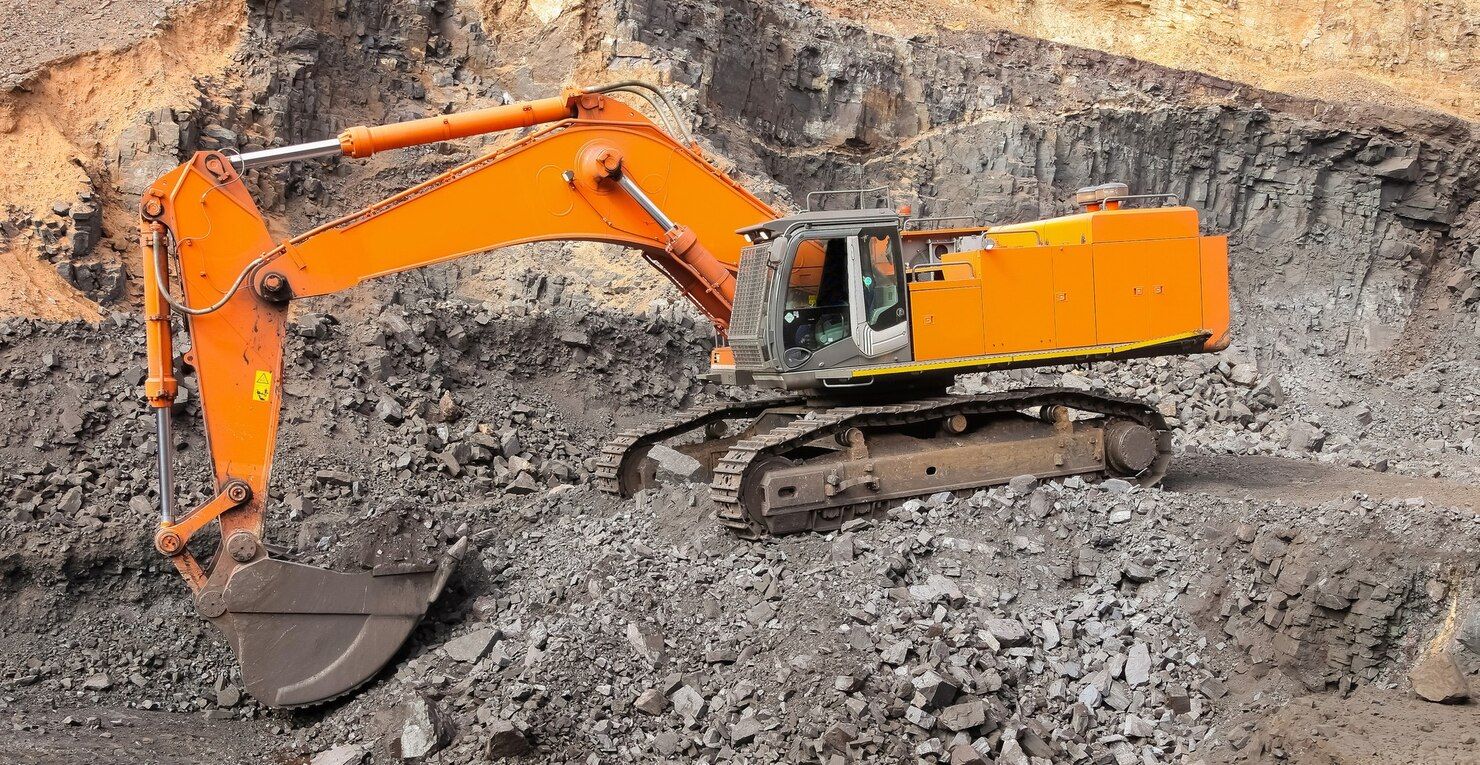
Mining excavators are large-scale heavy machines designed to move massive amounts of earth, rock, and minerals during mining operations. These machines are commonly used in open-pit mines and large construction projects where traditional earthmoving equipment would be inefficient.
The main purpose of mining excavators is to remove layers of soil and rock so valuable resources such as coal, iron ore, copper, and rare minerals can be accessed. Mining companies rely on these machines because mining sites often involve moving thousands of tons of material every day.
Unlike smaller construction excavators, mining excavators are engineered for extreme durability and high production capacity. Their large buckets, powerful hydraulic systems, and reinforced structures allow them to operate continuously in demanding environments.
Mining excavators also help coordinate material movement within the mining site. They load haul trucks, remove overburden, and prepare surfaces for drilling and blasting operations. Because of this role, they are considered one of the core machines in large-scale mining operations.
Modern mining operations depend on precise excavation techniques. Mining excavators support this by allowing operators to control digging depth, bucket force, and material placement with high accuracy.
Why Mining Excavators Matter in the Modern Mining Industry
Mining excavators play an important role in the global supply chain for raw materials. Many industries depend on minerals extracted from the earth, including energy, infrastructure, electronics, and transportation.
Without high-capacity excavation equipment, large mineral deposits would be difficult to access efficiently.
Several industries benefit directly from mining excavator operations:
- Steel manufacturing
- Renewable energy technologies
- Electric vehicle battery production
- Infrastructure development
- Construction material supply
Mining excavators also help reduce operational inefficiencies. By moving larger volumes of material in a shorter time, they support productivity goals in large mining projects.
Another reason mining excavators are important today is their role in improving safety at mining sites. Modern machines include monitoring systems, sensors, and advanced operator cabins that help reduce risk during excavation work.
The following table shows how mining excavators contribute to different stages of mining operations.
| Mining Stage | Role of Excavators | Operational Impact |
|---|---|---|
| Overburden Removal | Remove soil and rock layers | Access to mineral deposits |
| Ore Extraction | Dig and load valuable materials | Supports production output |
| Material Loading | Transfer ore to haul trucks | Improves transport efficiency |
| Site Preparation | Shape mining areas | Supports drilling operations |
Large mining operations depend heavily on excavation capacity. As mineral demand increases globally, these machines remain essential for maintaining consistent production.
Recent Developments in Mining Excavator Technology
Mining equipment technology has evolved rapidly in recent years. Several updates between 2024 and 2025 highlight how the mining industry is focusing on efficiency, automation, and environmental performance.
One major development is the introduction of electric and hybrid mining excavators. Equipment manufacturers have begun integrating electric drive systems that reduce fuel consumption and emissions. These systems are designed to support sustainability initiatives in the mining sector.
Automation is another significant trend. Advanced excavation machines now include features such as:
- GPS-based digging assistance
- Remote operation capabilities
- Real-time performance monitoring
- AI-supported predictive maintenance
Remote operation technology gained attention in 2024 as several mining companies expanded automated equipment fleets. Remote-controlled excavators allow operators to work from control centers located away from hazardous mining zones.
Another trend involves data-driven mining operations. Modern excavators generate large amounts of operational data. Mining companies analyze this information to improve machine efficiency, reduce downtime, and optimize production cycles.
A comparison of traditional and modern excavation technology illustrates these changes.
| Feature | Traditional Excavators | Modern Mining Excavators |
|---|---|---|
| Power Source | Diesel Engines | Diesel-Electric or Hybrid |
| Monitoring | Basic gauges | Digital performance systems |
| Operation | Manual controls | Assisted automation |
| Maintenance | Scheduled inspections | Predictive diagnostics |
These innovations are shaping how mining sites operate. The goal is to improve productivity while reducing environmental impact and operational risk.
Mining Regulations and Policies Affecting Excavator Operations
Mining activities operate under strict regulations in many countries. Governments regulate excavation activities to ensure environmental protection, worker safety, and responsible mineral extraction.
Several regulatory areas influence the operation of mining excavators.
Environmental protection rules require mining companies to manage land disturbance, dust emissions, and water usage. Excavators must often operate according to approved mining plans that outline excavation zones and material handling procedures.
Worker safety standards also affect how excavation equipment is used. Mining authorities require protective structures, operator training programs, and machine inspection protocols.
In India, several laws influence mining equipment operations, including:
- Mines Act, 1952 – Focuses on worker safety in mining environments
- Mineral Conservation and Development Rules (MCDR) – Regulates mining practices and mineral management
- Environment Protection Act, 1986 – Addresses environmental impacts of industrial activity
Government agencies regularly update guidelines to ensure responsible resource extraction. Mining companies must comply with these policies when operating heavy excavation equipment.
International mining companies also follow global frameworks related to environmental sustainability and responsible mineral sourcing.
Useful Tools and Resources for Understanding Mining Excavators
Many digital tools and online platforms help researchers, engineers, and industry professionals analyze mining equipment performance and mining operations.
These resources provide insights into equipment design, mining productivity, and operational planning.
Helpful resources include:
• Mining engineering research platforms for studying excavation methods
• Equipment simulation software used in mining training programs
• Fleet monitoring systems that track machine performance
• Geological mapping tools that help plan excavation areas
• Mining productivity calculators used for project planning
The table below highlights common categories of tools used in mining operations.
| Tool Type | Purpose | Example Use |
|---|---|---|
| Fleet Monitoring Systems | Track machine productivity | Equipment performance analysis |
| Geological Mapping Software | Map mineral deposits | Planning excavation areas |
| Simulation Training Platforms | Operator training | Virtual mining environments |
| Productivity Calculators | Estimate material movement | Project planning support |
These tools support data-driven mining operations and help improve excavation efficiency.
Frequently Asked Questions About Mining Excavators
What is a mining excavator used for?
A mining excavator is used to remove soil, rock, and mineral materials from mining sites. The machine loads materials into trucks and helps expose valuable mineral deposits.
How large are mining excavators?
Mining excavators can be extremely large. Some machines weigh several hundred tons and have bucket capacities capable of moving tens of tons of material in a single digging cycle.
What type of mines use excavators?
Mining excavators are commonly used in open-pit mines, coal mines, and large-scale mineral extraction projects where large volumes of earth must be removed.
How are modern mining excavators monitored?
Many modern machines include digital monitoring systems that track fuel consumption, digging efficiency, hydraulic performance, and maintenance requirements.
Are mining excavators becoming automated?
Yes. Automation is becoming more common in the mining industry. Some excavation systems now support remote operation and semi-autonomous functions that assist operators.
Conclusion
Mining excavators remain one of the most important machines used in large-scale mining operations. These machines help remove massive quantities of earth and rock, making it possible to access essential minerals used in industries around the world.
As the demand for raw materials continues to grow, mining companies rely on advanced excavation technology to improve productivity and efficiency. Developments such as electric power systems, automation tools, and digital monitoring platforms are shaping the future of mining equipment.
At the same time, regulations and environmental policies influence how excavation equipment operates at mining sites. Compliance with safety and environmental standards ensures that mining activities are conducted responsibly.
Understanding the role of mining excavators provides insight into how modern mining operations function. These powerful machines remain central to mineral extraction, infrastructure development, and the global industrial supply chain.