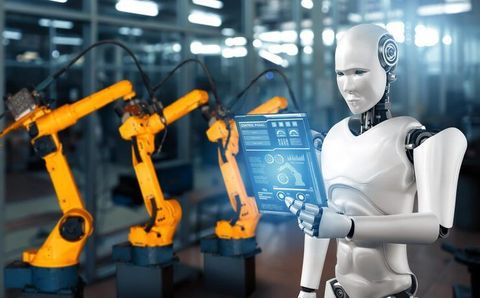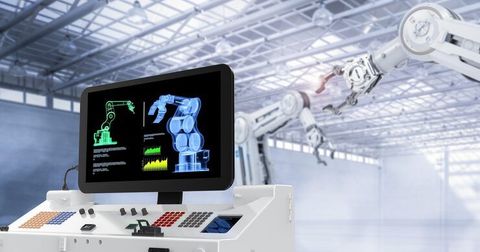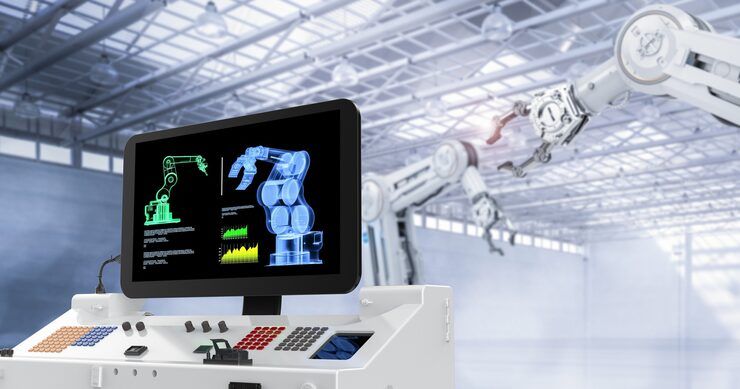
Motion control systems are technologies used to regulate the movement of machines, tools, and mechanical components. They control factors such as position, speed, acceleration, direction, and torque. These systems are widely used in industrial automation, robotics, packaging equipment, manufacturing machinery, medical devices, and automated production lines.
The main purpose of a motion control system is to make mechanical movement accurate, repeatable, and coordinated. For example, a robotic arm may need to move a component to a specific position, while a conveyor belt must maintain a consistent speed to transport materials through a production facility.
Modern motion control combines mechanical components, electrical equipment, electronic controllers, and software. The system receives instructions, calculates the required movement, and adjusts the motor or actuator to achieve the intended result.
Main Components of a Motion Control System
A typical motion control system includes several interconnected components.
Motion controller: Processes movement instructions and determines the required position, speed, and acceleration.
Servo motor: Provides precise control of rotational or linear movement using feedback from sensors or encoders.
Stepper motor: Moves in defined steps and is commonly used where controlled incremental movement is suitable.
Servo drive: Regulates the electrical power supplied to a servo motor and adjusts its operation according to control signals.
Sensors and encoders: Measure position, speed, rotation, or other movement-related variables.
Mechanical transmission: Components such as gears, belts, lead screws, and ball screws transfer motor movement to the machine.
Human-machine interface (HMI): Allows operators to monitor equipment, adjust settings, and interact with the control system.
The exact configuration depends on the application. A basic positioning machine may use a stepper motor and controller, whereas a high-speed robotic assembly line may require multiple servo axes operating together.
Types of Motion Control Systems
Motion control technologies can be grouped according to how they regulate movement.
Open-loop systems operate without continuously measuring the actual output position. They are often used when the mechanical load is predictable and the required accuracy can be achieved without feedback.
Closed-loop systems use feedback from encoders or sensors to compare actual movement with the target. The controller adjusts motor operation when a difference occurs.
Point-to-point control moves a mechanism between specified positions. The path between those positions may not be the main priority.
Coordinated motion control synchronizes multiple axes so that machines can perform complex movements. This approach is important in CNC machinery, industrial robotics, and automated material handling.
Importance of Motion Control Systems in Modern Industry
Motion control systems help manufacturers improve precision, consistency, and coordination across automated processes. They are particularly valuable when machinery must perform repetitive movements at controlled speeds or position components within narrow tolerances.
Industrial Applications
Motion control technology is used across a wide range of sectors.
Automotive manufacturing: Coordinates robotic welding, assembly operations, and component handling.
CNC machining: Controls tool position, spindle rotation, and feed movement during precision machining.
Packaging machinery: Synchronizes filling, labeling, sealing, and cutting operations.
Electronics manufacturing: Positions small components during automated assembly and inspection.
Warehousing and logistics: Regulates conveyor systems, sorting equipment, and automated storage mechanisms.
Medical equipment: Controls movement in laboratory instruments, imaging equipment, and selected medical devices.
Textile machinery: Coordinates rollers, winding systems, and fabric processing equipment.
Key Performance Factors
When evaluating an industrial motion control system, engineers typically consider accuracy, repeatability, response time, load capacity, and energy consumption.
Performance factor | Meaning | Why it matters |
|---|---|---|
Positioning accuracy | Closeness to the target position | Supports precision manufacturing |
Repeatability | Ability to return to the same position | Improves process consistency |
Response time | Time taken to react to a command | Supports rapid machine operation |
Torque capacity | Rotational force available from the motor | Helps handle mechanical loads |
Speed range | Range of achievable movement speeds | Supports different operating conditions |
Feedback quality | Reliability of measured movement data | Improves closed-loop control |
Selecting a system requires balancing these factors against the machine's actual operating requirements. Higher precision is not always necessary for every application, and excessive system complexity can make integration and maintenance more difficult.
Recent Developments in Motion Control Technology
During 2025 and 2026, industrial automation continued to move toward integrated motion hardware, simplified commissioning, networked controllers, and software-assisted machine diagnostics. These developments reflect a broader effort to make automated machinery easier to configure, operate, and maintain.
Integrated Servo Drives and Controllers
Modern motion control products increasingly combine functions that previously required separate components. Depending on the design, integrated equipment may reduce wiring complexity, cabinet space, and configuration effort.
This approach can be useful for machine builders producing multiple equipment variations. However, compatibility with existing controllers, communication protocols, and safety architecture remains important.
Industrial Networking and Real-Time Control
EtherCAT, PROFINET, and other industrial communication technologies allow controllers, drives, sensors, and other devices to exchange information.
Real-time communication is particularly important when multiple motor axes must move in coordination. Network selection depends on timing requirements, equipment compatibility, cybersecurity considerations, and the manufacturer's supported architecture.
Predictive Maintenance and Intelligent Diagnostics
Motion controllers and servo drives can provide information about current, torque, temperature, following error, and other operating conditions. Engineers can analyze these measurements to identify unusual behavior before it develops into a major interruption.
Common developments include:
Software tools for configuring servo parameters.
Automated detection of positioning errors.
Condition monitoring for motors, bearings, and mechanical transmissions.
Digital simulation of machine movements before physical commissioning.
Improved diagnostic information for troubleshooting connected equipment.
These technologies can support maintenance planning, but their effectiveness depends on data quality, suitable thresholds, and proper engineering interpretation.
Laws, Standards, and Policies in India
Motion control systems must be designed and installed with attention to electrical safety, machinery hazards, electromagnetic compatibility, and applicable product requirements. The relevant obligations depend on the equipment category, intended use, installation environment, and current regulations.
Machinery Safety Requirements
The Bureau of Indian Standards (BIS) develops Indian Standards for machinery and electrical equipment. Relevant technical standards may address machinery risk assessment, electrical equipment, protective devices, emergency stops, and safety-related control systems.
Examples include:
IS 16819: Machinery safety principles for risk assessment and risk reduction, aligned with ISO 12100.
IS 16504 series: Requirements relating to the electrical equipment of machines.
IS 16810 series: Safety-related parts of machinery control systems.
IS 16818: Principles for emergency-stop functions.
These standards address different aspects of safety and should be selected according to the equipment and applicable regulatory framework.
Important Regulatory Considerations in 2025–2026
India's Machinery and Electrical Equipment Safety (Omnibus Technical Regulation) Order, 2024, underwent amendments during 2025. The Ministry of Heavy Industries subsequently published a withdrawal notification dated January 16, 2026.
Consequently, manufacturers and equipment integrators should not assume that the original order's proposed implementation dates remain applicable. They should confirm the current status of the relevant product-specific Quality Control Orders, BIS certification requirements, and other applicable notifications before determining compliance obligations.
The broader legal framework includes the Bureau of Indian Standards Act, 2016, along with applicable electrical safety, workplace safety, and industrial regulations. Compliance should be assessed for the complete machine and its intended application, rather than for the motion controller alone.
Tools and Resources for Motion Control Engineering
Engineers use a combination of design software, configuration utilities, calculators, and testing equipment to select and configure motion control components.
Useful Engineering Tools
Servo sizing calculators: Estimate motor torque, speed, inertia, and power requirements.
Motion simulation software: Models trajectories, acceleration, deceleration, and coordinated axis movement.
PLC programming environments: Develop machine sequences and coordinate motion with other automation functions.
Drive configuration software: Sets control parameters, tuning values, and operating limits.
Encoder testing tools: Help assess position feedback and signal quality.
Oscilloscopes and diagnostic instruments: Assist with troubleshooting electrical signals and control behavior.
Practical Selection Checklist
Before selecting a motion control system, engineers should assess:
Required travel distance and positioning accuracy.
Maximum speed, acceleration, and deceleration.
Mechanical load, inertia, friction, and torque requirements.
Motor and drive compatibility.
Feedback device resolution and communication protocol.
Emergency-stop requirements and safety functions.
Environmental conditions, including temperature, dust, and vibration.
Maintenance access and availability of technical documentation.
A structured checklist helps reduce design errors and makes it easier to compare different system configurations.
Frequently Asked Questions
What is the main purpose of a motion control system?
Its main purpose is to regulate movement by controlling position, speed, acceleration, direction, or torque. It helps machinery perform movements accurately and consistently.
What is the difference between a servo motor and a stepper motor?
A servo motor typically operates with feedback to regulate movement and correct errors. A stepper motor moves in defined increments and may operate without position feedback. Closed-loop stepper systems are also available. The appropriate choice depends on required precision, speed, load, and operating conditions.
What is closed-loop motion control?
Closed-loop motion control compares the desired movement with actual movement measured by an encoder or sensor. The controller uses the difference, known as the error, to adjust motor operation.
Which industries use motion control systems?
Automotive manufacturing, electronics assembly, packaging, CNC machining, robotics, textile processing, warehousing, and selected medical equipment applications use motion control technology.
How can engineers improve motion control accuracy?
Accuracy can be improved through appropriate motor sizing, correct mechanical alignment, suitable encoder resolution, effective servo tuning, reduced mechanical backlash, and stable operating conditions. Regular inspection and validation are also important.
Conclusion
Motion control systems are an essential part of modern industrial automation. They coordinate motors, drives, controllers, sensors, and mechanical components to deliver controlled movement in manufacturing and other technical applications.
Advances in integrated hardware, industrial networking, simulation, and predictive diagnostics are making motion systems more adaptable and easier to monitor. However, successful implementation still depends on proper engineering, equipment compatibility, and machinery safety.
By understanding system types, performance requirements, relevant standards, and available engineering tools, organizations can make informed decisions about motion control technology and develop reliable automated processes.