Plastic sorting machines are automated or semi-automated systems used to identify, separate, and classify plastic materials according to polymer type, color, shape, size, density, or contamination. They are widely used in plastic recycling plants, material recovery facilities, waste-processing operations, and plastics manufacturing.
Modern sorting systems can combine optical sensors, near-infrared technology, cameras, artificial intelligence, magnetic separation, air jets, and automated controls. The selected technology depends on the incoming material, required purity, throughput, and final recycled product.
Why Plastic Sorting Machines Matter
Mixed plastic waste can contain multiple polymer types, colors, labels, metals, paper, organic material, and other contaminants. Separating these materials before further processing helps create more consistent feedstock for recycling.
A typical plastic recycling line may include:
- Waste receiving
- Pre-sorting
- Conveying
- Screening
- Magnetic separation
- Optical sorting
- Polymer identification
- Color sorting
- Air ejection
- Washing
- Drying
- Flake sorting
- Quality inspection
- Baling or further processing
The exact sequence depends on whether the feedstock consists of bottles, packaging, films, rigid plastics, production scrap, or post-consumer material.
Plastic Sorting Technologies
Optical Sorting
Optical sorting systems use sensors and imaging technologies to identify materials moving along a conveyor. Depending on the system, sensors can distinguish plastics by polymer characteristics, color, or other measurable properties.
Modern systems can automatically eject targeted materials using high-speed air jets.
TOMRA, for example, describes sensor-based plastic sorting systems that identify polymers and contaminants and can sort materials such as PET, PE, PP, and PVC.
Near-Infrared Sorting
Near-infrared (NIR) technology identifies materials based on their spectral response. It is widely used for distinguishing different polymer types in mixed plastic streams.
NIR systems can help separate materials such as:
- PET
- HDPE
- LDPE
- PP
- PVC
NIR is particularly useful where visual appearance alone cannot reliably identify the polymer.
Color Sorting
Camera-based systems can identify differences in plastic color. Color sorting is often combined with polymer identification to produce more consistent material fractions.
For example, clear, light-colored, and dark plastic streams can require different sorting decisions depending on the recycling application.
AI-Based Sorting
Artificial intelligence and deep-learning systems can classify complex objects using visual information and trained models.
TOMRA's GAINnext system uses AI and deep-learning technology to identify difficult-to-classify objects and automate certain sorting tasks.
AI-based systems can be useful when traditional sensor-based sorting struggles with overlapping or visually complex materials.
Magnetic and Metal Separation
Magnets and inductive systems are used to remove metallic contamination from plastic streams.
These systems can be positioned before or after other sorting stages depending on the plant design. Sesotec, for example, describes magnetic and inductive systems for detecting and separating metal contaminants from plastics.
Air-Jet Separation
After a sensor identifies a target object, compressed air can be used to divert it from the main material stream.
High-speed air ejection allows automated sorting without direct mechanical contact with every individual item.
Major Types of Plastic Sorting Machines
| Machine Type | Main Function | Typical Application |
|---|---|---|
| Optical Sorter | Identifies materials using sensors | Mixed plastic waste |
| NIR Sorter | Identifies polymer characteristics | PET, PE, PP, PVC |
| Color Sorter | Separates materials by color | Bottles, flakes, packaging |
| AI Sorting Machine | Classifies complex objects | Mixed recycling streams |
| Flake Sorter | Separates washed plastic flakes | PET, PE, PP recycling |
| Metal Separator | Removes metallic contaminants | Plastic regrind and flakes |
| Magnetic Separator | Removes ferrous materials | Plastic waste streams |
| Air Sorter | Separates lightweight materials | Films and packaging |
| Belt Sorter | Transfers and supports automated detection | Recycling plants |
| Manual Sorting Station | Enables human inspection | Pre-sorting and quality control |
Plastic Sorting Machine Manufacturing Process
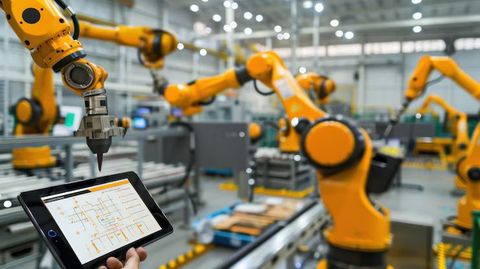
Manufacturing a plastic sorting machine involves mechanical engineering, sensor integration, electrical systems, software, fabrication, assembly, calibration, and testing.
A simplified manufacturing sequence is:
System Design → Material Selection → Frame Fabrication → Conveyor Assembly → Sensor Installation → Ejection-System Integration → Electrical Assembly → Software Integration → Calibration → Factory Testing → Installation → Commissioning
The machine must be calibrated for the intended material stream. Sensor settings, conveyor speed, detection parameters, air pressure, and ejection timing can influence sorting performance.
How Automated Plastic Sorting Works
A typical automated sorting process follows several steps.
1. Material Feeding
Mixed plastic material enters the sorting line through a hopper, conveyor, or feeding system.
2. Material Presentation
Conveyors spread the material so that individual objects or flakes can pass through the detection zone.
3. Sensor Detection
Cameras, NIR sensors, electromagnetic sensors, or other technologies analyze the material.
4. Classification
The control system determines whether each detected item matches the target sorting category.
5. Ejection
Air jets or mechanical mechanisms divert selected material into a designated fraction.
6. Collection
Separated materials are collected in individual streams for further processing, storage, washing, pelletizing, or packaging.
Plastic Sorting for Different Recycling Applications
PET Bottle Sorting
PET bottles can be sorted by polymer, color, and contamination before being processed into flakes or other recycled feedstock.
HDPE and PP Sorting
HDPE and PP are common polyolefins that may need to be separated from one another and from other polymers.
Plastic Flake Sorting
After shredding and washing, small plastic flakes can be sorted according to polymer type, color, and contamination.
TOMRA's AUTOSORT FLAKE, for example, combines NIR, color-camera, and metal-sensing technologies for plastic flake sorting applications.
Plastic Film Sorting
Films can be challenging to handle because of their low density and flexible shape. Specialized systems can combine controlled airflow and sensor technology to stabilize and classify lightweight materials.
Industrial Plastic Scrap
Manufacturing facilities can use sorting systems to separate production scrap according to polymer, color, or contamination before reprocessing.
Automation and Process Control
Automation is central to modern plastic sorting systems.
Control systems can monitor:
- Conveyor speed
- Sensor signals
- Material flow
- Air pressure
- Ejection timing
- Product purity
- Recovery rates
- Equipment status
- Maintenance conditions
Advanced systems can also use software to record production data and monitor sorting performance.
TOMRA states that its sorting platforms combine sensors, mechanics, and software, with systems designed for automated material recovery.
Global Plastic Sorting Machine Manufacturers and Suppliers
The global market includes companies specializing in optical sorting, sensor-based recycling systems, plastic separation, and broader waste-processing technologies.
TOMRA develops automated sorting systems for plastic recycling, including solutions for mixed plastics, polymers, films, and flakes. Its portfolio includes AUTOSORT, AUTOSORT FLAKE, AUTOSORT SPEEDAIR, INNOSORT FLAKE, and AI-based GAINnext systems.
Sesotec supplies sorting and detection technologies for plastics, including systems that identify polymer types, colors, metals, and other contaminants.
Other manufacturers and technology suppliers operate across optical sorting, polymer identification, recycling equipment, conveyor systems, shredding, washing, and material separation.
Supplier selection depends on feedstock composition, required throughput, target polymer fractions, contamination level, desired purity, plant layout, automation, and local technical support.
How to Select Plastic Sorting Machines
1. Identify the Feed Material
Determine whether the input consists of bottles, rigid packaging, films, flakes, industrial scrap, or mixed municipal plastics.
2. Define the Target Materials
Specify the fractions that need to be recovered, such as PET, HDPE, PP, LDPE, PVC, or mixed polyolefins.
3. Determine Throughput
Establish the required processing capacity in kilograms or tonnes per hour. The sorter should be compatible with the capacity of upstream and downstream equipment.
4. Establish Purity Requirements
Different recycled products require different material purity levels. The sorting configuration should reflect the specifications of the intended output.
5. Consider Material Presentation
Sensor-based systems work most effectively when material is appropriately distributed and presented within the detection zone.
6. Evaluate Automation
Determine whether the plant requires optical sorting, AI classification, automated ejection, quality monitoring, or multiple sorting stages.
7. Consider Maintenance
Review sensor cleaning, calibration, air requirements, wear components, software support, spare parts, and service requirements.
Plastic Sorting Machine Cost and Pricing Factors
The plastic sorting machine cost varies according to technology, throughput, sensor configuration, conveyor dimensions, automation, software, number of sorting stages, and installation requirements.
Important pricing factors include:
- Sorting capacity
- Number and type of sensors
- NIR or other optical technologies
- AI and software capabilities
- Conveyor configuration
- Air-ejection system
- Metal detection
- Flake or bottle application
- Control system
- Dust-management requirements
- Installation and commissioning
A basic sorting system has a different configuration from a multi-stage automated recycling plant.
When comparing equipment costs, consider the complete sorting system and the required output quality rather than looking only at the initial machine specification.
Best Practices for Plastic Sorting Machines
Proper operation can help maintain consistent sorting performance.
- Keep sensor windows and detection areas clean.
- Maintain stable conveyor speeds.
- Ensure material is distributed evenly.
- Check compressed-air quality and pressure.
- Calibrate sensors according to equipment requirements.
- Monitor contamination and output purity.
- Inspect ejection valves regularly.
- Keep conveyors and transfer points properly maintained.
- Monitor wear components.
- Review sorting data to identify changes in feedstock quality.
Frequently Asked Questions
What are plastic sorting machines?
Plastic sorting machines are systems that identify and separate plastic materials according to polymer type, color, shape, size, or contamination using optical, sensor-based, mechanical, or AI technologies.
How does an optical plastic sorting machine work?
An optical sorter scans materials as they move through a detection zone. Sensors identify characteristics of each object, and an automated ejection system diverts selected materials into the appropriate fraction.
Which plastics can sorting machines separate?
Depending on the technology, sorting systems can separate materials such as PET, HDPE, PP, LDPE, PVC, and other plastic categories. Some systems can also separate plastics by color and remove contaminants.
What is a plastic flake sorting machine?
A plastic flake sorting machine separates small pieces of shredded and washed plastic according to characteristics such as polymer type, color, and contamination. Specialized flake sorters can combine multiple sensor technologies.
How do I choose a plastic sorting machine?
Consider the incoming material, target polymers, throughput, required output purity, particle or object size, contamination level, sensor technology, automation, compressed-air requirements, and integration with the rest of the recycling line.
Conclusion
Plastic sorting machines are an important component of modern recycling infrastructure. Optical sensors, NIR identification, cameras, AI, magnetic separation, metal detection, and automated air ejection can work together to separate complex plastic streams into more consistent material fractions.
The appropriate sorting system depends on the feedstock, target polymers, throughput, contamination, required purity, material presentation, and downstream recycling process. Evaluating the complete recycling line can help processors select sorting technology that fits their specific production and material-recovery requirements.