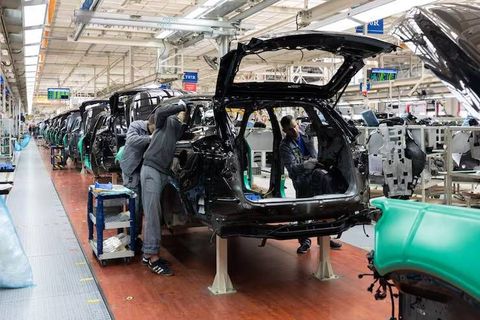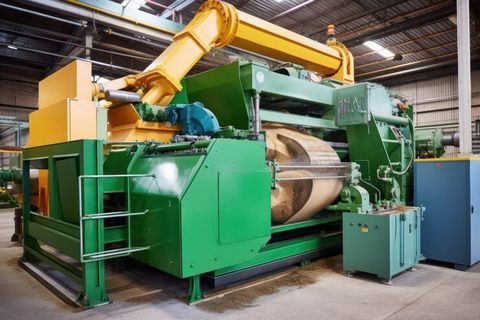
Sheet metal machinery refers to the equipment used to cut, bend, punch, form, join, and finish thin or moderately thick metal sheets. These machines are essential in manufacturing products such as electrical enclosures, automotive body panels, industrial cabinets, ventilation ducts, construction components, and household appliances. They transform flat metal sheets into components with specific shapes, dimensions, and mechanical properties.
Sheet metal fabrication is a major part of modern industrial production because metal sheets can be processed into many different shapes without manufacturing every component from a solid block of material. Common materials include mild steel, stainless steel, aluminum, copper, and galvanized steel. Each material has different forming characteristics, strength, thickness, and resistance to corrosion, which influence the machinery and processing methods used.
Traditional sheet metal workshops often relied on manually operated shears, presses, and bending tools. Modern facilities may use computer numerical control (CNC) systems, automated material handling, laser cutting, robotic welding, and digital production software. These technologies help manufacturers control dimensions, repeat production operations, and coordinate multiple fabrication stages.
How sheet metal fabrication works
Sheet metal fabrication usually begins with a flat sheet or coil of metal. The material is measured, cut into the required dimensions, and processed through one or more forming or joining operations. The finished component may then undergo surface treatment, inspection, and assembly.
The main stages include:
Design and planning: Engineers create component drawings and determine material thickness, tolerances, and forming requirements.
Cutting: Sheets are separated into specific shapes using shearing, laser cutting, plasma cutting, or punching.
Forming: Press brakes, rollers, and stamping presses change the sheet's shape without necessarily removing material.
Joining: Welding, riveting, fastening, or other joining methods connect separate components.
Finishing and inspection: Surfaces are treated where necessary, and components are checked against dimensional and quality requirements.
Not every product requires every stage. A simple bracket may need only cutting and bending, while an industrial enclosure may require punching, forming, welding, finishing, and final assembly.
Main Types of Sheet Metal Machinery
Sheet metal machinery is classified according to the operation it performs. Some machines are designed for a single task, while others combine several processes within an automated production line.
Cutting machines
Cutting equipment separates sheet material into blanks or finished profiles.
Laser cutting machines use a focused laser beam to cut metal according to a programmed path. They can produce complex profiles and fine details, with performance depending on the material, thickness, laser system, and process settings.
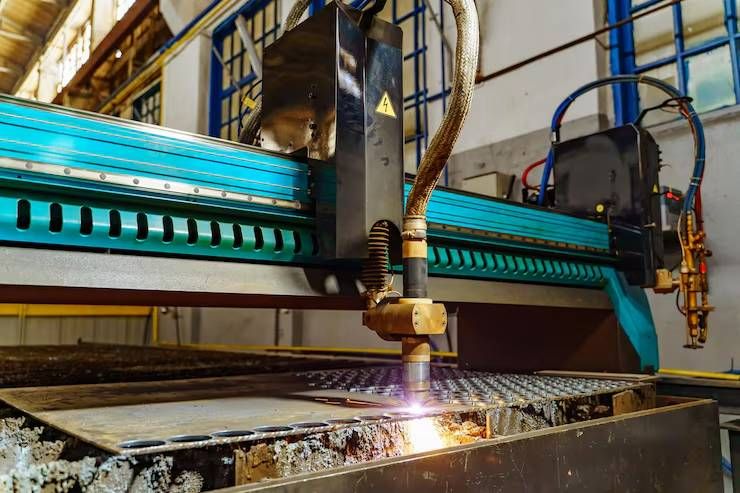
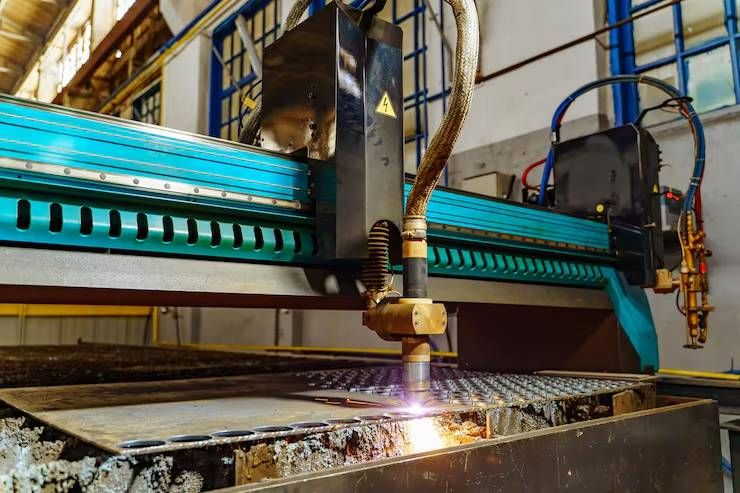
Plasma cutting machines use an electrically conductive, high-temperature plasma jet to cut electrically conductive metals. They are commonly used for applications involving thicker steel plates and structural components.
Mechanical shearing machines use blades to cut straight lines through sheet metal. They are suitable for preparing rectangular blanks and other straight-edged pieces.
CNC punching machines use punches and dies to create holes, slots, and repeated shapes. Turret punching systems can accommodate multiple tools, allowing different features to be produced within a single setup.
Bending and forming machines
Forming equipment changes the geometry of a sheet without relying primarily on material removal.
Press brakes use a punch and die to bend sheet metal at specified angles. CNC-controlled press brakes can manage back gauges, bending sequences, and selected machine movements to support repeatable production.
Roll forming machines progressively bend a continuous strip of metal through a series of roller stations. They are commonly used to produce channels, profiles, roofing sections, and structural shapes.
Plate rolling machines pass sheet or plate material through rollers to create cylindrical or curved components. They are used in tank fabrication, pressure equipment manufacturing, and structural metalwork.
Stamping presses use dies and applied force to form, pierce, blank, or draw metal sheets. Depending on the tooling and process, a press may produce shallow panels or complex three-dimensional components.
Other important machine categories
Additional equipment supports joining, finishing, and material preparation.
Welding equipment: Joins metal components using processes such as MIG, TIG, resistance, or laser welding.
Deburring machines: Remove sharp edges and unwanted burrs created during cutting and punching.
Coil processing lines: Straighten, feed, level, and cut metal strip from coils.
Sheet metal folding machines: Use clamping and folding mechanisms to create bends in panels and sheet components.
Robotic fabrication systems: Automate selected tasks such as welding, material transfer, and handling of formed parts.
The selection of equipment depends on production volume, part geometry, material properties, dimensional tolerances, and the range of components being manufactured.
Sheet Metal Fabrication Technologies
Modern sheet metal production combines mechanical processes with digital controls, computer-aided design, and automated handling. The technology used depends on the desired component geometry, production quantity, material thickness, and required accuracy.
CNC and automated fabrication
Computer numerical control (CNC) technology allows machines to follow programmed instructions for cutting, bending, and punching. Operators can prepare production programs from engineering drawings and adjust machine settings for different components.
CNC systems are particularly useful when a production facility manufactures multiple part designs or needs consistent dimensions across repeated production runs. However, the final result still depends on tooling condition, material variation, correct programming, and machine setup.
Automated fabrication lines may connect cutting machines, press brakes, conveyors, storage systems, and robotic handling equipment. These arrangements can reduce manual material movement and help coordinate the flow of parts between production stages.
Laser cutting and precision fabrication
Laser cutting is widely used for components that require complex outlines, small features, or precise profiles. Fiber laser systems are commonly applied to conductive metals, including steel, stainless steel, and aluminum, subject to the machine's operating range.
Cut quality depends on several variables, including beam characteristics, material composition, thickness, cutting speed, assist gas, and surface condition. Thermal effects can also influence the cut edge, so appropriate process settings and inspection remain important.
Digital design and production planning
Computer-aided design (CAD) software creates component drawings and three-dimensional models. Computer-aided manufacturing (CAM) software can convert those designs into machine instructions for cutting, punching, and other supported operations.
Sheet metal design software may also account for bend allowances, material thickness, tool geometry, and the sequence of forming operations. These calculations help reduce dimensional errors when flat patterns are converted into formed parts.
Manufacturing execution systems (MES) and production planning software can track work orders, machine status, material usage, and inspection results. When properly integrated, these systems help production teams understand how individual fabrication stages relate to the overall manufacturing schedule.
Manufacturing Processes and Industrial Applications
Sheet metal machinery is used in industries that require durable, lightweight, or precisely shaped metal components. Production methods vary depending on the component's function and the conditions in which it will operate.
Common manufacturing processes
A typical fabrication workflow begins with material selection and preparation. Metal sheets or coils are inspected, and the material is cut according to the production drawing.
The main processing stages may include:
Blanking and punching: Producing flat pieces or openings in the sheet.
Bending and forming: Creating angles, channels, flanges, and curved shapes.
Deep drawing: Forming a flat blank into a deeper shape using a punch and die.
Welding and fastening: Joining multiple pieces into a finished assembly.
Surface finishing: Applying processes such as powder coating, painting, polishing, or plating where appropriate.
Quality inspection: Checking dimensions, surface condition, hole positions, bend angles, and other specified characteristics.
Some components are manufactured in a single operation, while others pass through several machines before assembly. The production sequence must account for tool access, material deformation, component geometry, and the possibility of distortion during forming or welding.
Industries that use sheet metal machinery
Industry | Typical components |
|---|---|
Automotive | Body panels, brackets, structural parts |
Construction | Roofing panels, metal framing, cladding |
Electrical equipment | Control cabinets, enclosures, mounting panels |
HVAC | Ductwork, ventilation housings, air-handling components |
Industrial machinery | Guards, machine covers, frames |
Aerospace | Selected formed panels and precision sheet components |
Appliances | Housings, internal panels, structural supports |
Energy | Equipment enclosures, support structures, selected fabricated components |
Material choice varies across these applications. Aluminum may be selected for its relatively low density, stainless steel for corrosion resistance in suitable environments, and carbon steel for many structural and general fabrication requirements.
Factors affecting production quality
Fabrication quality depends on more than the capabilities of the machine. Material thickness variation, tool wear, incorrect programming, inadequate clamping, and unsuitable process settings can affect the finished component.
Manufacturers commonly use dimensional inspection tools, angle gauges, coordinate measurement equipment, and visual checks to verify specified requirements. Preventive maintenance and operator training also help maintain reliable production conditions.
Recent Developments in Sheet Metal Machinery
Developments in sheet metal machinery increasingly focus on automation, energy use, production flexibility, and digital integration. Across 2024–2026, manufacturers have continued adopting technologies that connect fabrication equipment with design systems, production planning, and quality monitoring.
Smart fabrication and Industry 4.0
Connected machinery can share operating information such as production counts, machine status, alarms, and maintenance requirements. These data can help supervisors monitor production and identify interruptions without relying entirely on manual reporting.
Some facilities integrate CNC laser cutters, press brakes, robotic handling systems, and automated storage equipment. The extent of integration depends on production volume, available floor space, component variety, and compatibility between equipment.
Advances in laser cutting and bending
Fiber laser technology continues to be used for sheet metal cutting because it can process a range of conductive metals and support detailed cutting paths. Modern machines may incorporate automatic nozzle changing, material identification, cutting-head monitoring, and other features, depending on the configuration.
CNC press brakes have also developed through improved control systems, angle measurement, tool management, and programmable bending sequences. These capabilities can help reduce setup errors, although tooling selection and operator knowledge remain important.
Robotics and digital manufacturing
Robots are increasingly used for repetitive material handling, welding, and selected fabrication operations. Automated loading and unloading can reduce manual handling, but safe operation requires appropriate guarding, risk assessment, and control systems.
Digital simulation can help manufacturers review tool movements, detect possible collisions, and plan production sequences before running a component on the physical machine. Such systems are particularly useful when components have complex shapes or require several forming stages.
Laws, Standards, and Safety Requirements
Sheet metal machinery is subject to requirements relating to machine safety, electrical systems, worker protection, noise, and environmental management. The applicable rules depend on the equipment, manufacturing process, installation location, and industry.
Safety considerations in India
Manufacturers and operators in India must consider applicable occupational safety and factory requirements, including the Occupational Safety, Health and Working Conditions Code, 2020, and relevant provisions that are in force. Specific obligations depend on the applicable commencement notifications, rules, and establishment classification.
Common machine hazards include moving tooling, sharp sheet edges, laser radiation, welding fumes, electrical risks, and flying particles. Appropriate safeguards may include physical guards, interlocks, emergency stops, ventilation, suitable personal protective equipment, and documented operating procedures.
Facilities using laser cutting or automated fabrication systems also need to consider the hazards associated with the particular machine and its working environment.
International standards
Several international standards are relevant to machinery safety and manufacturing quality.
ISO 12100: Principles for machinery risk assessment and risk reduction.
ISO 13849-1: Requirements for safety-related parts of machinery control systems.
IEC 60204-1: Electrical equipment requirements for machinery.
ISO 9001: Quality management system requirements.
ISO 14001: Environmental management system requirements.
These standards have different scopes and are not automatically mandatory in every country or application. Their applicability depends on local regulations, contractual requirements, and the equipment involved.
Tools and Resources
Selecting sheet metal machinery requires an understanding of component design, material characteristics, production volume, and the required level of automation.
Common software and inspection tools
CAD software: Used to create two-dimensional drawings and three-dimensional models of fabricated parts.
CAM and nesting software: Converts designs into machine instructions and arranges component profiles on sheets to manage material utilization.
Bending simulation software: Helps estimate forming sequences, bend allowances, and potential collisions between components and tools.
Production monitoring software: Tracks machine utilization, work orders, production quantities, and interruptions.
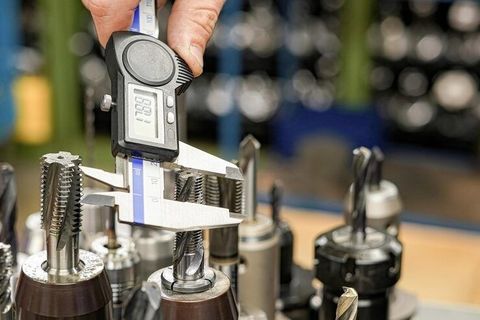
Measurement instruments: Calipers, micrometers, angle gauges, and coordinate measurement systems help verify component dimensions and geometry.
Factors to evaluate when selecting machinery
Factor | Consideration |
|---|---|
Material | Steel, aluminum, stainless steel, or other sheet metals |
Thickness | Machine capacity and suitable tooling |
Part geometry | Required cutting, bending, punching, or forming operations |
Production volume | Manual, CNC, or automated equipment |
Accuracy | Dimensional tolerances and repeatability |
Floor space | Machine footprint and material movement |
Maintenance | Tooling, spare parts, training, and inspection requirements |
Safety | Guards, interlocks, ventilation, and operator procedures |
Equipment should be evaluated according to the intended application and the full production workflow. A machine capable of performing one operation may not meet the requirements of a complete fabrication process.
Frequently Asked Questions
What are the main types of sheet metal machinery?
The main categories include laser cutting machines, shearing machines, CNC punching machines, press brakes, stamping presses, plate rollers, roll forming machines, and welding equipment. Each performs a specific fabrication operation.
What is CNC sheet metal machinery?
CNC sheet metal machinery uses programmed instructions to control operations such as cutting, punching, and bending. It supports repeatable production and allows different component designs to be processed by adjusting the program and machine setup.
Which industries use sheet metal fabrication machines?
Automotive, construction, aerospace, electrical equipment, HVAC, appliances, energy, and industrial machinery manufacturers use sheet metal fabrication equipment. The machines and materials vary according to the components being produced.
What factors determine sheet metal machine selection?
Important factors include material type, sheet thickness, component dimensions, production volume, required accuracy, tooling compatibility, available space, and operator safety requirements.
How is sheet metal machinery maintained?
Maintenance commonly includes inspecting tooling, cleaning machine surfaces, checking lubrication, verifying alignment, examining electrical and safety systems, and following the manufacturer's maintenance schedule. The specific procedure depends on the machine type and operating conditions.
Conclusion
Sheet metal machinery supports the production of components used in transportation, construction, electrical equipment, appliances, and industrial systems. Cutting, bending, punching, forming, and joining technologies serve different purposes within the fabrication process. CNC controls, robotics, and digital manufacturing systems are expanding the ways fabrication operations can be coordinated and monitored. Machine selection and reliable operation depend on material characteristics, component requirements, maintenance practices, and applicable safety standards.