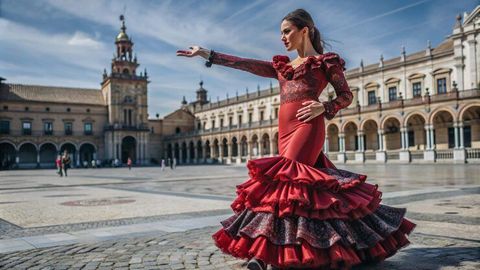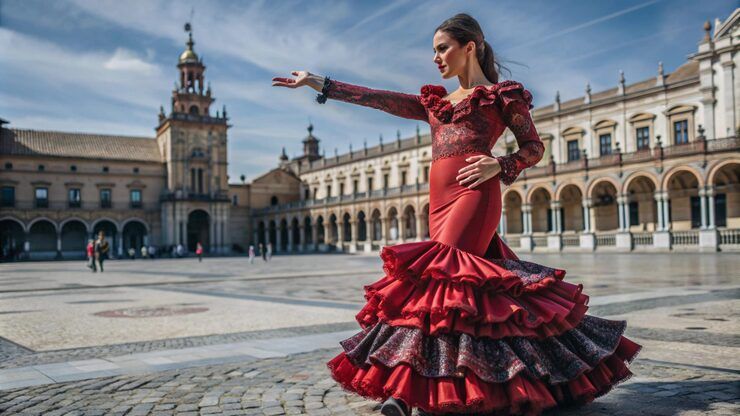
Flamenco is one of Spain’s most recognizable cultural traditions, combining singing, guitar, dance, rhythm, poetry, and expressive movement. Although flamenco is performed throughout Spain and internationally, Andalusia is widely recognized as its historical heart.
Several Spanish cities have developed distinct relationships with flamenco. Seville is associated with major performance venues and cultural institutions, Granada has strong connections with the Sacromonte neighborhood, Jerez de la Frontera is particularly associated with flamenco, wine, and equestrian culture, and Córdoba and Málaga also have active flamenco traditions.
Madrid, although outside Andalusia, has become an important national and international center for flamenco performances, education, and artistic development.
Flamenco was added to UNESCO’s Representative List of the Intangible Cultural Heritage of Humanity in 2010. UNESCO describes it as an artistic expression combining elements including singing, dancing, and musicianship, while recognizing the contributions of different cultural communities to its development.
Major Flamenco Cities in Spain
| City | Region | Notable Flamenco Connection | Suitable Travel Focus |
|---|---|---|---|
| Seville | Andalusia | Historic performance and cultural scene | Cultural tourism |
| Granada | Andalusia | Sacromonte and cave traditions | Heritage travel |
| Jerez de la Frontera | Andalusia | Strong flamenco and Andalusian traditions | Cultural and regional travel |
| Córdoba | Andalusia | Flamenco festivals and historic setting | Heritage and city travel |
| Málaga | Andalusia | Contemporary performances and cultural events | Coastal and cultural tourism |
| Madrid | Madrid | Major national performance scene | Urban cultural travel |
These cities provide different ways to understand flamenco rather than representing one identical tradition.
Why Spanish Flamenco Cities Matter Today
Flamenco contributes to Spain’s cultural identity while also influencing tourism, education, performing arts, local festivals, and international cultural exchange.
For travelers researching Spain travel destinations, flamenco cities can provide a deeper experience than sightseeing alone. A trip can combine historical architecture, local food traditions, museums, music, dance, and evening performances.
Cultural Tourism and Local Identity
Flamenco is closely connected with communities, family traditions, performance spaces, festivals, and teaching networks. Its significance therefore extends beyond stage performances.
Travelers interested in cultural tourism may encounter flamenco through:
Traditional performances
Festivals and cultural events
Dance classes
Guitar and singing workshops
Flamenco museums
Historic neighborhoods
Local cultural centers
Educational programs
This makes flamenco particularly relevant to travelers planning longer cultural itineraries across southern Spain.
Comparing the Main Cities
Seville can be useful for visitors who want a broad introduction to Andalusian culture. Granada provides a different atmosphere because flamenco is closely associated with Sacromonte and its historic cave settings.
Jerez has a particularly strong flamenco identity and is important for visitors interested in the relationship between music, local traditions, and Andalusian heritage.
Madrid provides another perspective. Its large metropolitan population and international cultural connections have made it an important center for professional performances and artistic experimentation.
Economic and Tourism Relevance
Cultural attractions can influence hotel accommodation patterns, transportation demand, restaurant activity, event attendance, and travel planning.
For international visitors, a flamenco-focused itinerary can also connect with wider high-value travel topics such as:
Luxury travel in Spain
Cultural tourism
European vacation planning
Spain hotel accommodation
International travel insurance
Heritage travel
Family travel in Spain
Long-stay European travel
The cultural value, however, remains more important than simply treating flamenco as a tourism product. Maintaining authentic traditions and respecting the communities connected with them are central to long-term cultural sustainability.
Recent Developments in Spanish Flamenco
Flamenco policy and cultural planning have received significant attention in Andalusia during 2026.
Andalusia Approves a Strategic Flamenco Plan in 2026
On May 6, 2026, the Andalusian government approved the Plan General Estratégico del Flamenco, establishing a strategic framework for the protection, governance, promotion, and international development of flamenco in the region.
The planning process involved 237 participants, including artists, educators, cultural organizations, institutional representatives, and specialists. According to the Andalusian government, the consultation produced 630 proposals that were organized into strategic objectives and action programs.
This is significant because the plan treats flamenco not simply as entertainment but as living cultural heritage requiring long-term preservation, education, research, and international cultural exchange.
New Andalusian Cultural Heritage Law
Another important development occurred in 2026. Andalusia approved Law 4/2026 on Cultural Heritage, which was published in Spain’s official state gazette in May 2026 and is scheduled to enter into force on April 7, 2027.
The legislation updates the region's wider cultural heritage framework and specifically recognizes the importance of intangible heritage, including flamenco.
Digital Cultural Preservation
The Andalusian Flamenco Law also encourages the reproduction and dissemination of flamenco through digital platforms, social networks, and information technologies. This supports broader access to performances, educational material, research, and cultural documentation.
Digital archives and online cultural resources are increasingly useful for travelers who want to understand flamenco before visiting Spain.
Laws and Cultural Policies Affecting Flamenco
Spain's cultural system involves national, regional, and local authorities. For flamenco, Andalusia has particularly important responsibilities because the regional government has specific authority relating to its knowledge, preservation, research, education, promotion, and dissemination.
Andalusian Flamenco Law
Law 4/2023 of April 18, 2023, known as the Andalusian Flamenco Law, establishes a legal framework for protecting, preserving, researching, teaching, and promoting flamenco. The legislation also recognizes its importance as intangible cultural heritage.
The law has several objectives, including:
Protecting flamenco as part of Andalusian culture
Encouraging education and knowledge
Supporting artistic creation
Promoting cultural tourism connected with flamenco
Encouraging international dissemination
Preserving different forms and traditions
Supporting accessibility and participation
Maintaining transmission between generations
The law also establishes the Andalusian Flamenco Registry and provides for strategic planning.
UNESCO Recognition
Flamenco's inclusion on UNESCO's Intangible Cultural Heritage list in 2010 provides an international framework for safeguarding the tradition.
This recognition does not mean every performance is automatically protected under identical rules. Instead, it highlights the importance of maintaining the cultural knowledge, practices, artistic forms, and communities associated with flamenco.
Travelers should therefore distinguish between traditional cultural practices and modern commercial performances when researching flamenco experiences.
Tools and Resources for Flamenco Travel Planning
A combination of official cultural resources and ordinary travel-planning tools can make research easier.
Official Cultural Resources
Useful sources include:
Junta de Andalucía cultural information
Spanish tourism information
UNESCO cultural heritage resources
Municipal tourism websites
Festival calendars
Museum and cultural-center websites
Official venue calendars
The Andalusian government maintains dedicated flamenco legislation and planning information, making it a useful starting point for understanding the cultural framework.
Travel Planning Tools
Travelers can also use:
Digital maps for comparing cities
Rail and flight planning platforms
Hotel accommodation comparison tools
Weather applications
Translation applications
Calendar applications
Travel insurance policy documents
Currency conversion tools
For a multi-city itinerary, a simple spreadsheet can help compare travel dates, accommodation locations, transport times, festival dates, and performance schedules.
Suggested Flamenco Research Checklist
Before planning a flamenco-focused trip, research:
Which city best matches your interests
Performance dates and locations
Festival calendars
Museum opening schedules
Public transportation
Accommodation location
Seasonal weather
Accessibility information
Travel insurance coverage
Local cultural etiquette
Schedules can change, so official venue and municipal sources should be checked shortly before travel.
Frequently Asked Questions
Which Spanish city is most associated with flamenco?
Seville is one of the most internationally recognized flamenco destinations, but there is no single city that represents the entire tradition. Jerez de la Frontera, Granada, Córdoba, Málaga, and Madrid all have important flamenco communities and performance traditions.
Is flamenco only found in Andalusia?
No. Andalusia is the historical heart of flamenco, but the tradition is practiced throughout Spain and internationally. Madrid, in particular, has a significant flamenco performance and education scene.
What is the best city for learning about traditional flamenco?
Jerez, Seville, and Granada can be strong choices for travelers interested in traditional Andalusian contexts. The best choice depends on whether the visitor is more interested in history, dance, music, festivals, or contemporary performances.
When is the best time to visit Spanish flamenco cities?
There is no single ideal period. Festival calendars, weather, personal travel preferences, and performance schedules should all be considered. Spring and autumn can be attractive for city-based cultural travel because temperatures are generally more moderate than during the hottest part of summer.
Is flamenco protected as cultural heritage?
Yes. Flamenco was included on UNESCO's Representative List of the Intangible Cultural Heritage of Humanity in 2010. Andalusia also has specific legislation protecting and promoting flamenco, including the 2023 Andalusian Flamenco Law.
Conclusion
Spanish flamenco cities provide different perspectives on one of Spain's most important living cultural traditions. Seville, Granada, Jerez de la Frontera, Córdoba, Málaga, and Madrid each contribute in different ways through performances, education, festivals, cultural institutions, and artistic communities.
Recent developments demonstrate that flamenco continues to receive institutional attention. The approval of Andalusia's Strategic Flamenco Plan in May 2026 represents an important step toward coordinated preservation, education, governance, and international cultural development.
The new Andalusian Cultural Heritage Law also strengthens the broader framework for protecting tangible and intangible heritage, with flamenco specifically recognized within the region's cultural heritage landscape.
For travelers, a flamenco-focused journey can combine music and dance with historic neighborhoods, museums, architecture, regional food traditions, and broader Spanish cultural experiences. Understanding the differences between the major cities can help create a more informed and respectful cultural travel itinerary.