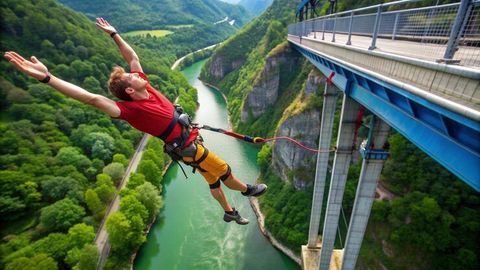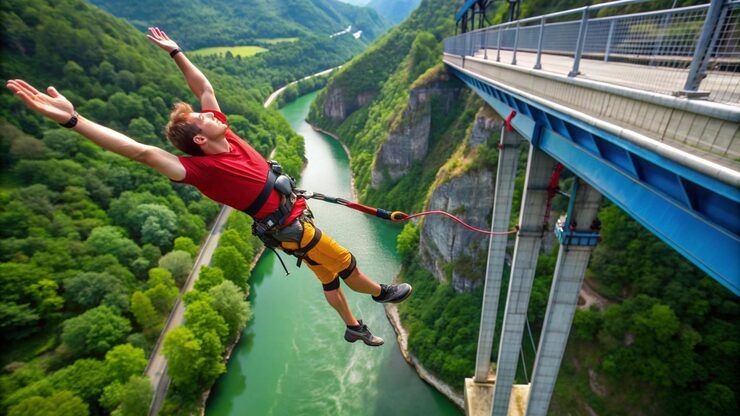
Bungee jumping from bridges is an adventure activity in which a participant makes a controlled jump from an elevated platform while connected to an elastic bungee cord and appropriate restraint equipment. The cord stretches during the descent and then retracts, producing a controlled rebound before the participant is brought to a stable position.
Bridges are among the most recognizable locations for bungee jumping because they can provide substantial height above rivers, gorges, or valleys. Well-known destinations have helped make bridge-based bungee jumping part of international adventure tourism.
Although the activity appears straightforward, it involves carefully engineered equipment, structural assessment, participant screening, operating procedures, weather monitoring, and emergency planning. The height of the bridge, attachment arrangement, cord characteristics, participant weight, and surrounding environment all need to be considered.
Bungee jumping is therefore connected with adventure travel, extreme sports travel, risk management, travel insurance, recreational safety, and tourism regulations.
How Bridge Bungee Jumping Works
A typical setup includes a designated jumping platform or bridge attachment point, a bungee cord, harness or ankle connection system, safety lines where applicable, and equipment used for recovery.
The basic sequence generally involves:
Participant briefing
Equipment inspection
Weight and eligibility assessment
Connection to the jumping system
Final safety checks
Controlled jump
Cord extension and rebound
Recovery from the landing or lower position
The exact procedure varies according to the equipment and operating system used at the particular location.
Understanding the Bungee Cord
A bungee cord is designed to stretch under load and absorb a significant portion of the energy generated during the jump. Its characteristics depend on its construction, length, elasticity, condition, and intended operating range.
Equipment selection is not simply a matter of choosing a cord based on height. The complete jumping system must be engineered around factors such as participant weight, available clearance, attachment points, rebound behavior, and recovery procedures.
Why Bridge Structure Matters
A bridge must be capable of supporting the loads associated with the activity and the equipment attachment system must be appropriately designed.
Important considerations can include:
Structural capacity
Attachment-point design
Clearance beneath the bridge
Water depth where applicable
Nearby structures
Falling-object hazards
Emergency access
Weather exposure
Rescue arrangements
The suitability of a bridge for bungee jumping should be established by qualified professionals rather than inferred from its apparent strength.
Why Bridge Bungee Jumping Matters Today
A Major Adventure Tourism Activity
Bungee jumping has become part of the global adventure-tourism market. Bridge locations can become recognizable attractions because the surrounding landscape and structure form part of the overall experience.
The activity is relevant to travelers researching:
Adventure travel destinations
Extreme sports travel
Outdoor recreation
Adventure tourism
Travel insurance for high-risk activities
International travel planning
Landmark tourism
The popularity of these activities also makes consistent safety management important for tourism destinations.
Risk Management
Unlike ordinary sightseeing, bungee jumping deliberately involves a controlled fall from height. This means risk cannot be eliminated completely.
A structured safety system attempts to manage hazards through:
Equipment inspection
Engineering assessment
Participant screening
Staff training
Standard operating procedures
Weather monitoring
Weight limits
Clearance calculations
Emergency planning
Regular equipment replacement
The objective is to control foreseeable risks through multiple layers rather than relying on a single piece of equipment.
Participant Eligibility
Physical requirements can vary between locations. Restrictions may relate to:
Minimum or maximum weight
Age
Pregnancy
Cardiovascular conditions
Certain musculoskeletal conditions
Recent injuries
Medication
Alcohol or drug use
Previous medical concerns
The exact requirements should come from the relevant operator and applicable regulations. Individuals with medical concerns should obtain appropriate medical advice before participating.
| Planning Factor | Why It Matters |
|---|---|
| Bridge height | Determines available vertical distance |
| Participant weight | Influences equipment selection |
| Cord characteristics | Affect stretch and rebound |
| Clearance | Helps prevent contact with obstacles |
| Weather | Can affect operating conditions |
| Structure | Must accommodate attachment loads |
| Equipment condition | Supports reliable operation |
| Emergency access | Important for recovery planning |
Recent Developments and Standards
ASTM Bungee Jumping Standard
A notable development in recreational safety standards is ASTM F3785-25, Standard Practice for Bungee Jumping, listed by ASTM International among its sports and recreation standards. The 2025 edition is specifically identified as a bungee-jumping standard, distinguishing it from the separate ASTM standards covering aerial adventure courses.
ASTM standards are consensus-based technical standards rather than automatically applicable laws. Their relevance depends on the jurisdiction, facility, contracts, regulatory framework, and adoption by the organizations involved.
Broader Adventure-Activity Safety
Safety management for adventure activities has also received continued attention in countries with established adventure-tourism industries.
New Zealand's WorkSafe published guidance on 11 April 2025 addressing management of natural hazards for adventure activity and outdoor recreation providers. The guidance covers hazards such as flooding, landslips, and snowfall and explains duties under New Zealand's health and safety framework.
Although natural hazards are only one part of bungee-jumping risk, the development demonstrates the continuing emphasis on systematic hazard identification and management.
Technology and Inspection
Modern adventure facilities can use digital inspection records, equipment tracking, structured checklists, weather monitoring, communication systems, and documented maintenance schedules.
Technology can support safety management, but it does not replace physical inspection or qualified personnel. Equipment exposed to repeated loading, weather, ultraviolet radiation, moisture, and other environmental conditions requires appropriate inspection and replacement procedures.
Environmental Awareness
Bridge locations can also be affected by environmental considerations. Rivers, wildlife habitats, protected landscapes, and seasonal flooding can influence when and where an activity can operate.
This is particularly relevant to bridges in mountainous or remote areas where weather and natural hazards can change rapidly.
Laws, Regulations and Government Policies
New Zealand as a Regulatory Example
New Zealand is an important jurisdiction for understanding adventure-activity regulation because bungee jumping is specifically recognized within its adventure-activity framework.
WorkSafe New Zealand states that bungy jumping is among activities that are likely to be subject to the country's adventure-activity regulations, although some bungy operations may instead fall under the Amusement Devices Regulations depending on the circumstances.
The Health and Safety at Work (Adventure Activities) Regulations 2016 establish requirements for covered adventure-activity operators, including registration and safety auditing. WorkSafe explains that operators covered by the regulations must pass a safety audit and obtain registration.
Participant Risk Information
New Zealand strengthened its adventure-activity regulations in amendments that came into force on 1 April 2024.
Among the changes was a requirement for covered adventure-activity operators to take reasonable steps to inform participants about serious health and safety risks associated with the activity. WorkSafe's guidance explains that information should be sufficient and accessible enough to support an informed decision.
This is particularly relevant to bungee jumping because participants deliberately undertake an activity involving a fall from height.
Natural-Hazard Management
New Zealand's current guidance also emphasizes identifying and managing natural hazards that could affect adventure activities. These can include flooding, landslides, snowfall, and other environmental conditions.
For bridge locations, natural-hazard planning can be especially important where rivers, cliffs, unstable terrain, or severe weather are nearby.
Other Countries
Regulation varies substantially around the world. Depending on the jurisdiction, bungee jumping can be affected by:
Workplace health and safety legislation
Amusement-device regulations
Adventure-activity laws
Building and structural requirements
Public-land regulations
Local permits
Environmental rules
Insurance requirements
Emergency-response requirements
A technical standard such as ASTM F3785-25 should not be treated as a universal legal requirement. Travelers should check the relevant national or regional authority for the destination.
Tools and Resources for Bungee Jumping Planning
Weather Information
Weather can affect bridge operations, particularly at exposed locations.
Useful resources include:
National meteorological agencies
Local weather stations
Wind forecasts
Severe-weather alerts
Rainfall information
River-level information where relevant
Satellite and radar information
Weather information is particularly important for bridges over rivers or in mountain valleys because water levels, wind, visibility, and access conditions can change.
Equipment and Safety Documentation
A structured facility may maintain documentation relating to:
Equipment inspections
Cord specifications
Harness inspections
Attachment systems
Participant weights
Maintenance schedules
Staff training
Emergency procedures
Incident records
Travelers do not normally need to calculate equipment parameters themselves. Those calculations should be performed within the facility's established safety system by appropriately qualified personnel.
Travel Planning Resources
People researching adventure travel insurance should examine the policy wording carefully. Bungee jumping may be classified as an extreme or adventure activity, and some policies may apply exclusions or specific conditions.
Useful travel-planning resources include:
National tourism authorities
Local government websites
National safety regulators
Weather agencies
Travel insurance documentation
Emergency information
Local transportation information
Participant Checklist
Before participating, travelers can consider:
Check current health and eligibility requirements.
Review the activity briefing carefully.
Follow all equipment instructions.
Declare relevant medical conditions honestly.
Avoid participation while impaired by alcohol or drugs.
Check the weather and understand possible delays.
Review travel insurance conditions.
Follow all instructions from trained personnel.
Keep personal belongings secured.
Understand the recovery procedure before jumping.
Frequently Asked Questions
Is bungee jumping from a bridge safe?
Bungee jumping involves inherent risk because participants intentionally jump from a height. Safety depends on appropriate equipment, structural assessment, inspection, participant screening, trained personnel, operating procedures, and emergency planning. No recreational activity can be described as completely risk-free.
How is the bungee cord selected?
The complete jumping system is designed around factors such as participant weight, jumping height, clearance, cord characteristics, attachment arrangements, and recovery procedures. Participants should not attempt to select or modify equipment themselves.
Can weather stop a bungee jump?
Yes. Strong winds, lightning, heavy rainfall, flooding, poor visibility, or other hazardous conditions can affect whether a jump proceeds. The decision should be made according to the facility's safety procedures and applicable local requirements.
Does travel insurance cover bungee jumping?
Coverage depends on the individual policy. Some travel insurance policies classify bungee jumping as an adventure or extreme activity and may include specific exclusions or conditions. Travelers should read the policy definitions and exclusions before participating.
Are bridge bungee jumps regulated?
Regulation depends on the country and location. New Zealand, for example, has specific adventure-activity regulations and safety-audit requirements for covered activities, while some bungee operations can fall under other regulatory frameworks.
Conclusion
Bungee jumping from bridges combines engineered equipment, structural design, participant management, adventure tourism, and recreational safety. The apparent simplicity of jumping from a bridge conceals a carefully planned system involving cord characteristics, attachment points, clearance, participant weight, weather, inspection, and emergency procedures.
Recent developments include the publication of ASTM F3785-25 as a dedicated bungee-jumping standard and continued development of adventure-activity safety guidance in jurisdictions such as New Zealand.
New Zealand provides a useful example of how governments can regulate adventure activities through registration, safety auditing, risk communication, and hazard-management requirements. Its regulatory amendments that took effect in April 2024 also demonstrate the importance placed on communicating serious risks to participants.
For travelers, responsible preparation means checking the destination's regulations, understanding eligibility requirements, reviewing weather conditions, reading travel insurance documentation, and following all instructions from qualified personnel.
Bungee jumping is ultimately an engineered adventure activity rather than simply a jump from a high structure. Its safety depends on multiple systems working together, from bridge assessment and equipment inspection to participant information and emergency planning.