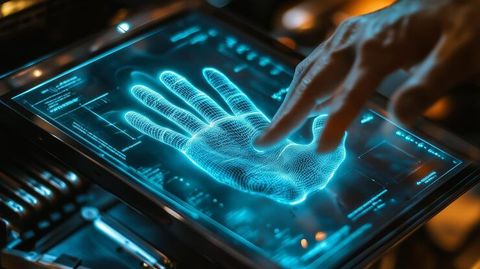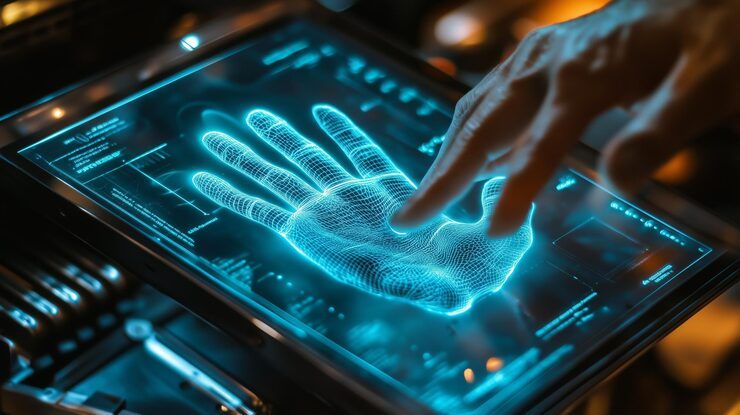
Touch sensors are electronic components that detect physical contact or changes in electrical conditions near a sensing surface. They allow people to interact with smartphones, industrial control panels, medical instruments, household appliances, automotive displays, and many other electronic systems without relying entirely on mechanical buttons.
These sensors convert a touch or contact-related change into an electrical signal that a connected controller can interpret. Depending on the technology, a sensor may detect direct finger contact, pressure, or changes in an electrical field near its surface.
Touch sensing has become an important part of modern human-machine interface design. Its development reflects the growing need for compact controls, responsive interfaces, easy-to-clean surfaces, and electronic systems that can interpret user input accurately.
How Touch Sensors Work
A touch sensor typically contains a sensing element, an electronic circuit, and a controller that interprets the detected signal. When a finger or another suitable object interacts with the sensing surface, the sensor detects a change and communicates it to the connected system.
For example, a capacitive sensor measures changes in electrical capacitance, while a resistive sensor detects changes in electrical resistance caused by pressure on layered surfaces.
The controller processes the signal and determines whether a touch has occurred. Depending on the application, it may also identify the touch position, movement, or duration.
Common applications include:
Smartphone and tablet screens
Industrial automation panels
Vehicle infotainment systems
Smart home controls
Kitchen appliances
Medical equipment interfaces
Access-control keypads
Interactive information displays
Electronic instruments and measuring devices
Main Types of Touch Sensors
Different sensing technologies are suitable for different operating environments. The appropriate design depends on sensitivity, durability, environmental conditions, electrical requirements, and the intended user interaction.
Capacitive Touch Sensors
Capacitive touch sensors are widely used in modern electronic interfaces. They detect changes in capacitance when a conductive object, such as a finger, approaches or touches a sensing electrode.
Two common methods are self-capacitance and mutual-capacitance sensing. Self-capacitance measures changes associated with an individual electrode, while mutual-capacitance measures changes between interacting electrodes. The second method is commonly used for multitouch screens.
Advantages include:
No need for moving mechanical contacts
Support for multitouch gestures
Compact sensor designs
Potential integration beneath glass or plastic surfaces
Low-power operation in appropriately designed systems
However, capacitive sensors can be affected by electrical interference, moisture, grounding conditions, gloves, and the materials covering the sensing electrodes. Good circuit design and signal processing help manage these challenges. Infineon Technologies provides technical information about capacitive sensing principles and applications.
Resistive Touch Sensors
Resistive touch sensors typically use two conductive layers separated by a small gap. When pressure is applied, the layers make contact and the controller determines the touch location from the resulting electrical change.
This technology can work with a finger, stylus, or gloved hand, depending on the design. It has been used in industrial terminals, measurement equipment, and some portable electronics.
Compared with capacitive systems, resistive designs generally require physical pressure and may experience more surface wear over time. They can still be appropriate when pressure-based input or compatibility with different pointing objects is important.
Other Touch and Contact Technologies
Some systems use infrared sensing, optical detection, piezoelectric elements, or force-sensitive components to identify interaction.
These technologies do not all operate in the same way. Infrared systems detect interruptions or changes in light, while piezoelectric sensors respond to mechanical stress. Force sensors measure applied pressure rather than simply detecting a finger's presence.
The best choice depends on the intended function, environmental conditions, and required accuracy.
Recent Developments and Industry Trends
Touch sensor technology continues to evolve as electronic displays become larger, thinner, more flexible, and more integrated into everyday equipment.
Automotive Display Technology in 2026
On January 27, 2026, Microchip Technology announced an expansion of its maXTouch M1 touchscreen controller family. The products were designed to support automotive displays ranging from small screens to large, free-form displays measuring up to 42 inches. The announcement also addressed challenges associated with electrical noise and touch detection in advanced display designs. Microchip Technology.
This development reflects growing interest in integrating touch controls across vehicle dashboards, instrument clusters, and infotainment displays.
Low-Power and Wearable Electronics
Compact electronics require touch sensing that balances responsiveness with battery consumption. In 2025, semiconductor manufacturers continued developing capacitive sensing technologies for wearables, compact connected devices, and smart home controls.
Design improvements focus on reducing unwanted activations, handling environmental interference, and integrating touch functions into microcontrollers. Infineon Technologies documents recent approaches to capacitive sensing for these applications.
Liquid Tolerance and Environmental Robustness
Touch panels in kitchens, factories, vehicles, and healthcare environments may encounter moisture, cleaning materials, electrical interference, and temperature changes.
Newer sensing approaches use improved signal processing, shielding, and calibration to reduce false detections under challenging conditions. Performance still depends on the sensor design and its operating environment; no single technology is immune to every source of interference.
Emerging Design Priorities
Current touch sensor development commonly focuses on:
Larger and curved display surfaces
Multitouch accuracy
Lower power consumption
Improved operation around moisture
Reduced electromagnetic interference
Integration with microcontrollers
Flexible and compact interface designs
Better reliability in industrial and automotive environments
These trends show how touch sensing is expanding beyond smartphones into a wider range of electronic systems.
Laws, Policies, and Technical Standards
Touch sensors are components, so legal requirements usually apply to the complete electronic product rather than to the sensor alone. Applicable rules depend on the product category, destination market, intended use, and operating environment.
Electrical and Product Safety
The international standard IEC 62368-1 addresses safety requirements for audio, video, information, and communication technology equipment. Its framework considers electrical and other energy-related hazards and the safeguards intended to reduce the risk of injury or property damage. The International Electrotechnical Commission published the current fourth edition in May 2023, with a corrected version dated August 2025. IEC 62368-1.
A touchscreen integrated into an electronic device may need to be evaluated as part of that device's overall safety assessment.
Electromagnetic Compatibility
Electronic systems must often operate reliably without creating unacceptable electromagnetic interference or becoming excessively sensitive to interference from nearby equipment.
This is especially important in industrial machinery, medical electronics, automotive displays, and densely integrated consumer devices.
Designers may need to assess electromagnetic compatibility, grounding, shielding, electrical noise, and applicable testing requirements.
Environmental and Materials Regulations
Depending on the market, electronic products may be subject to restrictions on hazardous substances, electronic waste rules, and material disclosure requirements.
For example, the European Union's Restriction of Hazardous Substances framework regulates specified hazardous substances in electrical and electronic equipment, subject to its scope and exemptions.
Manufacturers must determine which requirements apply to the complete product and its intended market.
Industry-Specific Requirements
Additional requirements may apply to medical devices, automotive electronics, household appliances, and industrial control systems. A touch sensor used in a safety-related control panel can require different verification from one used for a decorative lighting interface.
Compliance should therefore be evaluated for the intended application rather than assumed from a component's technical specifications.
Tools and Resources for Touch Sensor Development
Engineers, students, and product designers can use several resources to understand, evaluate, and develop touch sensing systems.
Semiconductor Documentation
Technical documentation from semiconductor manufacturers can explain sensor architecture, controller selection, circuit design, calibration, and troubleshooting.
Useful resources include:
Infineon Capacitive Sensing
Microchip Touch Sensing Resources
Texas Instruments CapTIvate Design Guide
These resources explain different sensing methods and provide design guidance for supported microcontrollers and controllers.
Engineering and Testing Tools
Common development tools include:
Oscilloscopes for examining electrical signals
Multimeters for basic electrical measurements
Evaluation boards for testing sensor controllers
Development environments for configuring microcontrollers
Signal-analysis tools for evaluating noise and response
Environmental test equipment for assessing temperature and moisture effects
The exact equipment depends on whether the task involves learning, prototyping, product validation, or production testing.
Design Evaluation Checklist
Before selecting a touch sensor, consider the following factors.
Design Factor | Questions to Evaluate |
|---|---|
Sensitivity | How reliably must a touch be detected? |
Input method | Finger, stylus, gloved hand, or applied pressure? |
Surface material | Glass, plastic, or another covering? |
Environment | Will moisture, dust, or temperature changes occur? |
Power consumption | Is the device battery-powered? |
Interference | Are motors, displays, or radio systems nearby? |
Durability | How frequently will the interface be used? |
Compliance | Which safety and electromagnetic requirements apply? |
Evaluating these factors early can reduce redesign work and help match the sensing technology to the application.
Frequently Asked Questions
What is a touch sensor?
A touch sensor is an electronic component that detects contact or a related change near a sensing surface. It converts that change into a signal that a connected electronic system can interpret.
What is the difference between capacitive and resistive touch sensors?
Capacitive sensors detect changes in electrical capacitance, while resistive sensors detect changes caused by pressure bringing conductive layers into contact. Capacitive technology is common in modern multitouch screens, while resistive technology can support input from different objects depending on the design.
Where are touch sensors commonly used?
They are used in smartphones, tablets, vehicle displays, household appliances, industrial control panels, medical instruments, smart home devices, and interactive displays.
Can touch sensors work through glass?
Yes. Capacitive sensors can detect a finger through suitable glass or plastic coverings when the electrode design and sensing electronics support the material's thickness and electrical properties.
What affects touch sensor accuracy?
Accuracy can be affected by electrical noise, moisture, grounding, surface materials, sensor layout, temperature, calibration, and the controller's signal-processing capabilities.
Conclusion
Touch sensors have become an important part of modern electronic interfaces because they allow devices to interpret user input without depending entirely on mechanical switches. Capacitive and resistive technologies remain important, while optical, infrared, and force-sensitive approaches address other types of interaction.
Recent developments in automotive displays, wearable electronics, and environmental robustness demonstrate how touch sensing continues to adapt to changing product requirements. At the same time, electrical safety, electromagnetic compatibility, environmental regulations, and application-specific standards remain important considerations.
Understanding the available technologies, testing methods, design constraints, and compliance requirements helps engineers and product designers select an appropriate touch sensing approach for each application.