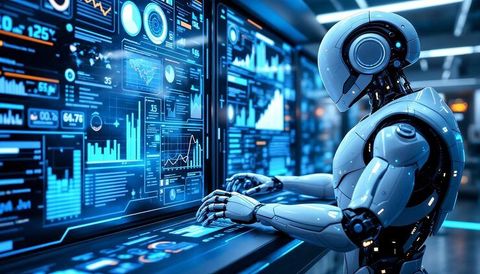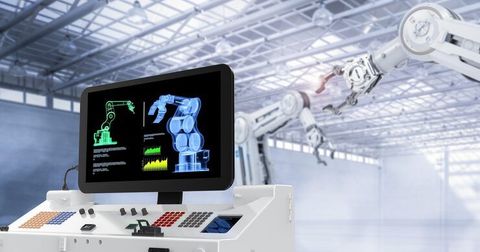
Robot data analytics is the process of collecting, processing, and interpreting information generated by robots and automated systems. This information helps engineers, researchers, and industrial operators understand how robots perform, identify operational problems, and improve the reliability of automated processes.
Modern robots generate data through sensors, cameras, motion controllers, force detectors, software logs, and connected industrial equipment. These sources can record movement, temperature, vibration, battery condition, task completion, operating time, and environmental changes. When analyzed systematically, the information provides insights into robot behavior and operating conditions.
Robot data analytics combines several technical fields, including robotics, industrial Internet of Things (IIoT), artificial intelligence (AI), machine learning, statistical analysis, and data visualization. The purpose is not simply to collect large amounts of information but to convert that information into useful findings.
How Robot Data Analytics Works
A typical robot data analytics system follows a sequence of connected activities:
Data collection: Sensors and controllers record operational measurements, movements, errors, and task results.
Data transmission: Information moves to an industrial computer, local server, or cloud platform.
Data processing: Software organizes the information, corrects inconsistencies, and prepares it for analysis.
Data analysis: Statistical models and machine learning techniques identify patterns, unusual behavior, and performance changes.
Visualization: Dashboards, charts, and reports present results in an understandable format.
Operational action: Engineers use the findings to investigate faults, adjust processes, or schedule maintenance.
For example, a robotic arm in a manufacturing facility may gradually develop increased vibration. Analytics software can identify a change in vibration measurements and alert the maintenance team to investigate the motor, bearings, or mechanical alignment before the issue causes a larger interruption.
Why Robot Data Analytics Matters
Robots are increasingly used in manufacturing, logistics, agriculture, healthcare research, laboratories, and other environments. As these systems become more connected, analyzing their operational data becomes important for maintaining productivity, safety, and consistent performance.
Without structured analysis, a facility may collect extensive sensor data without recognizing important patterns. Robot data analytics helps organize these measurements and connect them with practical operational questions.
Key Applications Across Industries
Industrial automation: Manufacturers analyze robot cycle times, motion accuracy, production interruptions, and rejected components to understand process performance.
Warehouse robotics: Autonomous mobile robots and automated guided vehicles generate location, navigation, battery, and task-completion data. Analysis can help identify congestion and recurring route problems.
Predictive maintenance: Vibration, temperature, current, and error logs can help identify developing mechanical or electrical faults. Predictions must be validated because sensor changes do not always indicate a specific failure.
Collaborative robotics: Data from robot joints, force sensors, and operating modes can help engineers investigate unusual movements and evaluate performance within established safety procedures.
Agricultural robotics: Autonomous equipment can analyze field conditions, navigation accuracy, machine performance, and crop-related measurements.
Important Performance Metrics
Robot analytics commonly uses key performance indicators (KPIs) to assess system behavior over time.
Cycle time: The duration required to complete a task.
Robot utilization: The proportion of available time that a robot spends performing its intended work.
Task success rate: The percentage of attempted tasks completed according to defined criteria.
Mean time between failures (MTBF): The average operating time between recorded failures.
Mean time to repair (MTTR): The average time required to restore equipment after a failure.
Energy consumption: The electrical energy used during a defined period or task.
Positioning accuracy: The difference between a robot's intended position and its measured position.
These metrics should be interpreted together. High utilization, for instance, does not necessarily indicate high-quality production if the robot also experiences frequent errors or produces defective outputs.
Recent Developments in Robot Data Analytics
During 2025 and 2026, robotics research increasingly emphasized artificial intelligence, autonomous decision-making, digital twins, and data-driven industrial automation. These developments are changing how organizations interpret robot performance and manage automated environments.
Artificial Intelligence and Predictive Analytics
AI-powered analytics can examine large volumes of sensor readings and operational records to detect patterns that conventional monitoring may overlook. Predictive models can estimate the likelihood of equipment faults when sufficient historical and validated data are available.
The International Federation of Robotics identified analytical AI, physical AI, and increasingly autonomous systems among the important robotics trends discussed in 2025 and 2026.
Digital Twins and Simulation
A digital twin is a digital representation of a physical robot, production line, or industrial process. It can combine sensor measurements with simulation models to help engineers investigate operating conditions and evaluate possible changes.
Common applications include:
Testing robot movements before modifying physical equipment.
Comparing predicted and actual performance.
Studying production bottlenecks.
Evaluating alternative maintenance schedules.
Examining how changes in operating conditions affect performance.
Digital twins are most useful when their models are updated with reliable information from real equipment.
Edge Computing and Real-Time Analytics
Edge computing processes data near the robot rather than transmitting every measurement to a remote platform. This can reduce communication delays and help systems respond quickly to operational changes.
Cloud computing remains useful for storing historical information, comparing multiple facilities, and training analytical models. Many industrial environments combine edge processing with centralized data analysis.
Laws, Policies, and Data Governance
Robot data analytics may involve industrial safety, cybersecurity, privacy, and artificial intelligence regulations. Applicable requirements depend on the location, intended use, type of data, and potential risks associated with the system.
Regulations in India and Other Regions
In India, the Digital Personal Data Protection Act, 2023, and the Digital Personal Data Protection Rules, 2025, establish a framework for processing digital personal data. Where robot analytics processes identifiable employee, customer, or visitor information, organizations should assess their obligations under the applicable provisions and implementation timelines.
The European Union's AI Act introduces requirements for certain AI systems according to their risk and intended use. As of August 2026, major provisions have begun applying, while specific obligations for certain high-risk systems follow later implementation dates. Not every robot analytics application is automatically classified as high-risk.
Industrial operators should also consider relevant machinery safety standards, workplace safety regulations, cybersecurity requirements, and data retention policies.
Responsible Data Management
Organizations can strengthen data governance through practical measures:
Restrict access to operational records according to user responsibilities.
Protect data in transit and at rest through appropriate security controls.
Establish retention periods for sensor logs and analytical outputs.
Document how automated recommendations are generated and evaluated.
Test AI models for reliability before using their outputs in safety-critical decisions.
Maintain human oversight for decisions that could affect worker safety or equipment operation.
Regulatory compliance should be assessed for each deployment rather than assumed from the use of a particular technology.
Tools and Resources for Robot Data Analytics
Several software platforms and technical resources support data collection, analysis, and visualization.
Common Analytics Tools
Python: Supports data cleaning, statistical analysis, machine learning, and sensor-data processing.
Pandas: Organizes and analyzes structured operational records.
Power BI: Creates dashboards for robot utilization, production performance, and maintenance indicators.
Grafana: Displays time-series measurements, system status, and monitoring alerts.
ROS 2: Provides robotics software infrastructure, including tools for handling messages, sensor data, and robot operations.
Digital twin platforms: Support simulation and comparison between physical equipment and digital models.
Useful reference materials include equipment manuals, robotics safety standards, sensor calibration records, data dictionaries, and maintenance history templates.
Example of a Robot Performance Dashboard
Metric | Example reading | Analytical purpose |
|---|---|---|
Average cycle time | 12 seconds | Track task duration |
Task success rate | 97% | Measure completed tasks |
Robot utilization | 78% | Understand operating time |
Mean time between failures | 240 hours | Assess reliability |
Mean time to repair | 2 hours | Track recovery duration |
Energy consumption | 1.8 kWh per operating hour | Monitor energy use |
These figures are illustrative, not industry benchmarks. Actual readings depend on robot type, workload, environment, and measurement methods.
Frequently Asked Questions
What is robot data analytics used for?
It is used to monitor robot performance, identify unusual operating patterns, evaluate productivity, support predictive maintenance, and understand energy consumption. Applications vary by industry and robot type.
How does AI improve robot data analytics?
AI can identify patterns in sensor readings, recognize anomalies, and estimate potential equipment failures. Its effectiveness depends on data quality, model validation, and the complexity of the operating environment.
What data do robots typically generate?
Robots may generate position measurements, speed readings, motor temperature, vibration, battery status, camera observations, task logs, error codes, and energy measurements. The available data depends on installed sensors and control systems.
What challenges affect robot data analytics?
Common challenges include inconsistent data formats, missing measurements, communication delays, cybersecurity risks, and difficulty integrating equipment from different manufacturers. Poor-quality data can also lead to misleading analytical results.
Can small industrial facilities use robot data analytics?
Yes. A facility can begin with basic monitoring of cycle time, errors, utilization, and maintenance records. More advanced capabilities, such as machine learning and digital twins, can be introduced when data availability and operational requirements justify them.
Conclusion
Robot data analytics connects robotics, artificial intelligence, industrial automation, and data science to provide a clearer understanding of machine performance. By examining sensor readings, operating records, and maintenance history, organizations can identify inefficiencies, investigate faults, and make better-informed operational decisions.
Developments in predictive analytics, edge computing, and digital twins are expanding the ways robotic systems can be monitored and evaluated. However, reliable results require accurate measurements, appropriate analytical methods, cybersecurity safeguards, and compliance with relevant regulations.
A structured approach allows organizations to turn robot-generated information into practical insights while supporting equipment reliability, operational efficiency, and responsible automation.