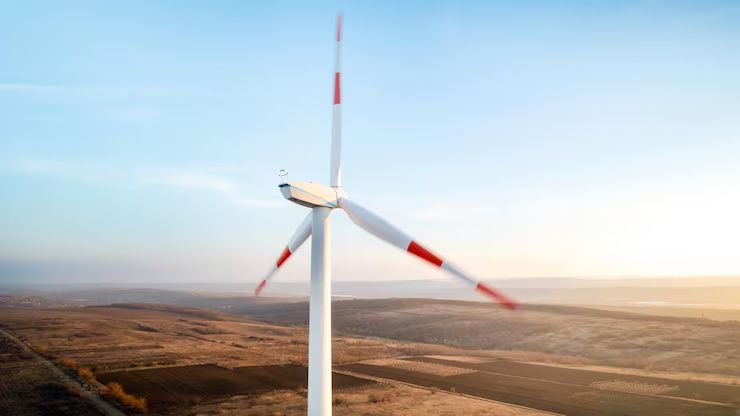
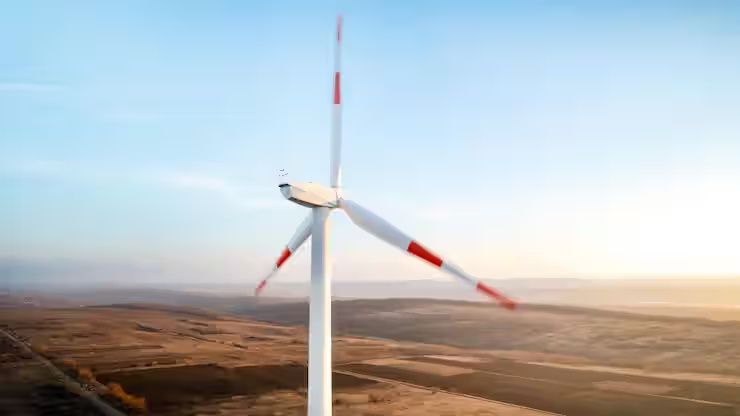
A wind turbine machine is a mechanical and electrical system designed to convert wind energy into electricity. It works by using rotating blades connected to a generator. When wind moves the blades, the rotor spins and produces electrical power that can be transmitted to homes, businesses, and industrial facilities.
Wind turbine machines are a key part of the renewable energy sector, generating electricity without combustion or direct carbon emissions during operation. They convert the kinetic energy of wind into electrical power, supporting cleaner energy production.
Modern wind systems include rotor blades, a nacelle, a tower, and electrical systems that transfer energy to the grid. These turbines are often grouped into wind farms, located either on land (onshore) or at sea (offshore).
Importance of Wind Turbine Technology
Role in Clean Energy Transition
Wind energy provides an alternative to fossil fuels, helping reduce greenhouse gas emissions and environmental impact.
It plays a significant role in meeting growing global electricity demand driven by urbanization and industrial expansion.
Key Reasons Wind Energy Matters
- Reduces dependence on fossil fuels
- Supports climate and sustainability goals
- Enhances energy security using local resources
- Expands electricity generation capacity
Economic and Infrastructure Impact
Wind energy development influences:
- Power grid infrastructure
- Electrical engineering innovation
- Renewable energy policy planning
- Environmental monitoring systems
Core Components of a Wind Turbine
Rotor and Blades
Rotor blades capture wind energy and convert it into rotational motion. Most turbines use three blades for efficiency and stability.
Nacelle
The nacelle houses key components such as the gearbox and generator, converting mechanical motion into electrical energy.
Tower
The tower elevates the turbine to higher altitudes where wind speeds are stronger and more consistent.
Generator
The generator transforms rotational energy into electrical power that can be transmitted to the grid.
Control Systems
Digital systems adjust blade angles and turbine orientation to optimize performance and ensure safety during varying wind conditions.
Wind Turbine Capacity Comparison
| Turbine Type | Typical Capacity | Location |
|---|---|---|
| Small turbine | 1–100 kW | Residential or small facilities |
| Medium turbine | 100 kW – 1 MW | Commercial installations |
| Utility-scale turbine | 2–6 MW | Large wind farms |
| Offshore turbine | 8–15 MW | Ocean-based projects |
Offshore turbines typically have higher capacity due to stronger and more consistent wind conditions.
Recent Trends in Wind Energy (2025–2026)
Offshore Wind Expansion
Countries are investing in offshore wind farms to increase renewable energy capacity and meet climate targets.
Larger Turbine Designs
Manufacturers are developing turbines exceeding 15 MW capacity, enabling higher energy output.
Digital Monitoring Systems
AI-based monitoring and predictive maintenance tools are improving turbine reliability and performance.
Grid Integration Improvements
Power grids are being upgraded to manage variable renewable energy sources more effectively.
Laws, Policies, and Regulations
Renewable Energy Policies
Governments worldwide have set renewable energy targets to reduce emissions and increase clean energy usage.
Environmental Assessments
Wind farm projects require evaluations to assess impacts on ecosystems and communities.
Grid Connection Standards
Electricity generated must meet grid requirements to ensure stable and reliable power delivery.
India-Specific Framework
In India, wind energy initiatives are supported by the Ministry of New and Renewable Energy, promoting development and integration.
International Agreements
Wind power contributes to global climate frameworks such as international agreements focused on reducing emissions.
Tools and Resources
Analytical and Planning Tools
- Wind resource maps for location analysis
- Energy generation calculators
- Geographic Information Systems (GIS)
- Renewable energy data platforms
Monitoring and Performance Tools
- Digital turbine monitoring systems
- Maintenance tracking platforms
- Energy output dashboards
These tools support efficient planning, operation, and evaluation of wind energy systems.
Advantages and Challenges of Wind Energy
| Category | Details |
|---|---|
| Environmental | Low emissions during operation |
| Energy source | Uses renewable wind resources |
| Land use | Can coexist with agriculture |
| Intermittency | Depends on wind availability |
| Infrastructure | Requires grid integration |
This balance highlights both benefits and technical considerations.
FAQs
How do wind turbines generate electricity?
Wind rotates the blades, driving a generator that converts mechanical energy into electrical power.
What is the difference between onshore and offshore turbines?
Onshore turbines are located on land, while offshore turbines operate in ocean environments with stronger winds.
Do turbines operate continuously?
They operate within specific wind speed ranges; very low or high winds can limit operation.
How tall are modern turbines?
Utility-scale turbines can reach heights of 80–150 meters or more.
Can wind energy support power grids?
Yes, when integrated with other energy sources and grid systems, it contributes significantly to electricity supply.
Conclusion
Wind turbine machines are a vital part of the global transition to renewable energy. They convert natural wind resources into electricity while reducing environmental impact.
Recent advancements in turbine design, offshore expansion, and digital monitoring demonstrate continued innovation. Regulatory frameworks and policies support safe and sustainable development.
Understanding wind turbine systems provides valuable insight into how modern energy infrastructure is evolving toward cleaner and more sustainable solutions.