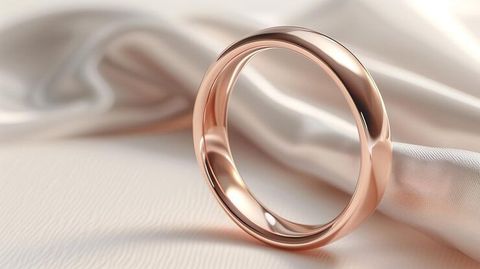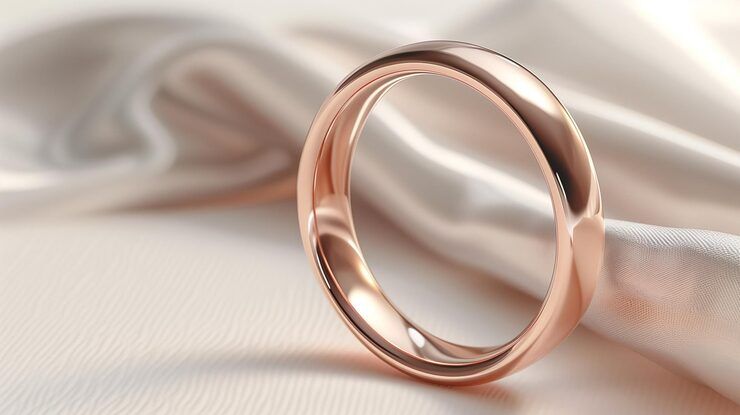
18K rose gold rings are jewelry pieces made from an alloy containing 75% pure gold and 25% other metals, primarily copper, with smaller amounts of other metals sometimes included. The copper gives rose gold its characteristic pink or reddish color, distinguishing it from yellow gold and white gold.
The 18-karat designation describes the proportion of pure gold in the alloy rather than the ring's color, weight, or overall quality. Because pure gold is relatively soft for many everyday jewelry applications, combining it with other metals helps create a material suitable for rings, including engagement rings, wedding bands, and decorative jewelry.
Rose gold has become a recognizable choice in contemporary jewelry because it combines the traditional appearance of gold with a warmer color. Its appearance can vary from pale pink to deeper reddish tones depending on the alloy formulation and manufacturing process.
Understanding 18K Rose Gold Composition
Gold purity is measured in karats, with 24-karat gold representing nearly pure gold. Eighteen-karat gold contains 18 parts gold out of 24 total parts by mass.
The calculation is straightforward:
18 ÷ 24 × 100 = 75%
The remaining 25% consists of alloying metals that influence color, hardness, workability, and other physical properties.
Copper is the principal metal responsible for rose gold's pink appearance. Some formulations may include silver or other metals to adjust the final color and manufacturing characteristics.
How Rose Gold Differs From Other Gold Colors
| Gold Type | Gold Content | Typical Appearance | Main Alloy Characteristics |
|---|---|---|---|
| 18K yellow gold | 75% | Yellow | Often contains silver and copper |
| 18K rose gold | 75% | Pink to reddish | Copper-rich alloy |
| 18K white gold | 75% | White or pale gray | Often contains palladium or other whitening metals |
| 14K rose gold | 58.5% | Pink to reddish | Lower gold proportion than 18K |
Actual colors depend on the alloy recipe, surface finish, lighting, and manufacturing process. White gold may also receive a rhodium coating to produce a brighter white surface.
Common 18K Rose Gold Ring Designs
Eighteen-karat rose gold can be shaped into many ring styles. The selected design influences its appearance, comfort, durability, and suitability for different activities.
Popular styles include:
Solitaire rings: Feature a central gemstone in a relatively simple setting.
Diamond halo rings: Surround a central stone with smaller gemstones.
Three-stone rings: Use three principal stones in a balanced arrangement.
Pavé rings: Incorporate small stones along part of the band.
Plain wedding bands: Emphasize the metal's color and polished or textured finish.
Vintage-inspired rings: Use engraved details, milgrain edges, or decorative settings.
Modern minimalist rings: Feature clean lines, geometric forms, or slim bands.
The design should be considered alongside the ring's intended use. A raised gemstone setting, for example, may require more attention during daily activities than a low-profile setting.
Why 18K Rose Gold Rings Matter
The choice of gold alloy affects jewelry appearance, material value, wear characteristics, and long-term maintenance. Understanding these differences helps people evaluate jewelry specifications more accurately.
Appearance and Personal Style
Rose gold provides a warm color that can complement different gemstone colors and clothing styles. Its appearance varies according to the copper content and the surrounding metals.
It can be used for understated bands, detailed vintage-inspired designs, or gemstone rings with contrasting colors.
Durability for Everyday Wear
Eighteen-karat gold contains a higher proportion of pure gold than 14-karat gold. However, this does not automatically mean that every 18K ring will be more durable than every lower-karat ring.
Hardness depends on the alloy composition, heat treatment, manufacturing method, and ring design. Thin bands and delicate settings may be more vulnerable to bending or damage than thicker, well-supported designs.
For rings worn daily, the band thickness, setting structure, and maintenance requirements are important considerations.
Gemstone Compatibility
Rose gold can be combined with diamonds, sapphires, rubies, emeralds, and other gemstones.
The warm metal can create contrast with colorless diamonds and blue gemstones, while red and pink stones may produce a coordinated appearance.
However, gemstone selection should also consider hardness, toughness, setting security, and exposure to chemicals or impacts.
Recent Design Trends and Developments
During 2025 and 2026, jewelry design discussions continued to emphasize personalization, mixed-metal combinations, distinctive gemstone settings, and designs that can be worn in different settings.
Mixed-Metal Jewelry
Combining rose gold with yellow or white gold creates visual contrast. Some rings incorporate different metals within a single band, while others combine a rose gold ring with jewelry made from another gold color.
This approach allows different jewelry pieces to coordinate without requiring every item to have the same finish.
Personalization and Detailed Craftsmanship
Engraving, textured surfaces, vintage-inspired decoration, and individually selected gemstones remain relevant design approaches.
Personalization can change the ring's appearance without necessarily changing its gold purity. Engraving and decorative details should be planned with the band thickness and structural integrity in mind.
Laboratory-Grown and Natural Diamonds
Both laboratory-grown and natural diamonds are used in contemporary rose gold rings. They have essentially the same chemical composition and crystal structure, although their formation processes differ.
The origin of a diamond does not determine the gold purity of its setting. Buyers and jewelry researchers should assess the metal specification and gemstone documentation separately.
Design trends can vary by region and manufacturer. A particular style's popularity does not guarantee its future value or long-term durability.
Laws, Hallmarking, and Jewelry Standards
Rules concerning precious-metal purity, hallmarking, product descriptions, and consumer protection vary by country. Understanding the applicable framework helps people interpret jewelry markings and specifications.
Gold Hallmarking in India
India operates a hallmarking framework administered by the Bureau of Indian Standards. Hallmarks help identify precious-metal purity and support confidence in the stated composition.
Eighteen-karat gold is associated with the purity mark 750, indicating 750 parts of gold per 1,000 parts by mass.
Consumers should examine the applicable hallmark and verify the item's details through official hallmarking resources. Hallmark requirements and exemptions can change, so current national guidance should be checked before relying on a particular marking.
International Purity Standards
Gold purity markings differ across markets. An 18K designation commonly corresponds to 750 fineness, while other systems may use karat marks, fineness numbers, or nationally recognized hallmark symbols.
For international purchases or jewelry brought across borders, it is useful to understand the local marking system and the documentation accompanying the item.
Accurate Jewelry Descriptions
Jewelry descriptions should distinguish between gold purity, plating, gemstone characteristics, and design features.
A solid 18K rose gold ring is different from a ring made from another metal with a rose gold coating. Similarly, the presence of a gemstone does not establish the gold content of the band.
Clear product documentation helps prevent confusion about the material used.
Tools and Resources for Evaluating 18K Rose Gold Rings
Several resources can help people understand jewelry composition and care.
Gold Purity Calculator
A simple calculation can estimate the pure-gold content of an 18K ring by multiplying its total metal mass by 0.75.
For example, a ring containing 4 grams of 18K gold alloy contains approximately 3 grams of gold by mass, with the remaining 1 gram consisting of other alloying metals.
This calculation does not determine the ring's complete monetary value because workmanship, gemstones, design, condition, and other factors may also influence valuation.
Hallmark Verification
Official hallmarking databases and national standards organizations can help identify recognized purity marks and verification procedures.
In India, the Bureau of Indian Standards provides information about gold hallmarking and applicable standards.
Jewelry Care Resources
Jewelry care guidance from qualified jewelers and gemstone laboratories can help explain cleaning methods, setting inspection, and the treatment of delicate gemstones.
For everyday maintenance:
Clean suitable rings gently with mild soap and lukewarm water.
Use a soft brush only when appropriate for the setting and gemstone.
Avoid harsh chemicals and abrasive cleaning products.
Remove rings before activities that could expose them to heavy impact.
Have loose stones or damaged prongs inspected by a qualified professional.
Cleaning methods should be adapted to the gemstone because pearls, opals, and some other materials require different care from diamonds and sapphires.
Frequently Asked Questions
What does 18K mean in a rose gold ring?
Eighteen-karat gold contains 75% pure gold by mass. The remaining 25% consists of alloying metals, with copper providing the characteristic rose color.
Are 18K rose gold rings suitable for everyday wear?
They can be suitable for everyday wear, depending on the ring's construction, thickness, setting, and intended use. Delicate designs and raised gemstones may require additional care.
Does 18K rose gold fade over time?
Solid 18K rose gold does not rely on a surface coating for its color. Its surface can develop scratches and changes in finish through normal wear, but ordinary polishing does not change the underlying alloy composition significantly.
Is 18K rose gold better than 14K rose gold?
Neither is universally better. Eighteen-karat gold contains more pure gold, while 14-karat gold contains a larger proportion of alloying metals. Hardness, color, design, and intended use should all be considered.
How can the purity of an 18K rose gold ring be checked?
A recognized hallmark, reliable documentation, and appropriate testing can help establish purity. In India, the applicable BIS hallmarking framework provides a reference for verifying gold purity.
Conclusion
Eighteen-karat rose gold rings combine a 75% gold content with a copper-rich alloy that produces their distinctive pink color. Their appearance, durability, and suitability for different occasions depend on alloy composition, ring construction, gemstone settings, and maintenance.
Contemporary designs include solitaire rings, decorative wedding bands, vintage-inspired pieces, mixed-metal combinations, and gemstone settings using natural or laboratory-grown diamonds. Understanding these options makes it easier to evaluate the differences between appearance, material composition, and structural design.
Hallmarking and accurate material descriptions are also important when assessing precious-metal jewelry. By checking purity markings, understanding care requirements, and considering the ring's construction, readers can make more informed decisions about 18K rose gold jewelry.