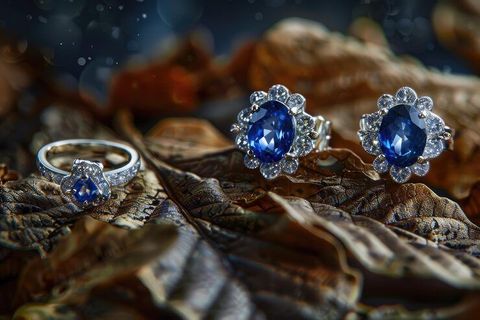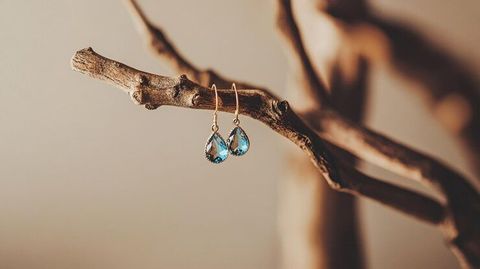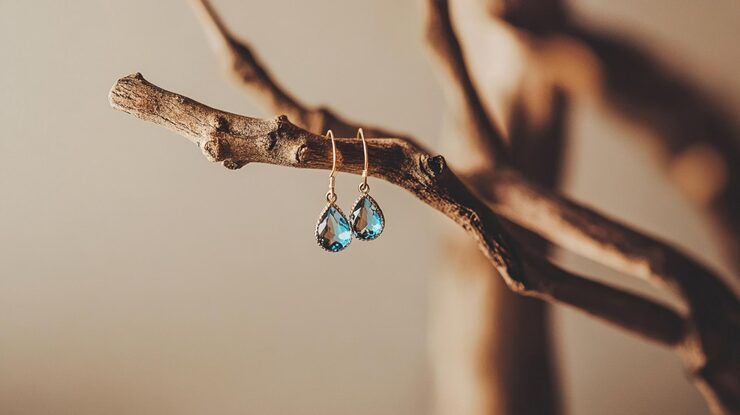
Minimalist drop earrings are a jewelry style characterized by clean lines, simple shapes, and elements that hang below the earlobe. They combine understated design with gentle movement, making them suitable for everyday wear, professional settings, and formal occasions. Their appearance can range from a single slender metal bar to a small geometric pendant or a delicate gemstone suspended from a fine hook.
The growing interest in minimalist jewelry reflects a broader preference for versatile accessories that complement different clothing styles without overwhelming an outfit. Understanding the design, materials, proportions, and care requirements of drop earrings can help people make informed decisions about their jewelry collections.
Understanding Minimalist Drop Earrings
Minimalist drop earrings typically feature a small decorative element suspended from a post, hook, or short chain. Unlike elaborate chandelier earrings, they generally emphasize simplicity rather than multiple layers, large ornaments, or intricate detailing.
Common design characteristics include:
Geometric shapes: Circles, rectangles, triangles, and narrow bars.
Linear designs: Slim rods, elongated links, and straight metal elements.
Organic forms: Smooth curves, teardrops, and nature-inspired shapes.
Subtle accents: Small pearls, gemstones, or polished metal details.
Light visual structure: Open spaces and limited decorative elements.
The term minimalist describes an aesthetic rather than a specific manufacturing technique or precious-metal grade. Earrings can therefore be minimalist whether they are made from sterling silver, gold, stainless steel, or other materials.
How Minimalist Drop Earrings Differ From Other Styles
Stud earrings sit close to the earlobe, while drop earrings extend below it. Dangle earrings may move more freely and can be longer or more elaborate, although these categories sometimes overlap.
Minimalist drop earrings usually maintain a controlled silhouette, with the hanging element providing visual interest without extensive ornamentation. Their length, weight, and shape determine how noticeable they appear.
| Earring style | Main characteristic | Typical appearance |
|---|---|---|
| Minimalist drop | Simple hanging element | Slim bar or small geometric shape |
| Stud | Sits close to the ear | Small stone or metal shape |
| Dangle | Moves freely below the ear | Chain, charm, or articulated design |
| Hoop | Curved, circular structure | Small or elongated ring |
| Chandelier | Multiple decorative levels | Elaborate, layered silhouette |
These categories are not mutually exclusive. A minimalist design may incorporate a hoop, a stud fastening, or a freely moving pendant.
Why Minimalist Drop Earrings Matter Today
Jewelry can serve practical, cultural, personal, and aesthetic purposes. Minimalist drop earrings are relevant to people who prefer accessories that can transition between different environments without requiring a complete change of style.
Versatility Across Different Occasions
A simple pair of drop earrings can complement office clothing, casual outfits, evening wear, and traditional garments. A slim silver design may suit a neutral work wardrobe, while a gold-toned teardrop can introduce warmth to a more formal outfit.
Their versatility depends on proportion, finish, and color rather than a universal styling rule. Short drops often create a restrained appearance, whereas longer designs can become a more prominent part of an outfit.
Comfort and Everyday Wear
Comfort is an important consideration when choosing earrings for extended wear. Lightweight construction can reduce the pulling sensation associated with heavier jewelry, although individual comfort also depends on ear anatomy, fastening type, and sensitivity.
Useful features to consider include:
Smooth edges that minimize friction against the skin.
Secure clasps or backs that help prevent accidental loss.
Balanced construction that does not place excessive weight on one point.
Materials suitable for the wearer's skin sensitivity.
A length that does not frequently catch on hair or clothing.
No particular design guarantees comfort for every wearer. People who experience persistent irritation, swelling, or pain should stop wearing the earrings and seek appropriate medical advice if symptoms continue.
Personal Style and Wardrobe Coordination
Minimalist jewelry allows people to express their preferences through small differences in shape, metal color, and proportion. Some prefer symmetrical designs, while others choose slightly irregular forms for a more organic appearance.
Styling can be guided by several principles:
Match warm gold tones with complementary warm colors when desired.
Use silver-toned designs with cool colors, monochrome outfits, or contrasting fabrics.
Choose short drops for a subtle profile.
Consider elongated shapes when a more vertical visual line is preferred.
Coordinate earrings with other jewelry without requiring every piece to match exactly.
These are optional styling approaches rather than strict rules. Personal preference, cultural context, and the occasion remain important considerations.
Recent Developments and Design Trends
Minimalist drop earrings continue to appear in contemporary jewelry collections, influenced by changing fashion preferences, material innovation, digital design tools, and interest in longer-lasting wardrobe essentials.
Jewelry Trends During 2025–2026
Several design directions have remained relevant in contemporary minimalist jewelry discussions.
Sculptural simplicity: Designers use curved metal surfaces, asymmetrical shapes, and subtle irregularities to create visual interest without adding extensive ornamentation.
Mixed proportions: Small ear studs paired with narrow drops, or compact pendants attached to elongated elements, create contrast while preserving a restrained appearance.
Pearl and geometric combinations: Small pearls combined with simple metal bars or circles bring together traditional materials and modern silhouettes.
Personalized proportions: Different drop lengths and shapes allow wearers to select designs that reflect their preferences rather than follow one universal trend.
Material transparency: Consumers increasingly encounter product descriptions that distinguish solid precious metals, plated surfaces, recycled metals, and laboratory-created gemstones. Clear descriptions can help people understand what an item contains.
These are broad design observations, not a quantified ranking of global sales or consumer demand. Specific trends vary by region, designer, retailer, and season.
Technology and Jewelry Production
Computer-aided design (CAD) allows jewelry designers to develop and refine shapes digitally before production. Three-dimensional printing can support prototype development, while precision casting and modern finishing techniques help reproduce detailed forms.
Digital visualization also makes it easier to compare earring length, pendant proportions, and metal finishes before a design is manufactured. However, a digital model cannot fully communicate the weight, surface feel, or real-world color of a finished piece.
Material traceability is another important development. Documentation describing metal composition, gemstone origin, and recycled content can provide additional information, although the reliability of such claims depends on the evidence and verification methods used.
What These Developments Mean for Consumers
The main benefit of these developments is greater access to information about design and materials. Rather than judging an earring by appearance alone, people can consider its composition, dimensions, manufacturing quality, and maintenance requirements.
A simple design is not automatically durable or environmentally preferable. Longevity depends on material quality, construction, use, and care, while environmental claims require supporting evidence.
Materials, Quality and Construction
The material used in minimalist drop earrings influences their appearance, durability, maintenance, and suitability for different wearers. Understanding common material categories helps distinguish surface finishes from the metal beneath them.
Common Materials Used in Drop Earrings
| Material | Main characteristics | Important consideration |
|---|---|---|
| Sterling silver | Bright, polished appearance | Can tarnish with exposure to air and moisture |
| Solid gold | Available in different karat grades and colors | Hardness and durability vary with alloy composition |
| Gold-plated metal | Gold-colored surface over a base metal | Plating may wear with repeated use |
| Stainless steel | Often durable and corrosion-resistant | Composition varies by grade |
| Titanium | Lightweight and available in different finishes | Confirm the grade and composition |
| Pearls | Soft luster and classic appearance | Require gentle cleaning and careful storage |
| Gemstones | Add color and visual detail | Hardness and care requirements differ by stone |
Material names alone do not establish quality. For example, gold-plated jewelry is different from solid gold, and the thickness and composition of a plated layer can vary considerably.
Understanding Precious-Metal Purity
Gold purity is commonly expressed in karats. Pure gold is designated 24 karats, while 18-karat gold contains approximately 75% gold by mass and 14-karat gold contains approximately 58.3%.
Sterling silver generally contains 92.5% silver, with the remaining portion consisting of other metals, commonly copper. These additional metals can influence hardness and workability.
Metal purity is only one measure of quality. Clasp construction, soldering, surface finishing, and the strength of connecting rings also influence how well earrings perform during regular use.
Nickel Sensitivity and Skin Contact
Some people develop allergic contact dermatitis from nickel in jewelry. Symptoms can include itching, redness, and irritation around the piercing.
People with known metal sensitivities may wish to investigate documented nickel-release information and choose materials appropriate for their circumstances. Surgical-grade or implant-grade terminology should not be treated as a universal guarantee of suitability without confirming the specific material and its intended use.
Laws, Regulations and Jewelry Standards
Minimalist drop earrings are influenced by consumer-protection rules, product-safety requirements, precious-metal standards, and restrictions on misleading material descriptions. The precise requirements depend on the country where the jewelry is manufactured, marketed, or supplied.
Precious-Metal Hallmarking
Hallmarking systems help identify precious-metal content and may include information about the responsible manufacturer, sponsor, or testing authority. Requirements differ across jurisdictions.
For example, the United Kingdom operates hallmarking requirements for qualifying gold, silver, platinum, and palladium articles, subject to applicable exemptions. In India, the Bureau of Indian Standards administers the hallmarking framework for gold jewelry and other covered articles.
A hallmark should be interpreted according to the applicable national system. Its presence, format, and legal significance are not identical worldwide.
Consumer Protection and Product Descriptions
Consumer-protection laws in many countries prohibit materially misleading claims about product composition, origin, and characteristics. Descriptions such as solid gold, sterling silver, natural gemstone, and recycled metal should accurately reflect the item.
In the United States, Federal Trade Commission guidance addresses jewelry marketing terminology, including precious-metal descriptions and certain gemstone-related claims. Other jurisdictions maintain their own standards and enforcement arrangements.
Important information to examine includes:
The base metal and any surface plating.
The stated precious-metal purity.
Gemstone identification and relevant treatments.
Accurate dimensions and product photographs.
Care instructions and applicable safety information.
People should consult the current rules of the relevant jurisdiction when determining whether a particular product or claim meets legal requirements.
Product Safety and Responsible Marketing
Jewelry can present risks if it contains unsuitable materials, has sharp edges, or includes small detachable components. Requirements may vary according to the product, intended user, and market.
Responsible descriptions should avoid unsupported statements about hypoallergenic properties, durability, ethical sourcing, or environmental benefits. A claim should be supported by appropriate evidence rather than relying only on a general label.
Helpful Tools and Resources
Several practical resources can help people evaluate minimalist drop earrings, compare designs, and maintain their jewelry.
Jewelry Measurement and Comparison Tools
A ruler or digital caliper can help measure earring length, pendant width, and component dimensions. A digital scale can help compare the weight of different pairs, although very small measurements require a suitably precise instrument.
When comparing earrings, record the following details:
Total length in millimeters.
Width and shape of the hanging element.
Weight per earring or per pair.
Fastening type and closure mechanism.
Material composition and surface finish.
A simple comparison table makes differences easier to evaluate without relying entirely on photographs.
Jewelry Identification and Care Resources
The following resources provide useful general information without requiring embedded links.
Gemological Institute of America (GIA): Educational information about gemstones, identification, and gemological characteristics.
Bureau of Indian Standards (BIS): Information about applicable Indian standards and hallmarking requirements.
Federal Trade Commission: Guidance concerning jewelry marketing terminology and material descriptions in the United States.
UK Assay Offices: Information about hallmarking and precious-metal identification in the United Kingdom.
Jewelry care guides: Manufacturer-provided instructions for cleaning, storing, and maintaining specific materials.
These resources serve different purposes. A general educational guide is not a substitute for an official hallmarking record, professional gem identification, or jurisdiction-specific legal advice.
Frequently Asked Questions
What Are Minimalist Drop Earrings?
Minimalist drop earrings are earrings featuring a simple decorative element that hangs below the earlobe. They commonly use clean geometric shapes, slender bars, small gemstones, or understated metal forms.
Are Minimalist Drop Earrings Suitable for Everyday Wear?
They can be suitable for everyday wear when their weight, construction, fastening, and materials meet the wearer's needs. Lightweight designs may be more comfortable for extended periods, but comfort varies by individual.
Which Materials Are Commonly Used for Minimalist Drop Earrings?
Common materials include sterling silver, solid gold, gold-plated metals, stainless steel, titanium, pearls, and gemstones. Their durability, maintenance needs, and suitability for sensitive skin differ.
How Should Minimalist Drop Earrings Be Cleaned?
Cleaning methods should match the material. Many plain metal earrings can be cleaned gently with a soft cloth, while pearls and certain gemstones require more cautious treatment. Avoid harsh chemicals unless the manufacturer confirms that they are suitable.
How Can Someone Determine Whether Earrings Contain Genuine Precious Metals?
Examine the material description, applicable hallmark, manufacturer documentation, and available verification records. When authenticity remains uncertain, an appropriately qualified jewelry professional or testing facility can provide additional assessment.
Conclusion
Minimalist drop earrings combine simple forms with the movement and visual interest of a hanging design. Their versatility makes them relevant to different wardrobes, personal preferences, and occasions, while their quality depends on much more than appearance alone.
Understanding metal purity, construction, dimensions, skin sensitivity, and maintenance requirements helps people evaluate these accessories more carefully. Awareness of hallmarking systems and consumer-protection rules also provides context for interpreting jewelry descriptions.
As contemporary jewelry design continues to explore sculptural shapes, mixed materials, and improved digital production methods, minimalist drop earrings remain an example of how restrained design can offer many variations. Informed choices ultimately depend on accurate material information, practical comfort, responsible care, and individual style.