Choosing the right harvester is an important decision for farmers who want to collect crops efficiently while protecting grain quality and reducing harvesting losses. Harvesting equipment varies considerably in size, design, operating capacity, and suitability for different crops. A machine designed for wheat may not be appropriate for sugarcane, cotton, maize, or rice without the correct configuration.
A suitable harvester should match the farm's crop requirements, field conditions, available labor, operating schedule, and financial resources. The objective is not necessarily to select the largest machine, but to identify equipment that can complete harvesting within the required period while maintaining acceptable crop quality.
Modern agricultural harvesters combine mechanical systems, crop separation technology, operator controls, and, in some models, digital monitoring features. Understanding these functions can help farmers compare equipment specifications and make more informed decisions.
Understanding Different Types of Harvesters
Harvesters are designed for specific crops and harvesting methods. Before evaluating individual machines, farmers should identify the equipment category that fits their agricultural operation.
Combine harvesters perform several grain-harvesting operations in one machine. They typically cut the crop, separate grain from straw or stalk material, remove much of the chaff, and collect the grain in a storage tank.
Rice harvesters are designed for paddy harvesting and may include features suitable for wet fields, such as specialized tracks and crop-handling systems.
Maize harvesters use crop-specific headers to gather maize plants or ears. Depending on the machine configuration, they may harvest ears or perform additional processing.
Sugarcane harvesters cut and process cane stalks. Their design must account for crop height, row spacing, soil conditions, and the handling of bulky plant material.
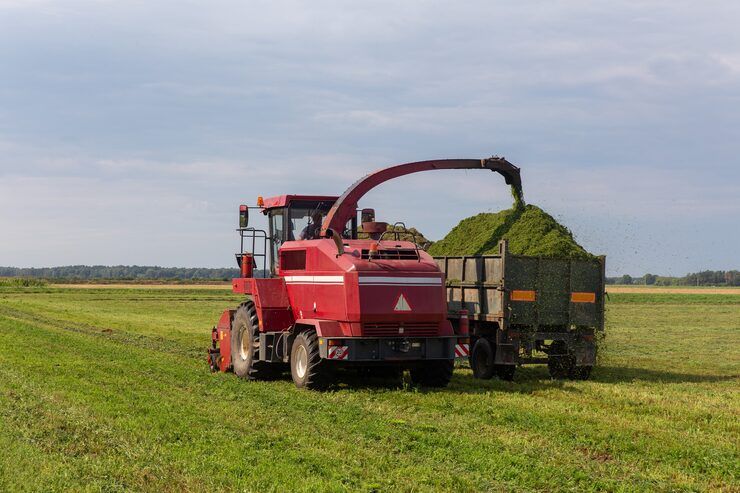
Forage harvesters cut and chop crops such as grass, maize, and other forage plants for livestock feed or silage production.
Cotton harvesters collect cotton using specialized picking or stripping mechanisms, depending on the harvesting system and crop conditions.
The correct category depends primarily on the crop grown and the required harvesting process.
Why Choosing the Right Harvester Matters
Selecting suitable harvesting equipment can improve field productivity, reduce crop losses, and help farmers complete harvesting within the correct seasonal window. Delays may expose mature crops to rain, wind, pests, or grain deterioration.
Harvesting Capacity and Field Size
Machine capacity should match the area that needs to be harvested and the available working hours. A large machine may have unnecessary capacity for a small farm, while an undersized machine may struggle to complete a large area before the crop deteriorates.
Farmers should compare theoretical field capacity with effective field capacity. Theoretical capacity is based on working width and speed, while effective capacity accounts for turning, unloading, adjustments, and other interruptions.
Crop Quality and Harvesting Losses
Harvesting machinery should handle the crop without excessive grain breakage, uncollected produce, or contamination.
For grain crops, important factors include cutting height, threshing settings, separation efficiency, and cleaning performance. For other crops, the relevant factors may include stalk damage, fruit bruising, or the amount of plant material collected.
Recent Developments in Harvester Technology
Agricultural machinery has increasingly incorporated precision controls, digital monitoring, and automation to improve harvesting operations.
Intelligent Harvesting Systems
Research published in October 2025 reviewed advances in intelligent combine harvesters, including sensor-based monitoring, automated operating adjustments, machine diagnostics, and navigation technology.
These systems can help operators monitor harvesting performance and identify potential problems. Actual results depend on the machine, crop conditions, field layout, and operator training.
Precision Agriculture in 2026
In July 2026, India's Ministry of Agriculture and Farmers Welfare highlighted continued support for agricultural mechanization through the Sub-Mission on Agricultural Mechanization. The initiative includes machinery access, training, testing, demonstrations, and support for shared equipment facilities.
In August 2026, the ministry also described advances in agricultural technology involving artificial intelligence, sensors, robotics, remote sensing, and other precision agriculture tools.
These developments indicate that harvester selection increasingly involves evaluating digital features alongside traditional factors such as engine power, working width, and crop compatibility.
Laws, Policies, and Agricultural Programs
Agricultural machinery requirements differ between countries. Farmers should review local safety standards, road transportation regulations, emissions requirements, and applicable agricultural support programs.
Agricultural Mechanization in India
India's Sub-Mission on Agricultural Mechanization supports wider access to farm machinery, particularly in areas where mechanization remains limited.
The program includes support for eligible machinery purchases and shared equipment facilities, subject to current guidelines, beneficiary requirements, and state-level implementation.
Farmers should verify current eligibility and application procedures through the relevant state agriculture department before making equipment decisions.
Machinery Safety and Operator Training
Harvesters contain moving cutting components, rotating mechanisms, hot surfaces, and powerful engines. Safe operation requires suitable guarding, maintenance, operator training, and compliance with manufacturer instructions.
Important precautions include:
Inspecting guards and emergency controls.
Shutting down machinery before clearing blockages.
Keeping people away from moving harvesting components.
Using appropriate protective equipment.
Following safe procedures when working on slopes.
Checking lighting and visibility during operation.
Farmers should also confirm whether a machine meets the applicable local testing and certification requirements.
Tools and Resources for Selecting a Harvester
Several practical tools can help compare agricultural harvesting equipment.
Farm Area and Capacity Calculator
Farmers can estimate the required field capacity using this formula:
For example, harvesting 40 hectares within 20 working hours requires an effective capacity of 2 hectares per hour.
This estimate should account for realistic field conditions, unloading interruptions, weather, and operator breaks.
Equipment Comparison Checklist
Factor | What to Evaluate |
|---|---|
Crop compatibility | Suitability for the intended crop |
Farm size | Area to be harvested within the available period |
Engine power | Power requirements under field conditions |
Working width | Area covered per pass |
Grain or crop losses | Performance under representative conditions |
Fuel consumption | Expected use per hectare |
Maintenance | Inspection requirements and parts availability |
Operator comfort | Visibility, controls, and seating |
Technology | Sensors, monitoring, and precision features |
Storage and transport | Space, road access, and movement between fields |
Useful Information Sources
Farmers can consult agricultural universities, government agricultural engineering departments, machinery testing institutes, and equipment technical manuals.
Demonstrations in similar soil and crop conditions are particularly useful because published specifications alone may not reflect actual field performance.
Frequently Asked Questions
Which harvester is suitable for a small farm?
The appropriate machine depends on crop type, field size, terrain, and the harvesting schedule. Compact harvesters or shared machinery arrangements may be practical where large equipment would remain underused.
What is the difference between a combine harvester and a crop-specific harvester?
A combine harvester performs several grain-harvesting operations, including cutting, threshing, and grain separation. Crop-specific harvesters, such as sugarcane or cotton harvesters, use specialized mechanisms designed for their particular crops.
How can farmers estimate harvesting capacity?
Farmers can divide the total field area by the number of available working hours. The result represents the effective hourly capacity needed to finish on schedule. Actual machine performance should be assessed under local field conditions.
Are modern harvesters equipped with precision technology?
Some models include GPS guidance, yield monitoring, sensors, automated adjustments, and digital performance tracking. Availability varies by model and configuration, and these features should be evaluated according to the farm's operational needs.
What should farmers check before operating a harvester?
Farmers should inspect safety guards, cutting components, tires or tracks, fluid levels, warning systems, and maintenance records. Operators should receive suitable training and follow the manufacturer's operating instructions.
Conclusion
Choosing the right harvester requires balancing crop requirements, farm size, harvesting capacity, field conditions, crop quality, maintenance, and safety. The most appropriate machine is one that can complete the work within the required timeframe while meeting the farm's operational needs.
Recent advances in intelligent machinery and precision agriculture provide additional tools for monitoring performance and improving harvesting decisions. However, technology alone cannot compensate for unsuitable equipment selection, poor maintenance, or inadequate operator training.
By comparing specifications, estimating realistic field capacity, reviewing local regulations, and assessing machinery under relevant conditions, farmers can make better-informed decisions about harvesting equipment and support more efficient farm operations.