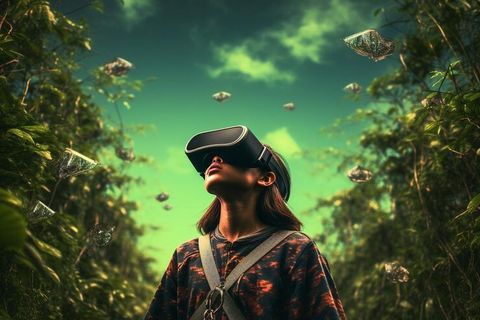
Virtual reality (VR) game monetization models describe the methods developers and publishers use to generate revenue from virtual reality games. These models help fund software development, technical maintenance, content updates, multiplayer infrastructure, and future game production.
VR games differ from traditional games because they use immersive environments, motion tracking, specialized controllers, and sometimes room-scale movement. These features influence how players interact with content and how developers structure their revenue strategies.
Common approaches include one-time purchases, downloadable content, subscriptions, optional in-game purchases, advertising, and paid expansions. Some games combine multiple approaches, while others use a single payment model to keep the experience straightforward.
Understanding VR Game Monetization
A monetization model determines how a game generates income and what players receive in return. The right approach depends on the game's design, audience, development budget, content schedule, and platform.
A single-player VR puzzle game may work well with a one-time purchase because the main experience is complete at launch. A multiplayer VR environment with regular updates may require a different structure to support continuing development.
Developers must also consider platform rules, payment processing, player expectations, and the additional technical requirements of virtual reality.
Common VR Gaming Revenue Models
Several models are used across the virtual reality gaming industry.
Premium game purchases: Players pay once to obtain the main game.
Downloadable content: Additional missions, environments, characters, or story chapters extend the experience.
Subscription models: Recurring payments provide access to a defined collection of games or continuing content.
In-game purchases: Optional cosmetic items, virtual accessories, or additional content generate revenue.
Advertising: Carefully designed advertisements can generate income without requiring every player to make a direct payment.
Expansion packs: Larger additions introduce new gameplay systems, areas, or substantial story content.
Free-to-play models: The core game is available without an initial payment, while optional purchases or other revenue mechanisms support development.
Each model has different implications for player experience, financial planning, and ongoing development.
How Developers Choose a Model
The selection process usually begins with the game's core experience.
A short, self-contained game may benefit from a simple payment structure. A social VR environment may rely on continuing updates and optional customization, while a fitness-oriented VR game may use recurring access to structured content.
Developers also need to estimate player retention, development expenses, platform fees, customer acquisition expenses, and the likely number of active users.
Why VR Game Monetization Matters
Monetization affects the financial sustainability of VR games and the relationship between developers and players.
Supporting Continued Development
Virtual reality games can require specialized design, testing, and optimization. Developers must account for headset compatibility, motion tracking, performance requirements, accessibility, and comfort.
Revenue can support software updates, bug fixes, new levels, multiplayer systems, security improvements, and compatibility with evolving hardware.
A sustainable model helps development teams plan these activities without relying entirely on unpredictable launch revenue.
Improving the Player Experience
The payment structure can influence how players perceive a game.
A one-time purchase provides a clear understanding of the initial transaction. Optional cosmetic purchases may allow players to personalize their avatars without affecting competitive balance.
Conversely, excessive purchase prompts or unclear subscription terms can reduce trust. VR environments can feel especially immersive, so payment interfaces should be clear, easy to understand, and separate from essential gameplay.
Reaching Different Audiences
Different players have different preferences and spending patterns.
| Monetization Model | Main Revenue Source | Important Consideration |
|---|---|---|
| Premium purchase | Initial game transaction | Communicate the main content clearly |
| Subscription | Recurring payments | Maintain continuing value |
| Downloadable content | Additional content purchases | Preserve the quality of the core game |
| Cosmetic purchases | Optional virtual items | Avoid misleading purchase prompts |
| Advertising | Advertising revenue | Protect immersion and privacy |
| Free-to-play | Optional purchases or advertising | Balance accessibility and revenue |
These models are not mutually exclusive. A game may combine a premium purchase with optional expansions, provided the structure is clearly communicated.
Recent Developments in VR Game Monetization
During 2025 and 2026, VR gaming continued to evolve alongside standalone headsets, mixed-reality features, subscription libraries, and changing digital marketplace policies.
Growth of Standalone VR Platforms
Standalone headsets have reduced the need for a separate gaming computer in many VR experiences. This has broadened the range of potential players and increased the importance of platform marketplaces.
For developers, standalone platforms create opportunities to reach users directly through headset-based digital stores. However, technical limitations, device compatibility, and marketplace requirements still influence development decisions.
Subscription and Game-Library Models
Subscription-based gaming remains one approach to distributing digital content across connected gaming platforms.
For VR developers, participation in a subscription library can provide exposure to a larger audience, although payment arrangements and inclusion requirements vary by platform. Subscription revenue should not be assumed to guarantee a particular financial outcome.
Mixed Reality and New Experiences
Mixed-reality technology combines virtual elements with views of the physical environment. In 2025 and 2026, developers continued exploring applications that combine immersive gameplay with real-world surroundings.
These experiences can introduce new monetization opportunities, including additional environments, optional customization, and content expansions. Developers must ensure that payment prompts and interactive elements remain understandable and do not interfere with physical safety.
Greater Attention to Consumer Transparency
Digital gaming platforms continue to face scrutiny over recurring payments, virtual currencies, in-game purchases, and the presentation of transaction information.
For VR developers, this means that transparent pricing, understandable purchase confirmations, clear cancellation information, and appropriate parental controls are important parts of product design.
Laws, Regulations, and Platform Policies
VR game monetization is influenced by consumer protection, privacy, digital commerce, advertising, and age-related rules. Requirements vary by the countries where games are distributed and the platforms on which they operate.
Consumer Protection and Digital Purchases
In the United States, the Federal Trade Commission enforces consumer protection laws that apply to misleading commercial practices and certain digital transactions.
Developers should present the terms of a purchase clearly, disclose recurring payment arrangements, and avoid designs that misrepresent the nature or consequences of a transaction.
The United Kingdom and European Union also have consumer protection frameworks governing digital content, online transactions, and unfair commercial practices.
Children's Privacy and Parental Controls
VR games may collect personal information through account systems, social features, motion-related interactions, and device telemetry.
In the United States, the Children's Online Privacy Protection Act establishes requirements for certain online services directed at children under 13 or that knowingly collect personal information from them. Other countries have their own privacy and child-safety requirements.
Developers should review applicable rules before introducing advertising, behavioral analytics, social interactions, or purchases into games used by children.
Platform Marketplace Rules
Headset manufacturers and digital storefronts establish their own requirements for payment processing, content distribution, refunds, advertising, and in-game transactions.
Developers should review current platform documentation before choosing a monetization model. A model permitted on one platform may require modification on another.
Advertising and Virtual Currency
Advertising should be identifiable as advertising, and material terms should not be hidden behind confusing interfaces.
If a game uses virtual currency, developers should explain how it works, what it can be used for, and whether unused balances have restrictions. Randomized digital rewards may be subject to additional platform or jurisdiction-specific requirements.
Tools and Resources for VR Game Monetization
Several development and analytics resources can help teams evaluate monetization choices.
Game Development Engines
Unity and Unreal Engine provide tools for creating VR environments, integrating user interfaces, and developing interactive experiences.
Their documentation can help developers understand platform integration, performance requirements, and implementation considerations for virtual reality applications.
Analytics and Financial Planning
Game analytics tools can help measure player engagement and retention, while financial spreadsheets can be used to model possible revenue and expenses.
Useful metrics include:
Daily and monthly active users
Player retention rates
Average revenue per user
Purchase conversion rate
Subscription renewal rate
Refund rate
Content engagement
Development and operating expenses
These measures should be interpreted together rather than used in isolation.
Monetization Planning Checklist
Before selecting a model, developers should evaluate:
Target audience and age range
Core gameplay and expected playtime
Initial development expenses
Ongoing content requirements
Platform payment rules
Privacy and consumer protection obligations
Refund and cancellation arrangements
Accessibility and user experience
Long-term financial sustainability
Testing a payment structure with representative users can help identify confusing interfaces and unexpected effects on gameplay.
Frequently Asked Questions
What are the main VR game monetization models?
The main models include premium purchases, subscriptions, downloadable content, expansion packs, optional in-game purchases, advertising, and free-to-play structures. Some games combine several approaches.
Which monetization model is suitable for a VR game?
The appropriate model depends on gameplay, audience expectations, development expenses, content frequency, and platform requirements. Self-contained games may suit one-time purchases, while games with continuing content may support recurring revenue models.
Can VR games generate revenue through advertising?
Yes. Advertising can be incorporated into appropriate virtual environments, menus, or sponsored experiences. Developers should clearly identify advertisements, protect player privacy, and avoid disrupting gameplay or creating misleading interactions.
How do subscriptions affect VR game development?
Subscriptions can support recurring revenue when players continue to find value in the available content. They also create expectations for continued updates, clear billing terms, and straightforward cancellation arrangements.
What legal requirements affect VR game monetization?
Requirements may cover consumer protection, privacy, children's data, advertising disclosures, digital transactions, and platform-specific payment policies. Developers must assess the rules that apply to their target markets and distribution platforms.
Conclusion
VR game monetization models help developers fund the creation, maintenance, and expansion of immersive gaming experiences. Premium purchases, subscriptions, downloadable content, optional virtual items, and advertising each provide different approaches to supporting development.
The most appropriate model depends on the game's design, audience, platform, content schedule, and operating requirements. Recent developments in standalone VR, mixed reality, digital subscriptions, and consumer protection have made thoughtful monetization design increasingly important.
A sustainable strategy combines transparent transactions, responsible data practices, clear platform compliance, and a positive player experience. By evaluating these factors together, developers can create revenue structures that support long-term development while maintaining trust with their audiences.